
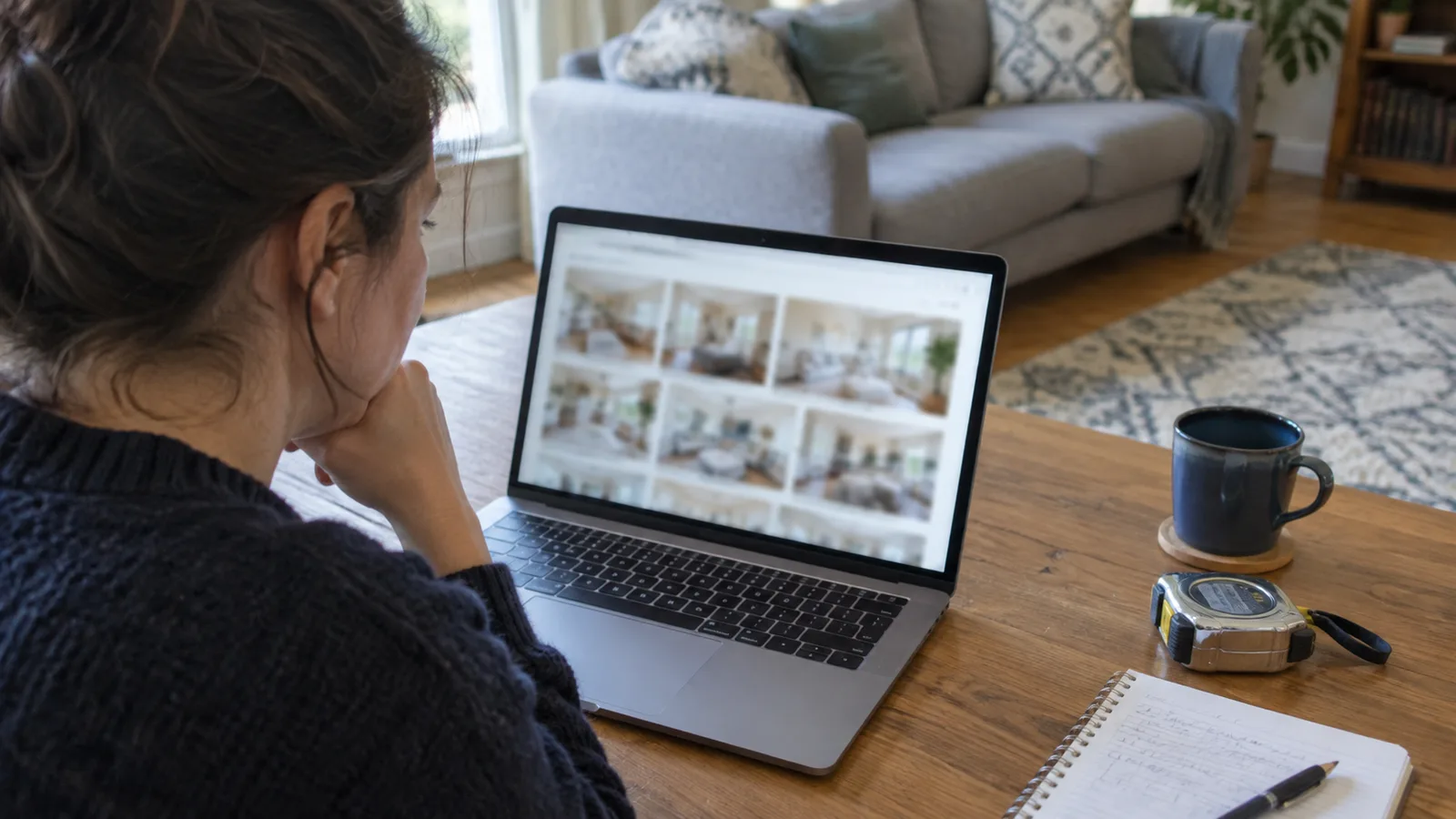
What this page is, and what it is not
This page gives you prompts and a checking routine for using a chatbot that can read photos, such as ChatGPT or Gemini, as a room critic. We did not run these prompts for this page, and we do not show sample answers, because an invented answer would look like a test result. The prompts are templates built from the measured guides on this site. What they produce depends on the model, the photo and what you tell it.
A critic is not a designer. It tells you what looks wrong from a photo. It does not know your room's true size, how the chair feels to sit in, or how the room sounds. That is why every suggestion below is paired with a check you can make with a tape measure.
Why ask for a critique instead of a redesign
Redesign tools invent a new room. A critique asks a different question: what is already wrong with the one you have? A common question in room-help forums is some version of "what is this room missing?", and the honest answer is often a smaller rug, a second light source, or a lower piece of art, not a new style. Our ChatGPT room design workflow includes one diagnose prompt for this. This page builds a full loop around it, so you can critique a room before deciding whether to change anything.
Photograph the room so it can be judged
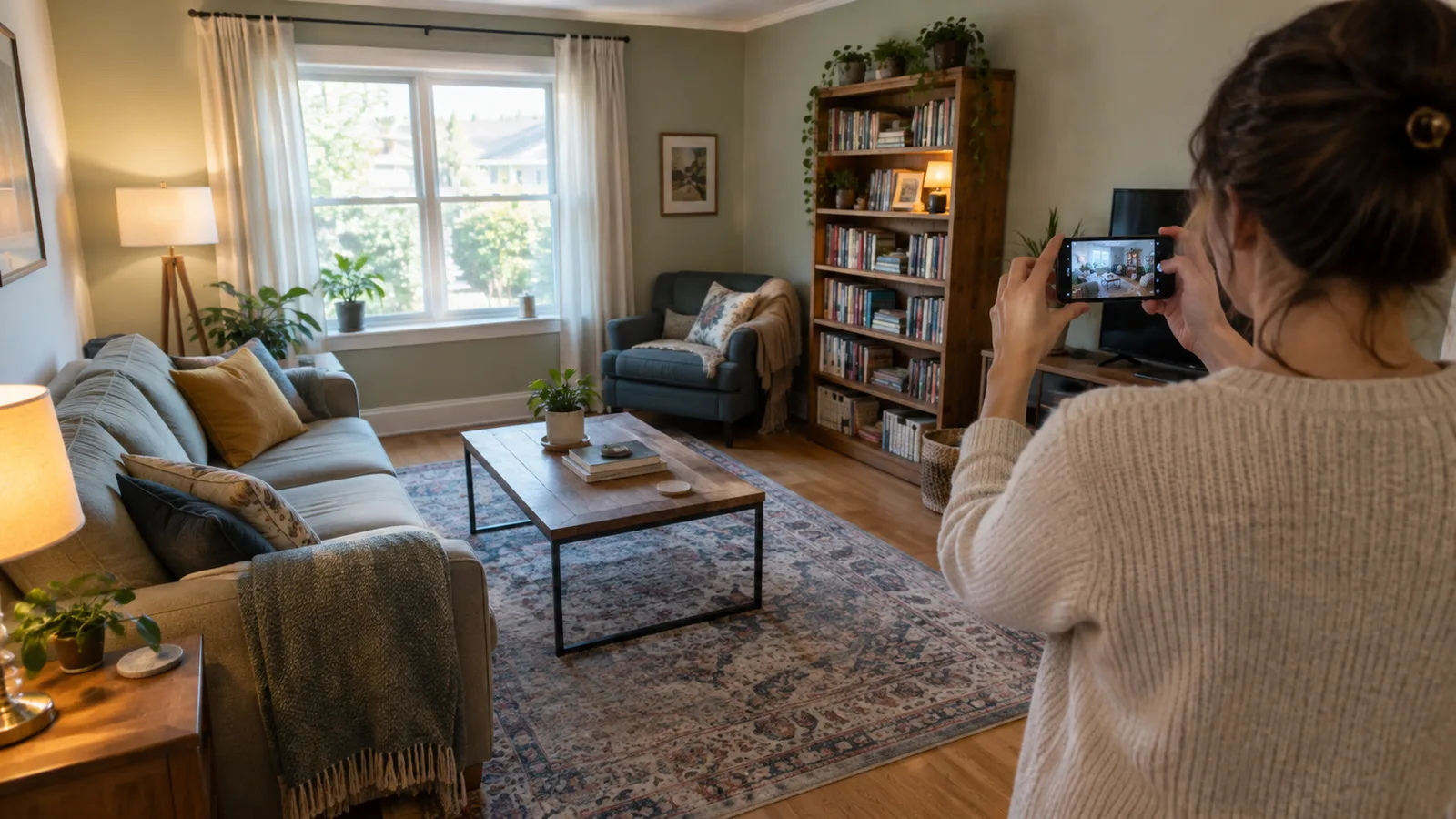
A critic can only judge what the photos show. Three photos from different spots work better than one wide shot, because they cover every wall and show how the pieces relate.
- AThe corner by the window, aimed across the sofa. This shows the seating and the rug.
- BThe opposite corner, aimed at the window wall. This shows the light and the curtains.
- CThe doorway, aimed at the TV wall. This shows what a visitor sees first.
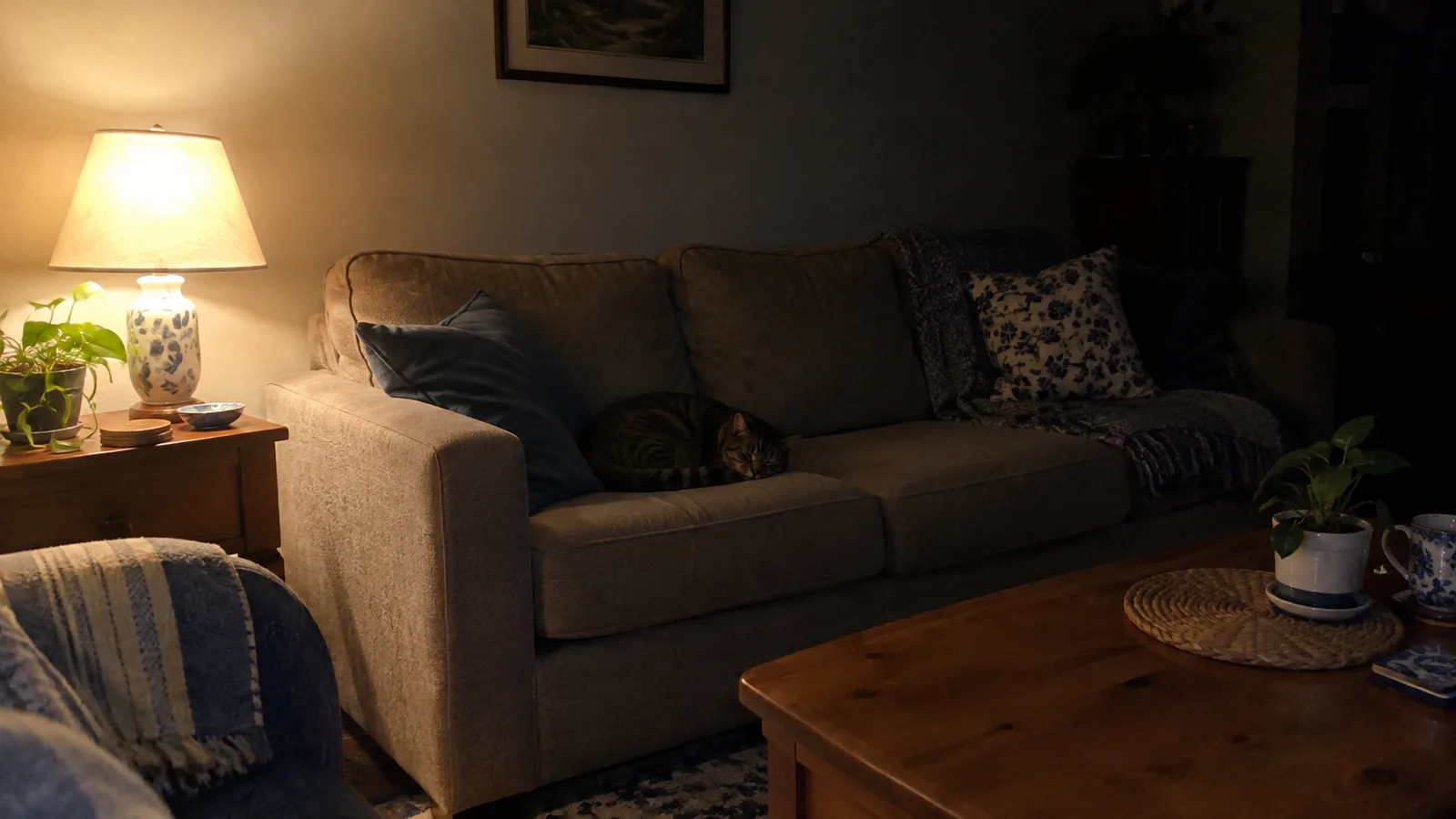
- Light. Take them in daylight with the lamps on, because a dusk photo makes the model blame the lighting.
- Frame. Include the floor and the ceiling line. Keep the phone level, since a tilted wide photo bends walls and furniture.
- One detail shot. Add a close photo of the area that bothers you most.
- Privacy. Move family photos, mail and anything with an address out of frame, and check the app's data settings before you upload photos of your home.
Give it the facts a photo cannot show
The model cannot read a tape measure from a photo. Any dimension it states is a guess unless you supplied it. Put a short fact sheet at the top of every conversation:
Room facts: living room, 14 ft by 12 ft, 8 ft ceiling. Two adults and a dog use it every evening, mostly for TV and reading. The sofa, rug and bookcase stay. I can spend about [budget] and I rent, so no drilling. The room is used mostly in the evening with lamps. The main door is bottom right, the window is on the right wall.
Replace the numbers with measured ones. If you do not know them yet, a phone scanner can help: our room measuring apps comparison shows which ones are worth using.
The prompts, one for each symptom
Paste your fact sheet and the three photos first, then use one of these. Each asks for observations tied to the photo and a single change per problem, so you can test them in order.
The master critique
Look at these three photos of my room and my room facts. Do not suggest a new style or any product yet. List the five biggest problems you can see, in order of impact. For each one say what you can see in the photos that shows it, what single change would fix it, and what I should measure or check before making that change. Say which problems you cannot judge from photos.
"Something feels off"
This room feels off and I cannot say why. Check these in order and tell me which ones apply, with what you can see: rug size against the furniture, everything pushed against the walls, no clear focal point, art hung too high or too small, curtains too low or too narrow, all the light coming from the ceiling, mismatched bulb colours, everything at the same height. Give me the top two.
"It feels cold or boring"
This room feels cold and flat. Looking only at what is in the photos, tell me where the light comes from, how many layers of texture you can see (rug, throws, curtains, wood, plants), and which one missing layer would change the feel most. Suggest changes that cost under [amount] first.
"It feels cramped"
This room feels cramped. From the photos, which pieces look too large for the room or too close together, and where does the walking route seem to run? Tell me what to measure to confirm it, such as the gap between the sofa and the table, and the width of the main walkway.
"It looks cluttered"
The room looks messy even when it is tidy. Point out which surfaces, shelves or corners are doing too much, and which ones could take a single large object instead of many small ones. Do not tell me to buy storage until you have listed what I could remove or group.
"It is too dark in the evening"
In the evening this room is lit mostly by [describe the lights]. From the photos, where are the dark zones, which of them is a place I sit, and which single light, in what position, would help most? List what I should check about bulb colour and brightness.
Three follow-ups that keep it honest
- Rank by effort. "Rank your suggestions from free and 10 minutes to expensive and a weekend."
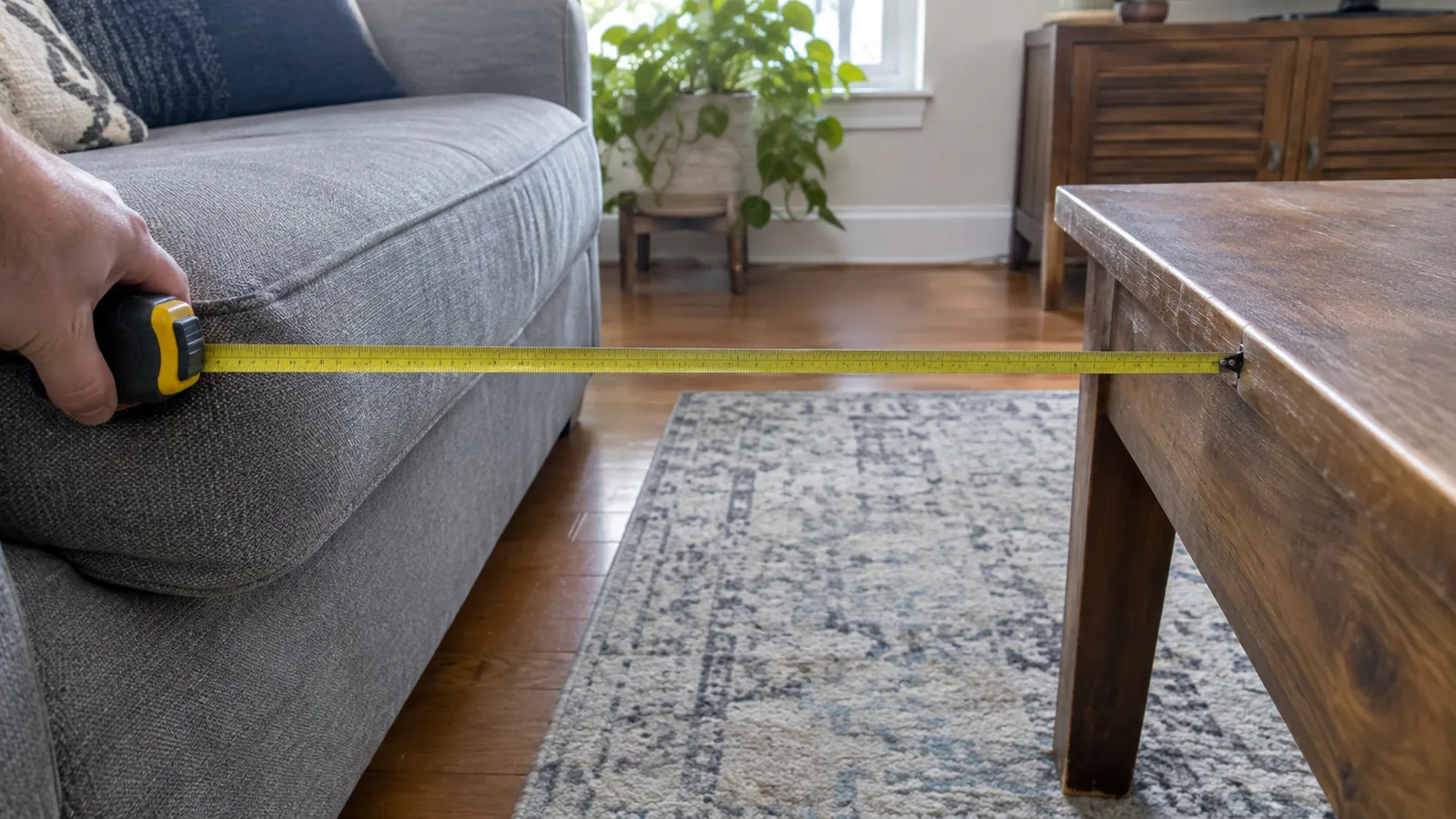
- Make it testable. "For each suggestion, give a number or a test I can check with a tape measure or a piece of painter's tape."
- Challenge it. "Which of your points are you least sure about from these photos, and why?"
How to read the answer
| What you see in the answer | What it usually means | What to do |
|---|---|---|
| Advice that fits any room ("add plants, add art") | It is not looking closely at your photos | Ask for observations tied to specific things you can see |
| Exact sizes you never gave it | A guess from a photo | Measure before you trust any number |
| Different answers for different photos | It is confused about which room or angle it is seeing | Resend one photo and ask for one problem |
| A long shopping list | It defaults to buying things | Ask for changes that use what you already own first |
| Ignores a constraint you gave | The fact sheet got lost in a long chat | Repeat the fact sheet and ask again |
Check every suggestion with a tape before you act on it
This is the step that makes the critic useful. For each point it makes, run the matching check, and use our measured guide for the numbers.
| If it says | Check this | Use this guide |
|---|---|---|
| The rug is too small | Front legs of all seating on the rug | Rug size guide |
| The sofa is too big | Walkway of 30 to 36 in beside it | Furniture clearance guide |
| The layout is awkward | Taped outline of the proposed layout | Living room layout ideas |
| The curtains are wrong | Rod height and width against the window | Curtain size guide |
| Something feels off | The nine common causes, in order | Why your room feels off |
What a chatbot cannot judge
- True scale. A single photo does not fix distances. Treat every size as a guess until measured.
- Comfort and sound. It cannot sit on the sofa or hear the echo in a bare room.
- True colour. Photos change colour with the camera and the bulbs, so test paint on the wall. Our color drenching vs accent wall comparison covers testing paint properly.
- Structure and safety. Walls, wiring and anchoring are outside what a photo can show.
Use the critic to decide what to look at first, and a tape measure, a sample pot and your own eyes to decide what to do. If the problem is still unclear, a human designer can help: see our online interior design services comparison.