
Color drenching vs accent wall at a glance
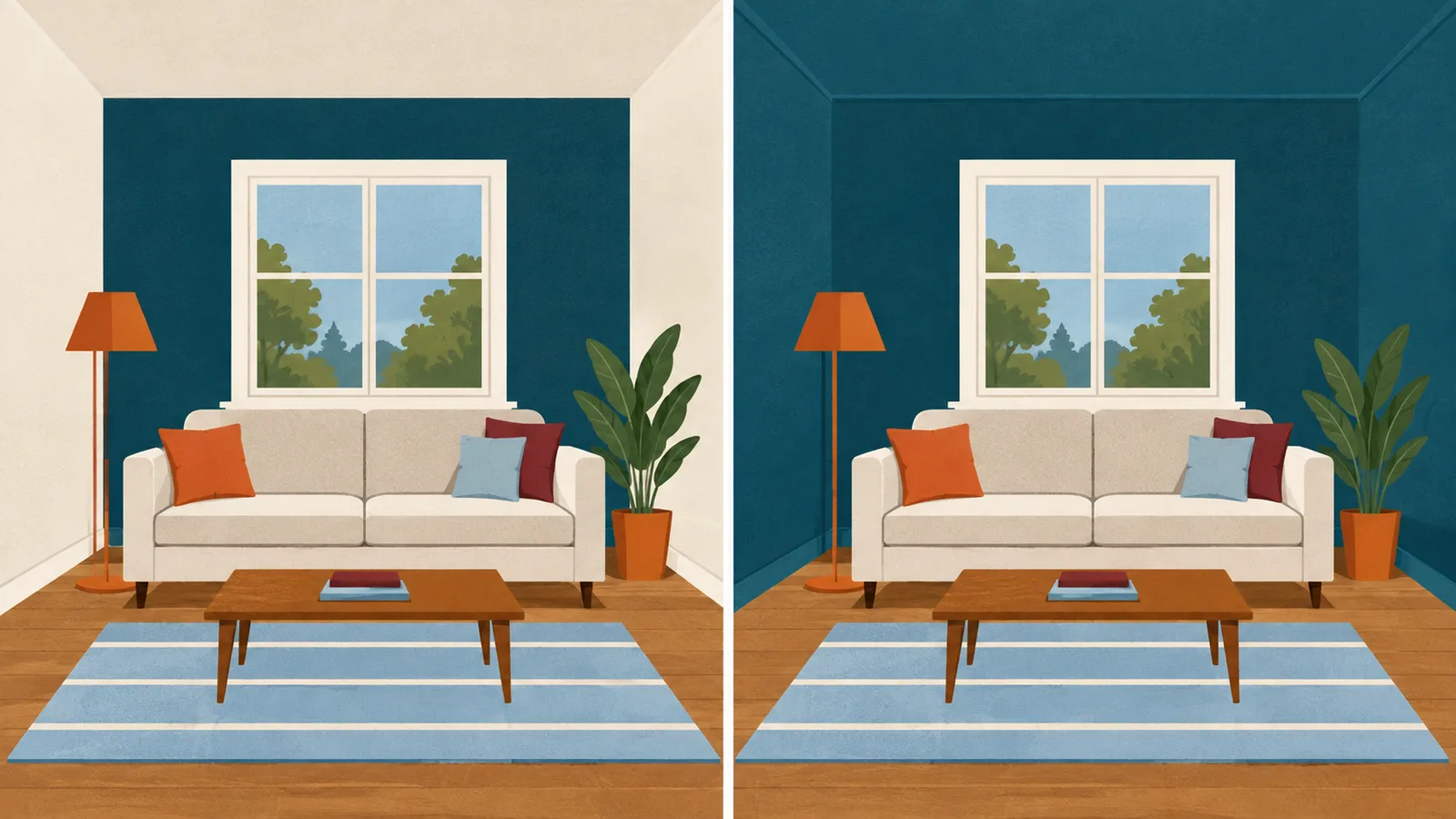
Choose an accent wall when you want one focal point and the rest of the room to stay light. Choose color drenching when you want the room to feel enveloped and are happy to paint every surface. They are not two sizes of the same idea. An accent wall adds contrast. Drenching removes it, by painting the walls, ceiling and woodwork one color.
| Question | Accent wall | Color drenching |
|---|---|---|
| What gets painted | One wall | Walls, ceiling, trim, often doors |
| The effect | Contrast and a focal point | No contrast, a wrapped room |
| Paint for a 12 x 14 ft room | About 0.6 gal | About 3.5 gal |
| Prep | One wall | Every surface, imperfections show |
| Changing your mind | Repaint one wall | Repaint everything |
| Fails when | It is on the wrong wall or too many rooms have one | Light is poor and the color is dark, or prep is rushed |
Paint quantities come from our arithmetic, shown in full below. The design points come from paint-maker guidance and are labelled as such. We did not test any paint for this page.
What each one means
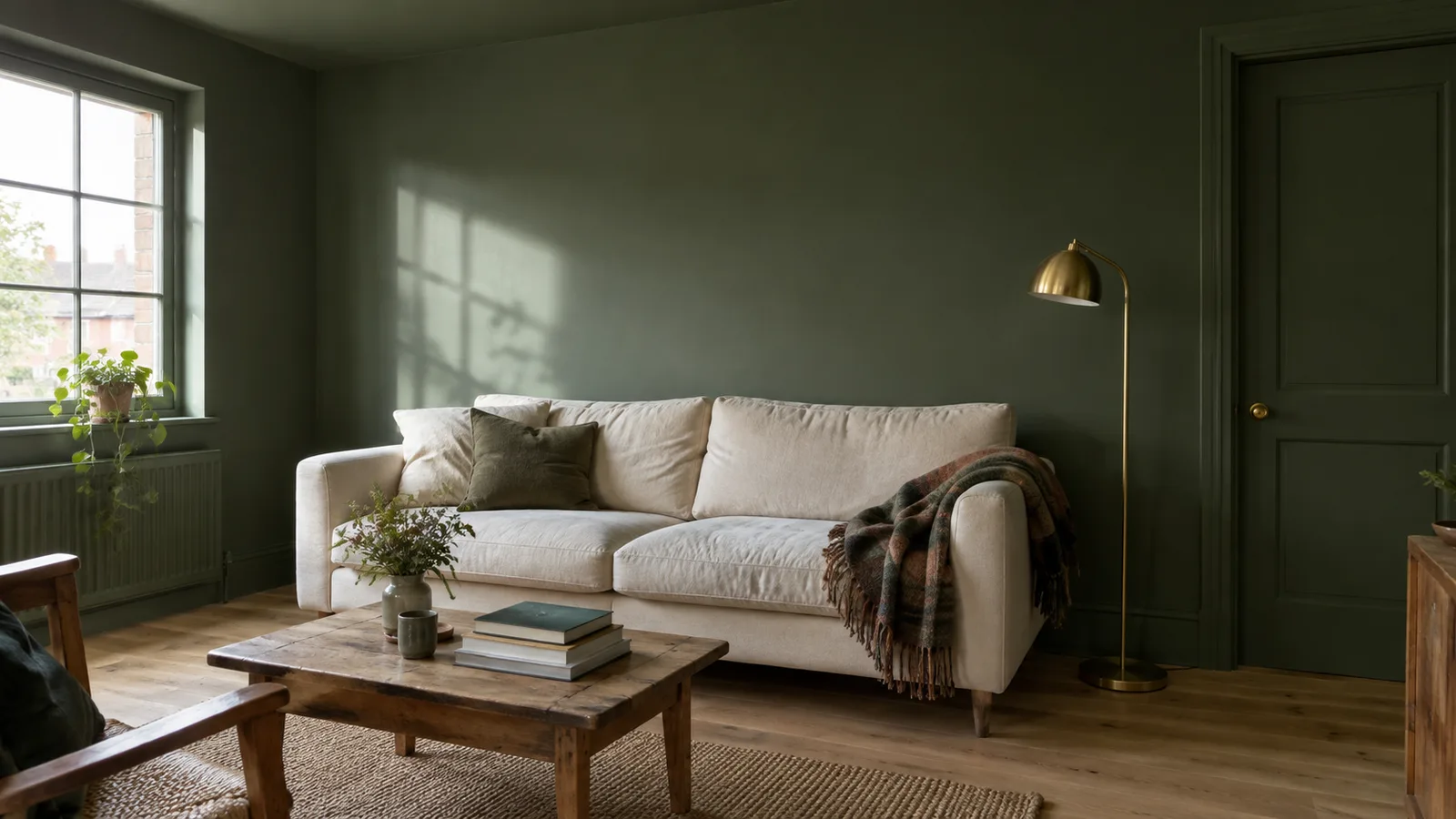
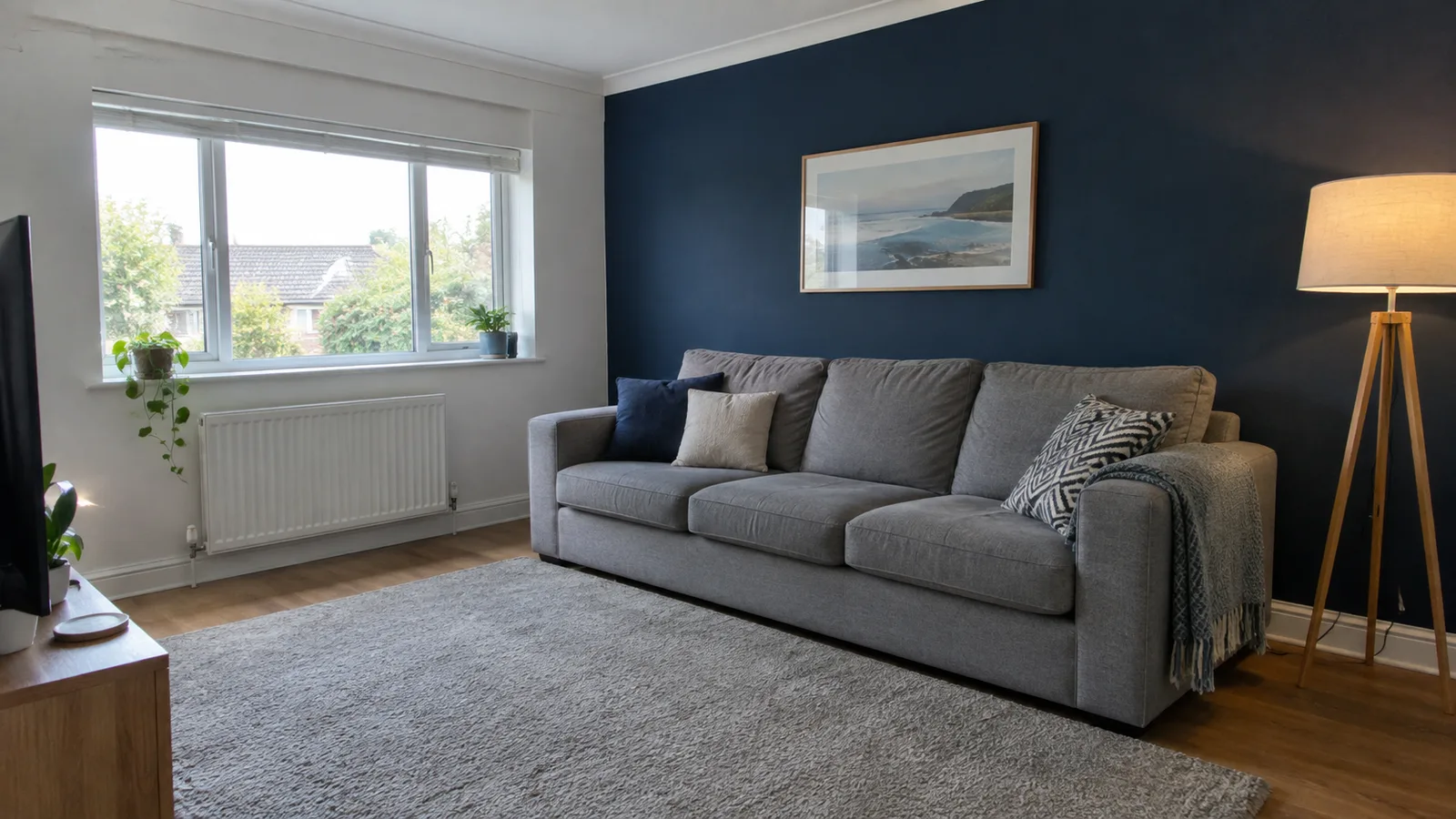
An accent wall is one wall in a deeper or stronger color than the rest, usually the wall you look at first: behind a bed, behind a sofa, or the one opposite the door. Farrow & Ball describes color drenching as painting everything the same shade: walls, woodwork, ceilings and even radiators or furniture. The aim is to remove the lines where one surface stops and another starts.
Light, size, and mood
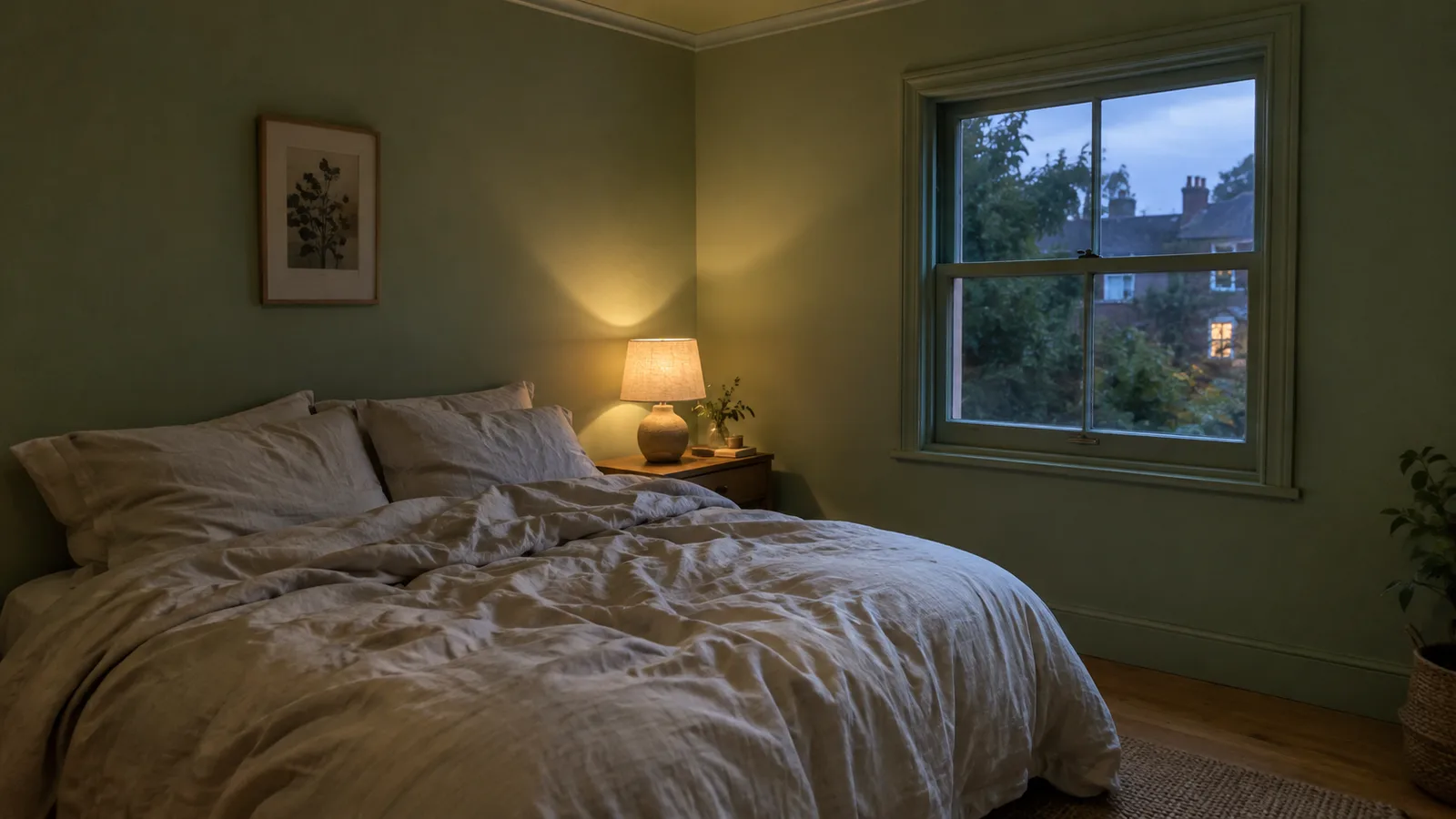
Farrow & Ball says that a light or mid shade can make a room feel more spacious because it blurs the line between wall and ceiling, which is why it suggests drenching for narrow hallways. It says deep shades feel cosy and enclosed, which suits evening rooms, and that a single shade avoids strong contrasts, so it suggests nurseries and offices. Those are the maker's claims, not test results.
An accent wall behaves differently. A dark wall in a room with little daylight can make that wall feel like a hole, and a very light accent can look like a mistake. Common advice from design sites is to pick the accent wall by its light and its job, such as the headboard wall or the fireplace wall, and to test swatches on the wall at different times of day. Dark colors also give more glare on glossy finishes, so use a matte finish for a dark accent.
The sheen question, where the makers disagree
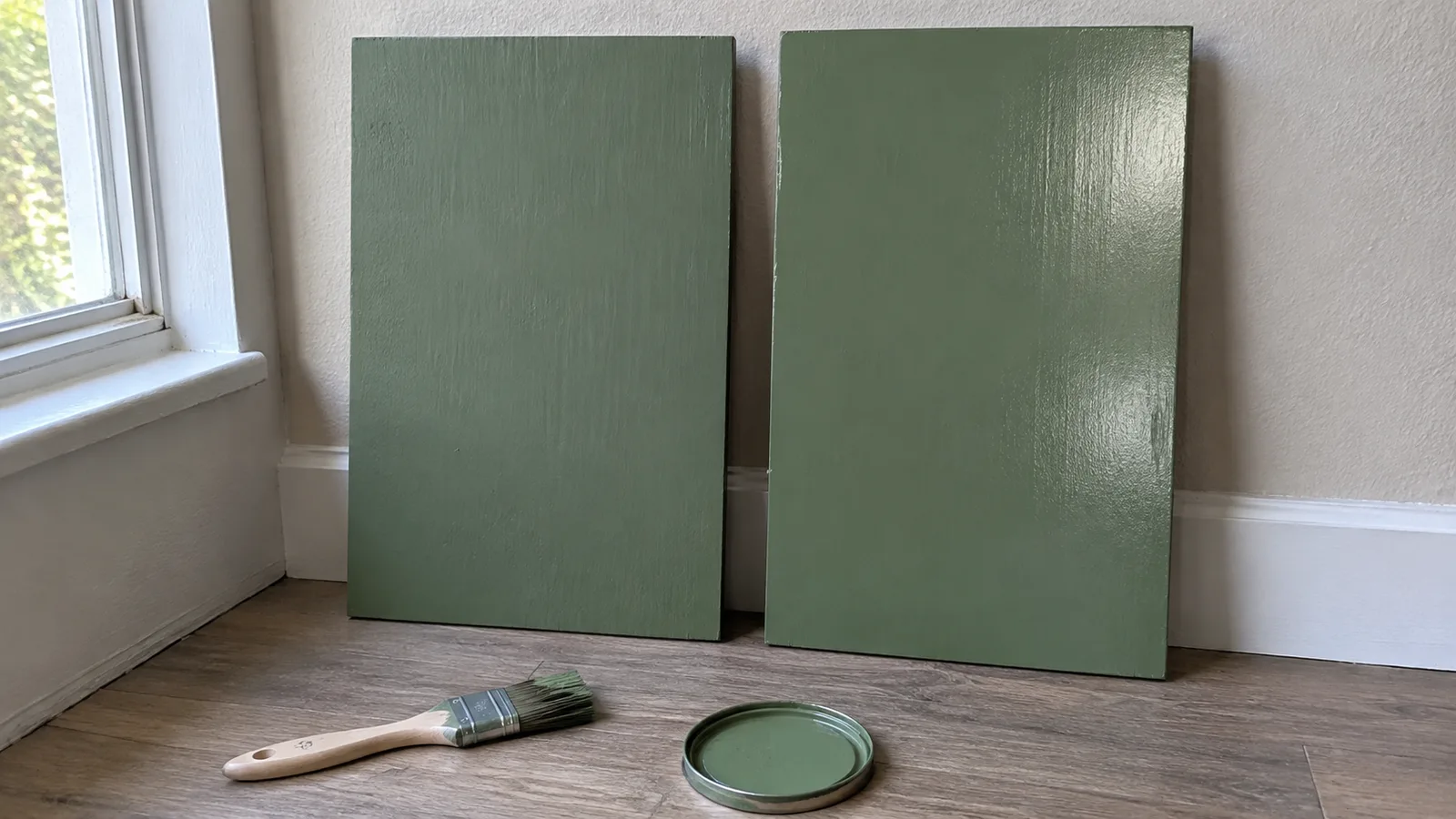
One color across every surface raises a practical question: should every surface have the same finish? Farrow & Ball's product advice says that when colour drenching a room in the same colour, the best results come from using the same finish on all surfaces. Sherwin-Williams says its colors would suit color drenching "with varying sheens," giving the example of flat on the ceiling, eggshell on the walls and semi-gloss on the trim, for added character. Both are defensible, and they give different rooms.
- One finish keeps the room unified and hides the edges, but a single finish has to cope with wear on trim and doors.
- Stepped sheens (flat ceiling, low sheen walls, harder trim) are easier to wipe clean where hands touch, and the same color will read a little differently at each sheen.
Our paint finish comparison covers durability and washability by room, which is the deciding factor. Whatever you choose, test the exact color in the sheens you plan to use, side by side, before you buy a gallon.
How much paint each plan needs
Sherwin-Williams says a gallon of paint typically covers about 350 to 400 square feet, that a quart covers about 100 and that a gallon of primer covers about 200 to 300, and that depending on wall texture and desired coverage, "having a little more than a gallon on hand may be best." Other guides say textured surfaces and ceilings take more and that two coats is the safe plan. Use the calculator, which does the arithmetic with those figures.
Prep, and the places drenching goes wrong
Farrow & Ball advises that any surface imperfection, however small, should be removed before painting, and recommends a primer to improve adhesion and minimise imperfections. In a drenched room that matters more: with no contrast, the eye goes to the surface itself, so a patched wall or a ceiling join shows. Plan for masking the trim, cutting in along the ceiling, and a full second coat.
- Dark color, little daylight. The room will feel smaller and darker at night. Drench in a mid or light shade instead, or limit the dark to one wall.
- Textured ceilings. One guide says popcorn or textured ceilings need 25 to 30 percent more paint, so raise the ceiling area before you divide.
- High-traffic trim and doors. A matte finish on a door scuffs. Use a harder sheen there, which is the stepped-sheen route above.
- An accent wall in every room. Design sites warn that too many accent walls stop reading as a choice.
Which should you choose?
| Room | Better fit | Why |
|---|---|---|
| Bedroom | Either | Drench for a cocoon, or an accent behind the bed |
| Narrow hallway | Drench in a light or mid shade | Farrow & Ball suggests it for blurring wall and ceiling |
| Nursery or home office | Drench | One shade avoids strong contrast |
| Living room with a TV wall | Accent wall | A dark wall behind the screen reduces glare |
| Open-plan space | Accent wall | No clean place to start or stop a drench |
| Rental | Neither, unless allowed | Check the lease first |
If you are still unsure, sample the color on two boards, one wall and one ceiling, and look at them morning and evening. Our guide to why a room feels off covers the other colour mistakes, including colors with no plan.