
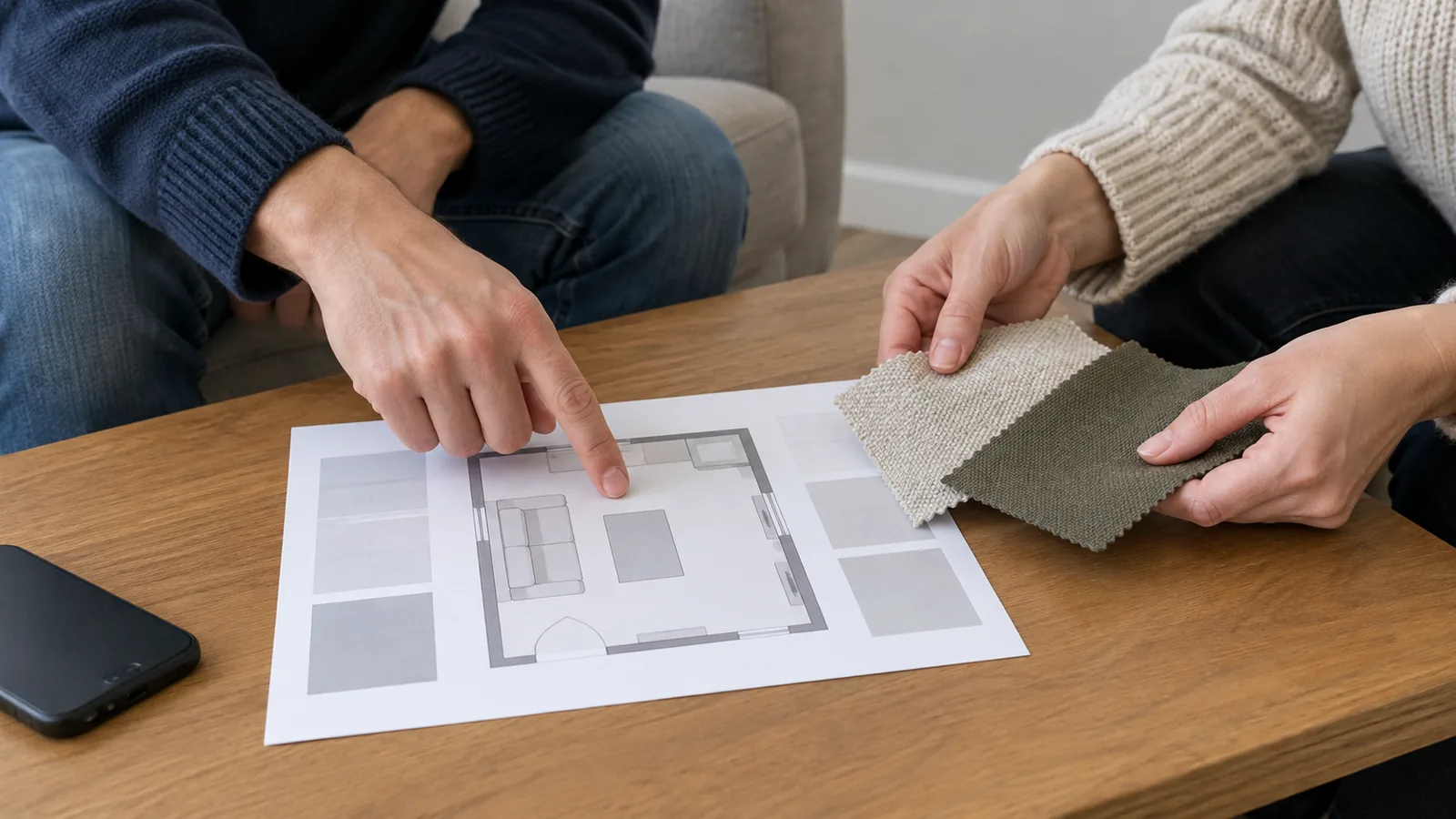
What a good interior design brief contains
A brief is a short written description of the room, the people in it, what has to change, and what you can spend. It is not a mood board, and it is not a wish list. A good one fits on a single page in nine short sections.
| Section | What to write |
|---|---|
| 1 Goals | What should be different when the work is finished, in one to three sentences |
| 2 Who uses it | People, ages, pets, and what happens in the room on a normal day and on a busy one |
| 3 Must keep | Each piece staying, with width x depth x height |
| 4 Measurements and fixed features | Floor size, ceiling height, doors and their swing, windows and sill heights, radiators, outlets, vents |
| 5 Budget range | A range with a ceiling, and what it includes: furniture, delivery, labour, design fee |
| 6 Timeline | When you want it done and any fixed date, such as a move or a visit |
| 7 Style in words | What you like and dislike in each reference photo, not just a style name |
| 8 Constraints | Rental rules, pets, accessibility, allergies, noise, building rules |
| 9 Deliverables | What you expect back: a floor plan, a product list, a quote, how many revisions |
Deliverables get their own box on purpose: a brief that does not say what you expect back invites a result you did not want. If you have not planned the layout yet, our guide to planning a room layout before you buy furniture covers the measurements section in more depth.
Why a written brief saves money
Designers ask for these details for a reason. Houzz Pro's client questionnaire template for interior designers (updated February 2026) groups its questions under the current situation, including what should change and what can stay; intended use, including who uses the space and any technical or accessibility needs; liked and disliked styles; budget, including "What is your maximum budget for this project?"; and timeline. Answering them in writing before the first meeting means that meeting can start from facts instead of discovery.
The budget question matters most. In a Houzz article on questions your interior designer should ask you, designer Mike Dietrich writes that "not defining the budget can make for a great deal of unhappiness as your project progresses", and suggests asking the designer directly whether the budget is realistic for what you want. A written range gives them something to answer.
Step 1: Let the chatbot interview you
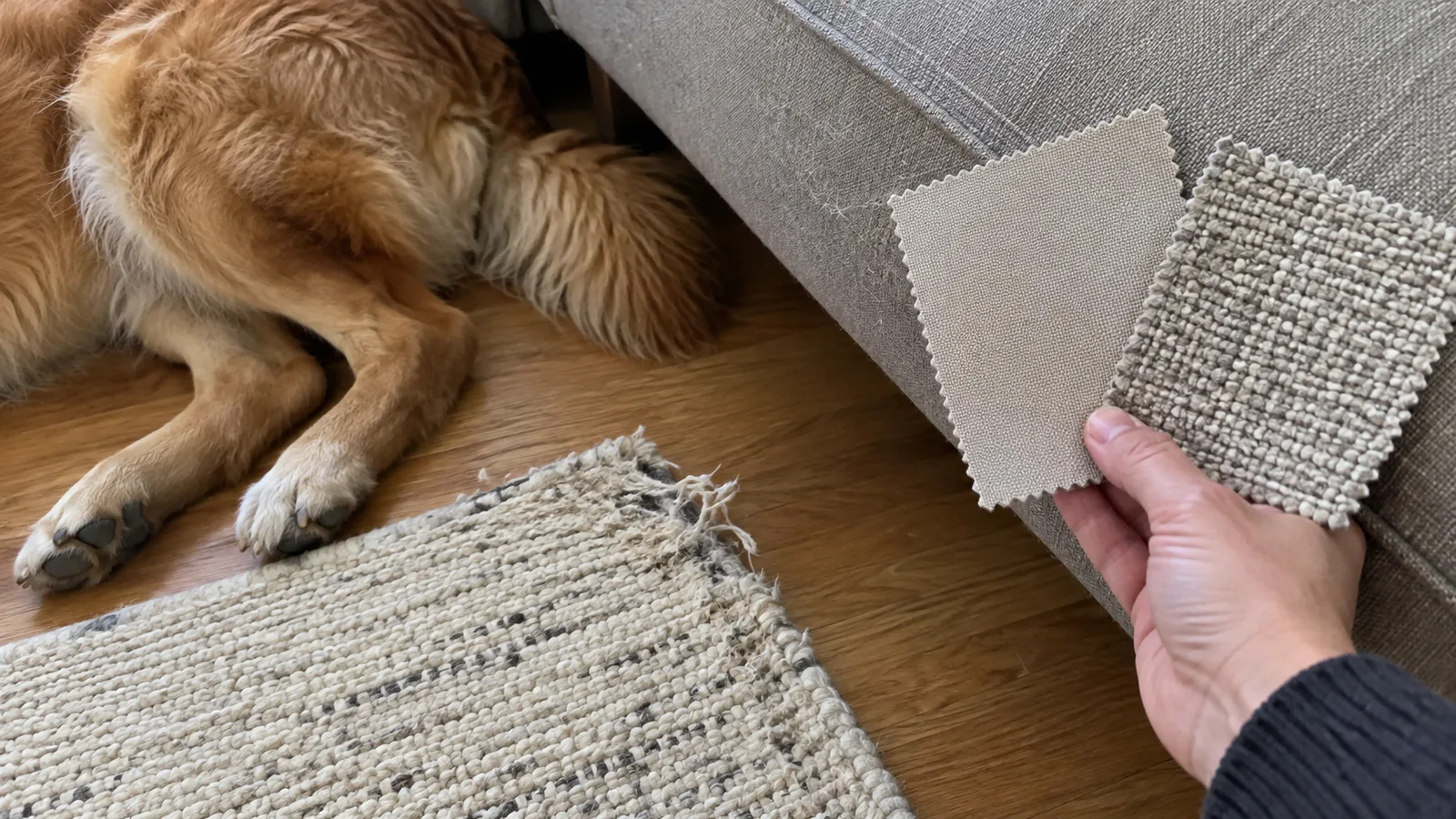
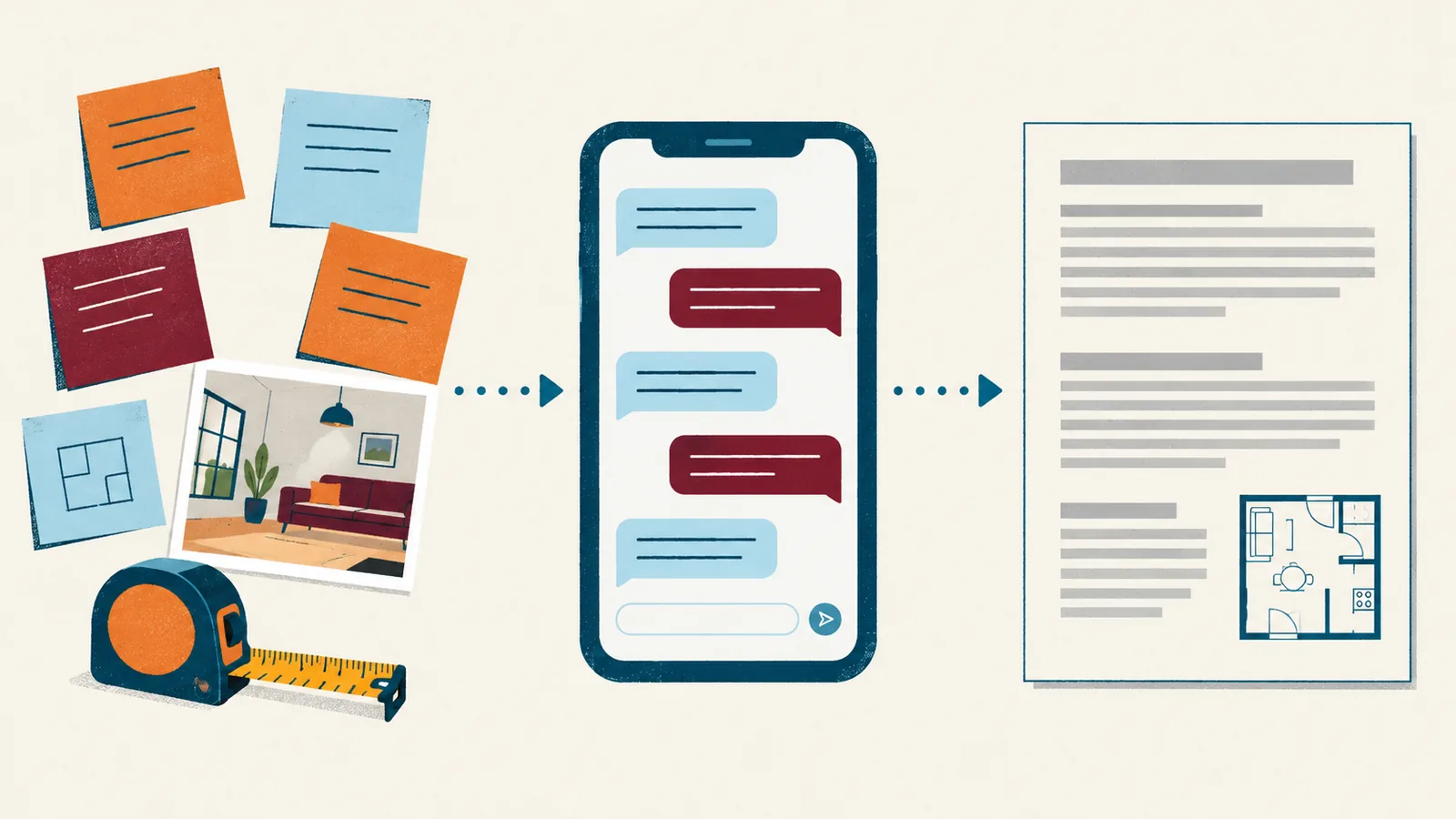
The hardest part of writing a brief is remembering what you have stopped noticing. An interview fixes that, because each answer prompts the next question. Paste this into ChatGPT or Gemini, with your room photos attached if you like:
I want to write an interior design brief for my [room]. Interview me to collect what a designer needs. Ask one question at a time and wait for my answer before asking the next. Cover: my goals, who uses the room and how, pieces I am keeping and their sizes, the room's measurements and fixed features, my budget range and what it includes, my timeline, my style likes and dislikes, constraints such as renting, pets or accessibility, and what I expect the designer to deliver. If an answer is vague, ask a follow-up that makes it specific. Do not suggest designs or products. Stop after about fifteen questions and summarise what is still missing.
Answer in your own words and do not tidy them up. "The sofa is where everyone dumps their coats" is more useful to a designer than "storage is needed". Have the tape measure and your notes beside you, because some questions will send you to measure something you never have, such as the sill height or the swing of the door.
Step 2: Turn your answers into a one-page brief
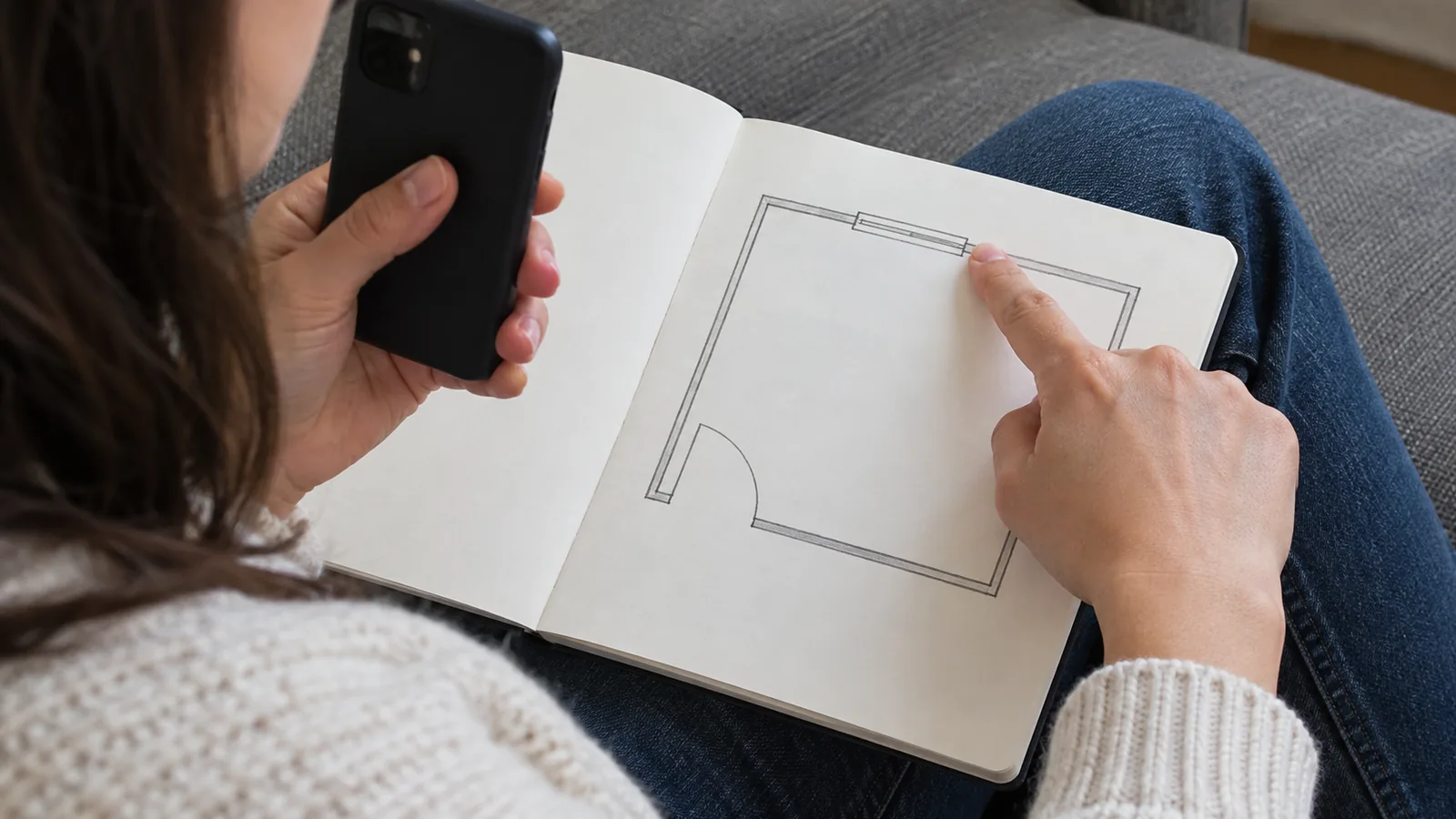
Once the interview is done, ask for the page. The important instruction is the second sentence: a chatbot that tidies your answers may also "improve" them by adding a dimension or a material you never gave. OpenAI's help page on whether ChatGPT tells the truth lists fabricated details among the errors to expect, so the prompt tells it where the line is.
Turn my answers into a one-page interior design brief using these headings: Goals, Who uses the room, Must keep, Measurements and fixed features, Budget, Timeline, Style in words, Constraints, Deliverables. Use only information I gave you. Do not add measurements, products, materials or prices that I did not state. Where a section is missing information, write "TO CONFIRM" and what is missing. Write in plain sentences, with all measurements in inches and centimetres. Keep it under 450 words.
Read the result next to your notes. Anything marked "TO CONFIRM" is your homework. Anything that sounds more specific than what you said is a warning sign: find where it came from or delete it. In ChatGPT, keeping the photos, notes and drafts in one project means the next chat starts with the same context; in Gemini, you can export a response to Google Docs to edit it there. Both were checked in October 2026, and both work on the free plans: ChatGPT's free tier includes unlimited everyday text chats and file uploads within limits, and Gemini's free plan is $0 with a Google Account.
Interior design brief template
If you prefer to fill it in yourself, or want to check the chatbot's draft against a fixed structure, copy this plain-text template. Delete the hints in brackets as you go.
INTERIOR DESIGN BRIEF: [ROOM], [DATE]
1. GOALS: [What should be different when this is finished? One to three sentences.]
2. WHO USES THE ROOM: [People, ages, pets. A normal day, and a busy day.]
3. MUST KEEP: [Each piece staying: name, width x depth x height in in (cm), colour or material.]
4. MEASUREMENTS AND FIXED FEATURES: [Floor length x width, ceiling height. Doors and which way they swing. Windows, sill heights. Radiators, vents, outlets, switches. Measured with a tape on (date).]
5. BUDGET: [Range, e.g. $X to $Y, firm ceiling $Z. What it includes: furniture, delivery, labour, design fee.]
6. TIMELINE: [Ideal finish date. Any fixed date. Phased or all at once?]
7. STYLE IN WORDS: [For each reference photo: what I like, what I do not. Words I would use. Things I never want.]
8. CONSTRAINTS: [Renting rules. Pets. Accessibility needs. Allergies. Building or HOA rules. Access for deliveries: stairs, lift, narrowest doorway.]
9. PRODUCTS I AM CONSIDERING: [Name, link, listed dimensions, price, date checked.]
10. DELIVERABLES I EXPECT: [Floor plan, product list with links and prices, quote, number of revision rounds, format.]
11. ATTACHED: [Photos from two corners, sketch with measurements, reference images.]
Section 9 is optional for a designer, who will usually propose products, but useful for a shop or for your own short-list. If you are weighing a few pieces, you can preview them in a photo of your own room with DecorViz: Quick Generate places one product, and Canvas arranges up to four together. Our DecorViz review covers what it does and its limits. A preview shows how a piece looks; the tape measure still decides whether it fits.
Weak and strong brief examples
| Section | Weak | Strong |
|---|---|---|
| Goals | "Make it cosy" | "Two of us read here most evenings, and four guests come about twice a month. It should seat six without bringing in kitchen chairs." |
| Who uses it | "Family room" | "Two adults, a six-year-old, and a large dog that sleeps on the sofa." |
| Must keep | "Some of our furniture" | "Walnut sideboard, 60 x 18 x 30 in (152 x 46 x 76 cm). Grey sofa, 84 in (213 cm) wide." |
| Measurements | "Medium-sized room" | "14 ft 2 in x 11 ft 8 in (4.32 x 3.56 m), 8 ft (2.44 m) ceiling. Radiator under the window. Door swings in at the bottom left." |
| Budget | "As cheap as possible" | "$3,000 to $4,000 including delivery, excluding the design fee. Firm ceiling $4,500." |
| Style | "Japandi" | "Low, light oak furniture and plain linen. In photo 2 I like the bare floor; I do not like the paper lantern. No gloss." |
| Constraints | "We rent" | "Rental: no paint, no holes bigger than picture hooks, the landlord's carpet stays." |
| Deliverables | "Some ideas" | "A measured floor plan, a product list with links and prices, and one round of revisions." |
The difference between a weak and a strong brief is rarely length. It is whether each line could only describe your room. The examples in the right-hand column are illustrations of the level of detail, not figures to copy. Your numbers should come from your own tape and your own bank balance. For more on why vague words go wrong once they reach an AI or a designer, see the weak and strong prompt examples in our ChatGPT vs Gemini guide.
Adapt it for a designer, a contractor or a shop
The same facts serve three readers, but each reads a different part first. Ask the chatbot to reorder the brief for the reader: "Rewrite this brief for a [designer / contractor / furniture shop]. Put what they need first, and keep every fact unchanged."
| Reader | Lead with | Add | Can shorten |
|---|---|---|---|
| Interior designer | Goals, who uses the room, style in words | Deliverables, revision rounds, how you prefer to decide | Product links |
| Contractor | Scope of work, measurements, fixed features, what stays | Access, working hours, who supplies materials, permit question | Style references |
| Furniture shop | Space dimensions, must-match pieces, budget per item | Delivery path: stairs, lift, narrowest doorway | Timeline beyond delivery date |
For building work, a brief is the start of the conversation, not the price. Our AI renovation budget workflow turns the scope into line items and contractor questions. For a kitchen, the kitchen brief section of our kitchen photo guide lists what to retain, explore, verify and quote. If you are using ChatGPT to develop ideas before the brief, the ChatGPT room design workflow ends with a buying list you can paste into section 9.
Checks before you send it
A brief is only as good as its least reliable line. Run these checks yourself; they are the ones a chatbot cannot do.
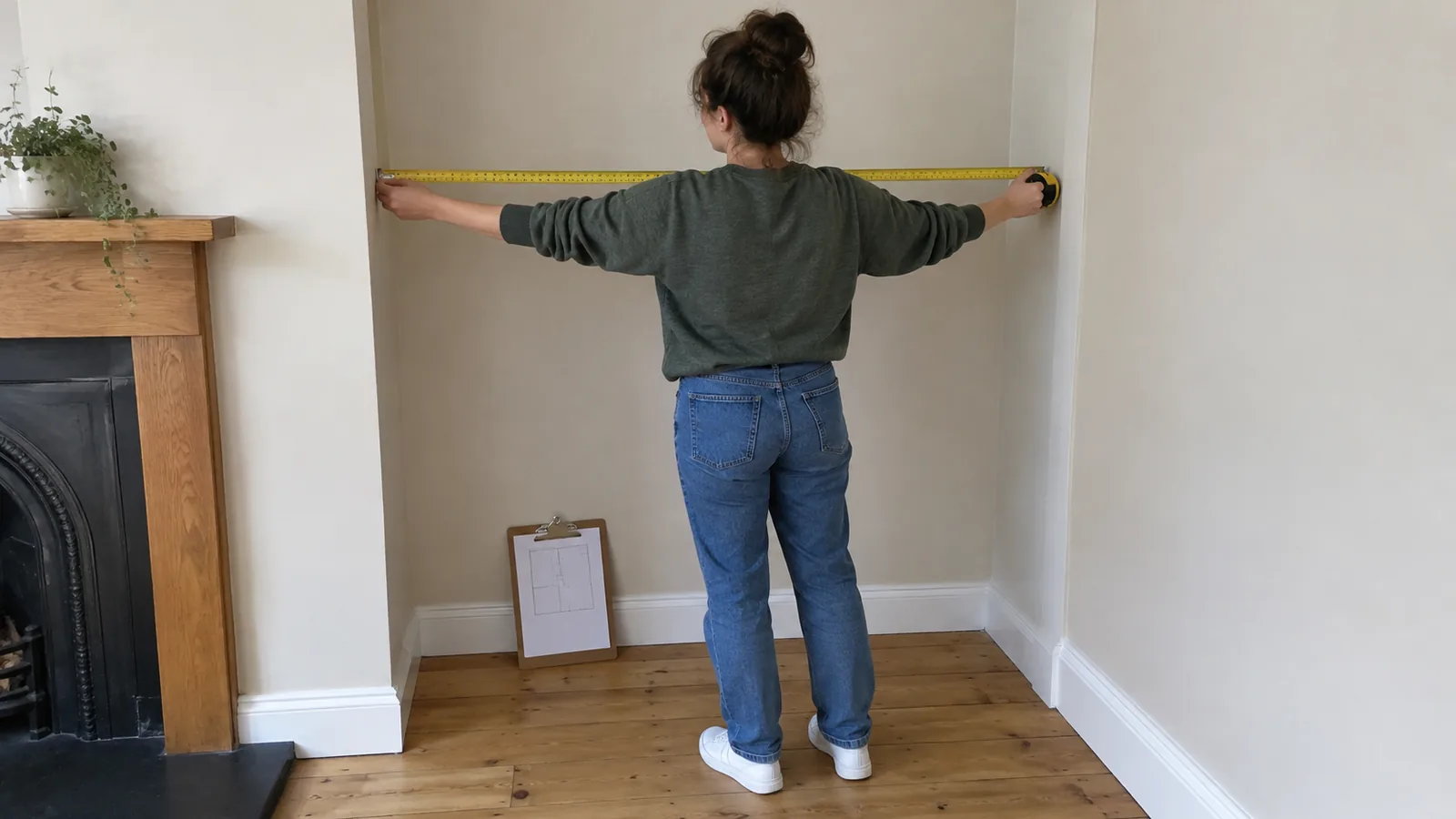
- Re-measure every dimension with a tape. Check the numbers on the page against the room, not against your notes, in case a figure was rounded or swapped.
- Delete any spec the AI invented. Every product size, material or price should trace back to a product page or to you. If you cannot say where it came from, remove it.
- State the budget as a range with a ceiling, and say what it includes. "$3,000 to $4,000 including delivery" can be answered; "around $3,500" cannot.
- Mark what is fixed and what is negotiable. "Must keep" and "would like to keep" are different instructions.
- Strip personal details from the photos and text. Google's Gemini Apps privacy notice says human reviewers read some chats, so leave out your address, documents and anything you would not want a stranger to see.
- Read it aloud to the person you live with. If they say "that is not how we use the room", fix it before a designer bases a plan on it.
What to do next
- Measure the room, photograph it from two corners, and list the pieces you are keeping with their sizes.
- Run the interview prompt and answer in your own words.
- Run the drafting prompt, then resolve every "TO CONFIRM".
- Run the checks, reorder the brief for its reader, and send it with your photos and sketch.
- Keep the brief. When the proposal comes back, check it against the goals and deliverables you wrote.
A good brief is also the best way to judge what comes back. If a proposal ignores the dog, the radiator or the ceiling on the budget, the brief shows exactly where it went wrong.