
Can AI estimate renovation costs?
Partly. A general chatbot can structure an estimate, but it cannot supply the prices that make an estimate true. OpenAI's own help page on whether ChatGPT tells the truth warns that the model can sound confident when it is wrong, can produce fabricated citations, and only knows recent information when a search tool is used. Local labour rates and this month's material prices are exactly that kind of information. The table sorts the budgeting jobs by how far you can rely on the answer.
| Job | How the chatbot does it | How far to trust it |
|---|---|---|
| Break a scope into line items | Reads your notes and lists the work, materials and labour | High as a draft; you add what it missed |
| Remind you of forgotten costs | Lists disposal, permits, delivery, patching, cleanup | High; it is a checklist, not a price |
| Calculate quantities from measurements | Floor area, wall area, waste allowance | Medium; check the formula and your inputs |
| Add up the budget | Arithmetic, or code in a data-analysis tool | Medium; keep the master copy in a spreadsheet |
| Say what an item costs where you live | A figure from training data or a web search | Low: replace it with a dated source or a quote |
| Predict what is behind the walls | It will guess | None: only opening up or an inspection shows it |
The five-step budget workflow
The order matters. Scope comes before prices because a price is only meaningful for a defined piece of work, and quotes come last because they are how you test the whole budget against the market.
Step 1: Write the scope and measurements
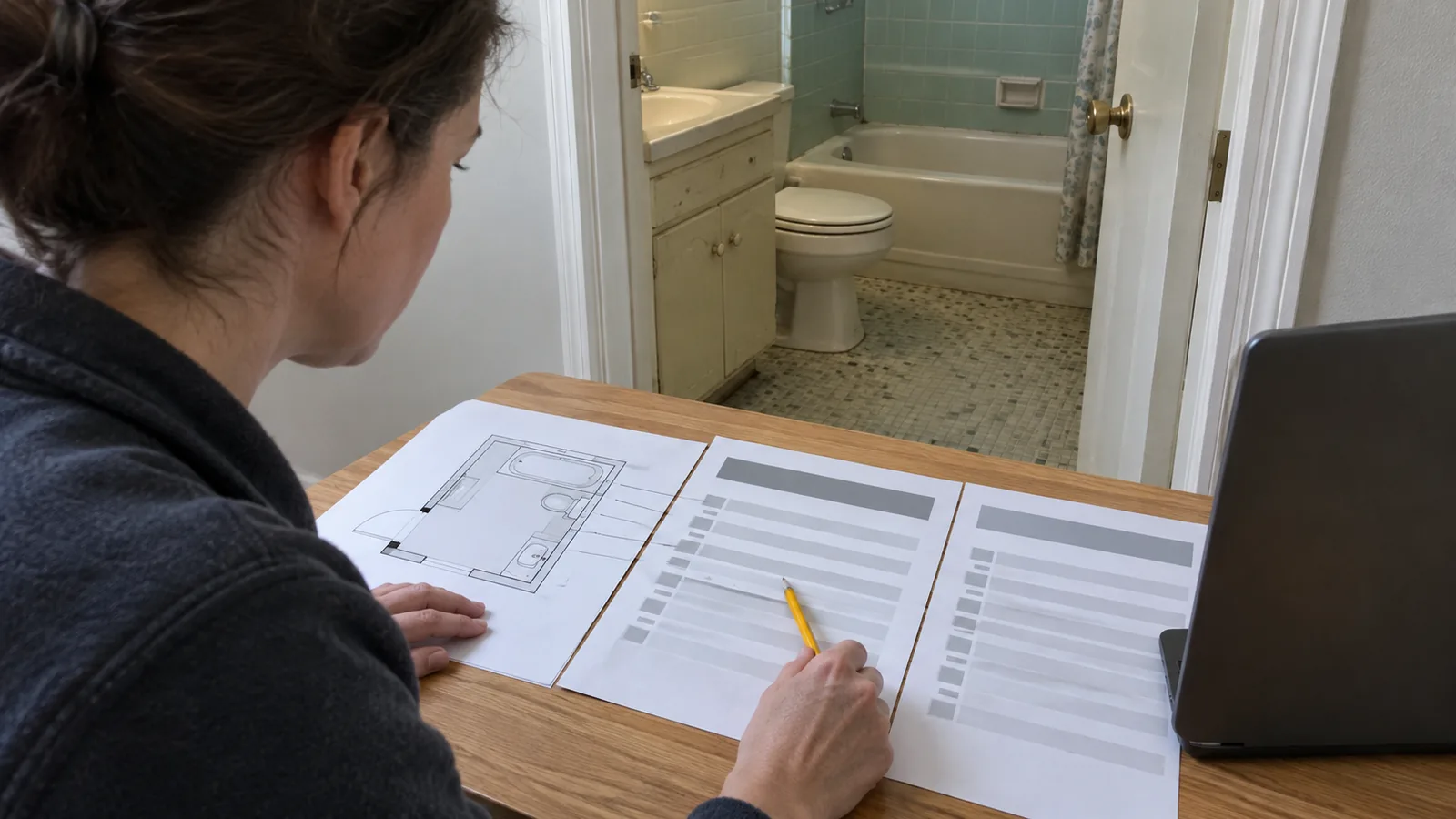
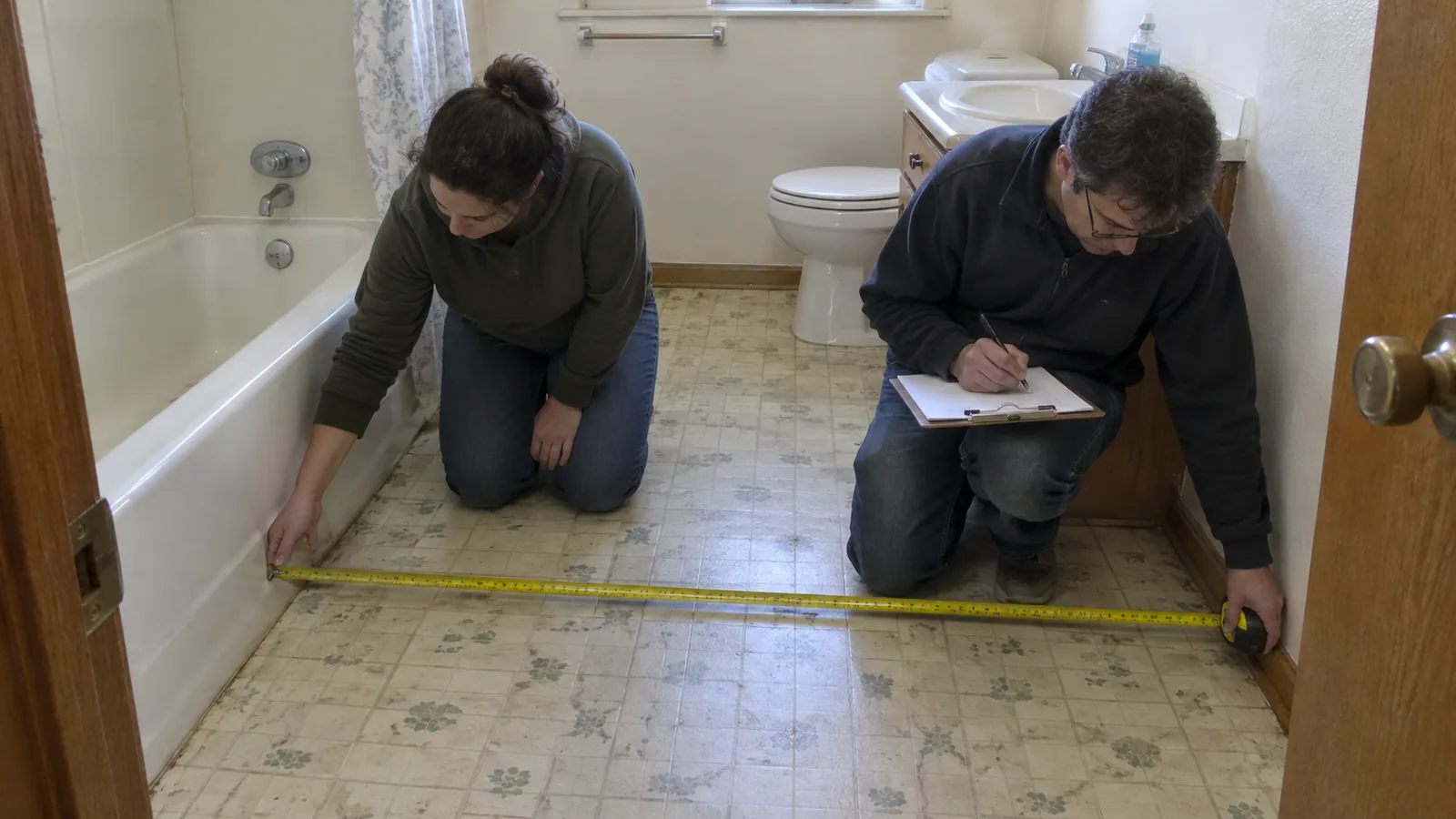
A chatbot can only list the work you describe. Before you open it, write down five things: the room's floor dimensions and ceiling height, what is being removed, what is being installed, what stays, and the age of the house. Measure with a tape, not from a listing or a floor plan app's estimate; our guide to measuring a room correctly covers what to record.
Then ask the chatbot to find the gaps before it counts anything. The prompt below makes it act as a checker rather than an estimator; answer each question and add the answers to your written scope. The most expensive word in renovation is "while": while the floor is up, while the wall is open. Decide now which of those you are including.
I am planning a renovation of my [room]. It is [length] x [width] ft with a [height] ft ceiling, in a house built around [year]. I want to remove [list], install [list], and keep [list]. Before estimating anything, ask me up to six questions about anything missing from this scope that would change the cost, such as what is under the floor, whether plumbing or wiring moves, who supplies the materials, and who handles disposal. Ask one question at a time. Do not give any prices yet.
Step 2: Ask for line items, not a total
A single total hides every assumption inside it. Ask for a table instead, with each assumption written next to the line it affects, and with prices left blank so you are not anchored by a number you cannot check. These are the columns to ask for:
| Column | Why it is there |
|---|---|
| Materials or labour | Quotes often split them; keeping them apart lets you compare like with like |
| Quantity and unit | Lets you check the maths from your own measurements |
| Unit price | Filled in by you from a dated source, never by the chatbot |
| Assumption | Shows what has to be true for the line to hold, such as "subfloor reused" |
| Source and date (add it yourself) | Where the price came from and when you checked it |
Turn my scope into a line-item budget table with these columns: item, materials or labour, quantity, unit, unit price, line total, assumption. Calculate quantities from my measurements and show each formula. For flooring, add a waste allowance and label it as a rule of thumb. Leave every unit price blank and write "needs price" in it. Then list any costs people often forget for this kind of job that are not yet in the table. Do not cite any source unless you give a link I can open.
The output is a draft structure, and it is usually the most valuable thing in the whole session. Read it line by line. If it assumes the subfloor is sound, or that you will reuse the existing shut-off valves, those are assumptions you now know to ask a contractor about.
Step 3: Replace AI prices with sourced figures
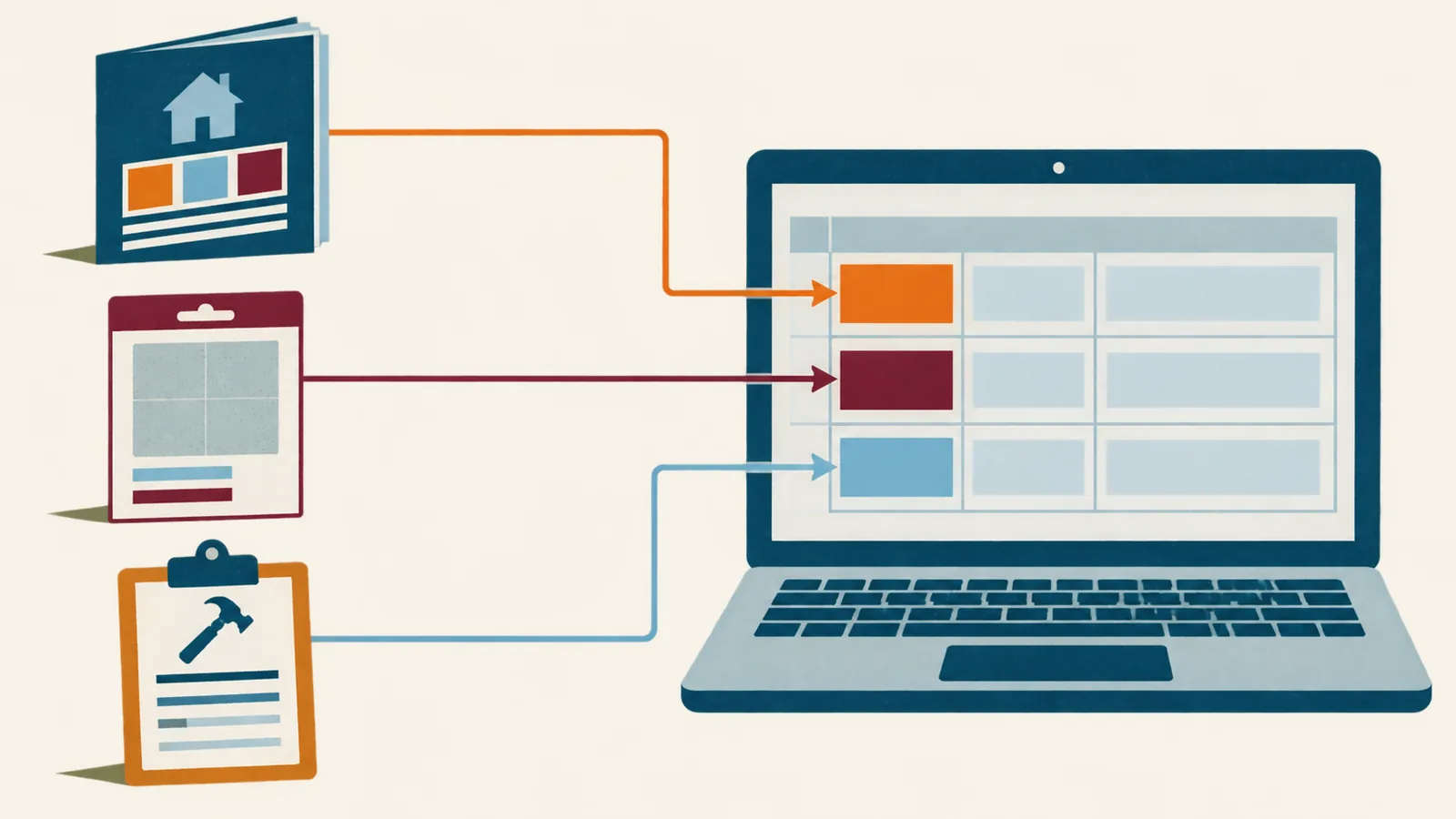
Copy the table into a spreadsheet and fill the price column from three kinds of source, in rising order of trust: published cost guides, retailer prices for the exact products you have chosen, and written quotes. Record the date next to each price. Keep the formulas in the spreadsheet, not in the chat, so a total can never silently change between messages.
Published datasets are useful for a sanity check, as long as you know what they measure. The 2025 Cost vs Value Report from the Journal of Light Construction compares the average cost of 28 defined remodelling projects with the value they retain at resale, across 119 US markets. Its methodology builds costs from price indices and Verisk remodelling cost data, and estimates resale value from a survey of more than 6,000 Realtors. Its midrange bath remodel is one specific job: a 5 x 7 ft bathroom with every fixture replaced, including the tub, tile surround, toilet, vanity counter, medicine cabinet and tile floor.
The report's own note on what the numbers mean says small differences in size, scope or finish quality "can dramatically affect the price". Use a figure like this to check that your total is in a plausible range for the scope, not to fill in your line items. If your job is smaller than the defined one, as most refreshes are, expect your total to be well below it.
Step 4: Add a contingency
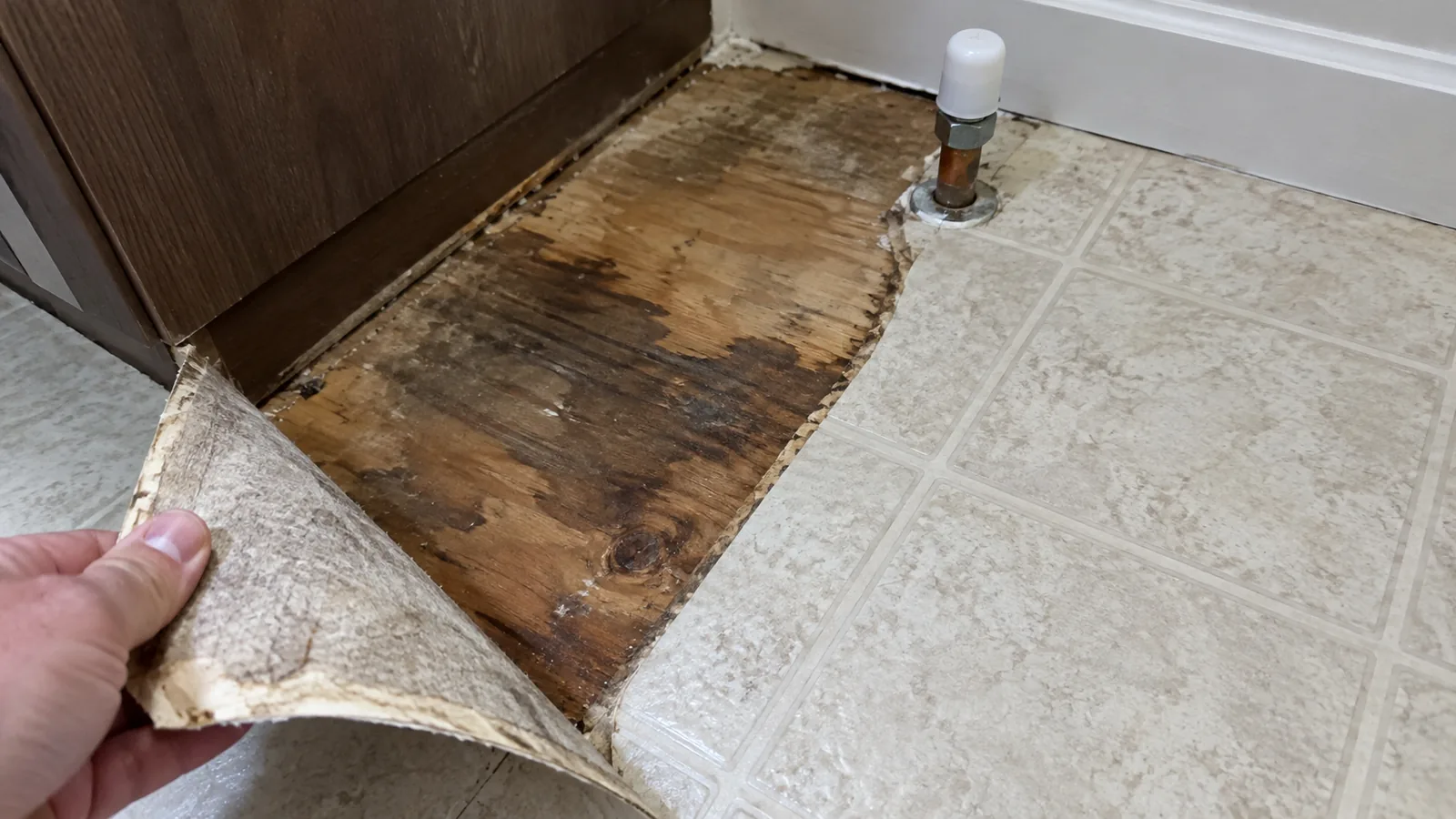
A contingency is money set aside for work nobody can price until it is found, such as rot under a toilet or wiring that is not to code. It is not a fund for upgrades. Treat the percentages below as a guideline, not a rule: HUD's older 203(k) rehabilitation handbook required cost estimates for houses more than 30 years old to carry a reserve of at least 10 percent of the rehabilitation cost, and no more than 20 percent where major remodelling was planned. A Houzz article by Jeffrey Veffer (August 2025) recommends setting aside 20 percent for unknowns.
- Cosmetic work only: paint, a fixture swap, nothing opened upTowards 10 percent of the priced work.
- Floors or walls come up, plumbing or wiring is touchedAround 15 percent, and ask each contractor how they price what they find.
- Older house, water damage likely, or a layout changeTowards 20 percent, and consider an inspection before you set the budget.
Put the contingency on its own line in the spreadsheet so it stays visible. If you have to cut the budget, cut scope, not the contingency.
Step 5: Turn the budget into contractor questions
Your line items are now the best contractor brief you have. Send the same scope to every contractor, ask for an itemised quote, and compare each quote against your lines rather than against each other's totals. A low total that leaves out disposal or the permit is not cheaper. If you need a fuller written brief first, our guide to writing a design brief with AI has a template.
Here is my scope and line-item budget. Write two things. First, a list of questions to ask a contractor before they quote, covering what is included, what is excluded, allowances for materials I have not chosen, who pulls the permit, how they price problems found after demolition, cleanup and disposal, timeline, payment schedule and warranty. Second, a blank quote comparison table with my line items as rows and three columns for Contractor A, B and C, plus rows for exclusions and allowances. Do not fill in any prices.
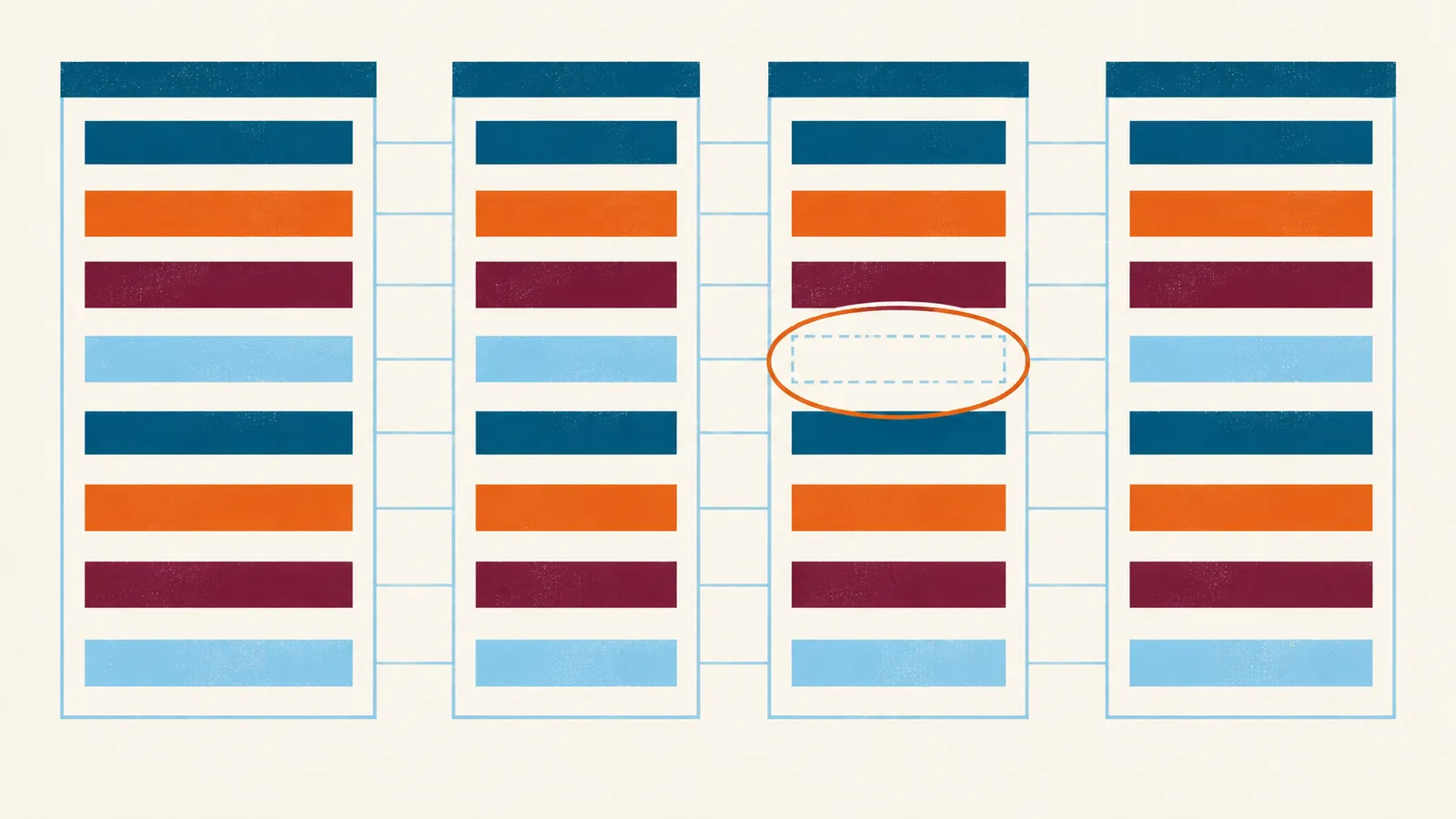
When you get an allowance in a quote, such as a fixed sum for tile you have not picked, check it against the retailer price you sourced in step 3. An allowance well below the product you want becomes an extra later.
Worked example: a small bathroom refresh
This example shows the method, not the market. Every price below is an example input chosen to make the arithmetic easy to follow. None is a real or current market price. Replace each one with your own sourced figure. The job: a 5 x 8 ft bathroom keeps its tub and tiled surround, and gets a new 30 in vanity, faucet, toilet, mirror and light, a new floor, and paint. For the vanity size and the clearances around it, see our bathroom vanity size guide.
| Line item | Quantity and formula | Example input | Group |
|---|---|---|---|
| 30 in vanity with top | 1 | $650 | A Fixtures |
| Faucet | 1 | $150 | A Fixtures |
| Toilet | 1 | $300 | A Fixtures |
| Mirror and vanity light | 1 each | $250 | A Fixtures |
| Floor material | 40 sq ft + 10% waste (rule of thumb) = 44 sq ft x $4.00 | $176 | B Materials |
| Underlayment, adhesive, grout | 1 lot | $80 | B Materials |
| Paint and supplies | 1 lot | $120 | B Materials |
| Plumbing labour: vanity, faucet, toilet | 1 job | $900 | C Labour |
| Flooring labour: remove and install | 40 sq ft | $800 | C Labour |
| Electrical labour: light swap | 1 job | $250 | C Labour |
| Permit allowance (confirm locally) | 1 | $150 | D Permit and disposal |
| Disposal and haul-away | 1 | $200 | D Permit and disposal |
| Subtotal | $4,026 | ||
| Contingency | 15% x $4,026 = $603.90 | $604 | E Contingency |
| Budget | $4,630 |
- AFixtures: vanity, faucet, toilet, mirror and light, $1,350.
- BFloor and paint materials, including the waste allowance, $376.
- CLabour: plumbing, flooring and electrical, $1,950.
- DPermit allowance and disposal, $350.
- EContingency at 15 percent of the subtotal, $604.
Two things in this example are worth copying. The floor line shows its formula, so you can check it when the contractor measures 42 sq ft, not 40. And the permit is an allowance marked "confirm locally", because whether a permit is needed and what it costs is set by your building department, not by a chatbot. The total also sits far below the $26,138 national Cost vs Value midrange bath. That is expected rather than a discount: the example keeps the tub and surround and uses example inputs, so the two are not comparable line by line. A smaller scope should land well below the defined job.
Where AI cost numbers go wrong
None of these failures is rare, and each has a simple fix that keeps the chatbot in the job it does well.
| Failure | Why it happens | Fix |
|---|---|---|
| Stale prices | Models are trained up to a cutoff and do not know later prices unless a search tool is used | Replace every figure with a dated source; re-check prices older than a few months |
| National averages used as local prices | Published averages describe a defined job, not yours, and vary between markets | Use regional data for a sanity check and local quotes for the line items |
| Regional labour rates | Labour availability and rates differ by area, and labour is often the largest share | Ask at least three local contractors for itemised quotes |
| Permits left out or guessed | Requirements and fees are set by each local building department | Check your building department's site and ask who pulls the permit |
| Hidden conditions | Rot, old wiring or a damaged subfloor only show once something is opened | Carry a contingency and agree how discoveries are priced before work starts |
| Arithmetic slips | Totals drift when a chat recalculates from memory between messages | Keep formulas in a spreadsheet; ask the chatbot to recheck it, not to own it |
| Invented sources | OpenAI lists fabricated citations among known hallucinations | Open every link; delete any figure whose source you cannot read yourself |
To check the maths without handing over control, upload your spreadsheet and ask: "Recalculate every line total and the subtotal from the quantities and unit prices in this file. List any line where my total differs from yours. Do not change any price." ChatGPT's data analysis reads .xlsx and .csv files and can run Python for calculations; OpenAI advises reviewing the generated code and assumptions before relying on the result.
What not to paste into a chatbot
A budget needs measurements and a scope. It does not need your address, your name, or a contractor's signed contract. Google's Gemini Apps privacy notice says human reviewers read some chats and asks users not to enter confidential information they would not want a reviewer to see. OpenAI's data controls let you turn off "Improve the model for everyone" so new chats are not used for training. Before pasting a quote, delete or black out:
- Your street address and any photo that shows it, such as a house number or a view from the window
- Names, phone numbers, email addresses and signatures, yours and the contractor's
- Licence, policy, account and bank details, and any payment terms tied to your identity
- Anything you have agreed to keep confidential under a contract
What the free ChatGPT and Gemini plans cover
Everything in this workflow is text and arithmetic, so the free plans are enough for most budgets. The details below come from each company's own pages, checked in October 2026. Limits change, so confirm them in your account.
| Need | ChatGPT | Gemini |
|---|---|---|
| Free text chat | Yes; OpenAI's free tier FAQ describes unlimited everyday text chats, subject to abuse safeguards | Yes; $0 a month with a Google Account |
| Upload a spreadsheet or quote | Yes, with separate usage limits on the free tier | Yes; Google's file upload help covers spreadsheets and documents, with rolling limits that rise on paid plans |
| Calculations from a file | Data analysis runs Python on uploaded files | Ask for a table, then use Export to Sheets and keep the formulas there |
| Keep the project together | Projects hold chats, files and instructions for signed-in users, subject to plan | Chats stay in your activity when Keep Activity is on |
| Paid plans add | Higher limits on files, data analysis and tools | Higher usage limits and more models |
If you are choosing between the two for wider room planning, our ChatGPT vs Gemini comparison covers where each fits.
What to do next
- Measure the room and write the scope: remove, install, keep, and the age of the house.
- Run the gap-finding prompt, then the line-item prompt, with prices left blank.
- Move the table into a spreadsheet and fill every price from a dated source.
- Add a contingency line of 10 to 20 percent, as a guideline, based on what will be opened up.
- Send the same scope and questions to three contractors and compare quotes line by line.
The AI total you started with should be gone by the end. What remains is a priced list you can defend line by line. If the project also involves new furniture, our ChatGPT room design prompts include one for splitting a furnishing budget.