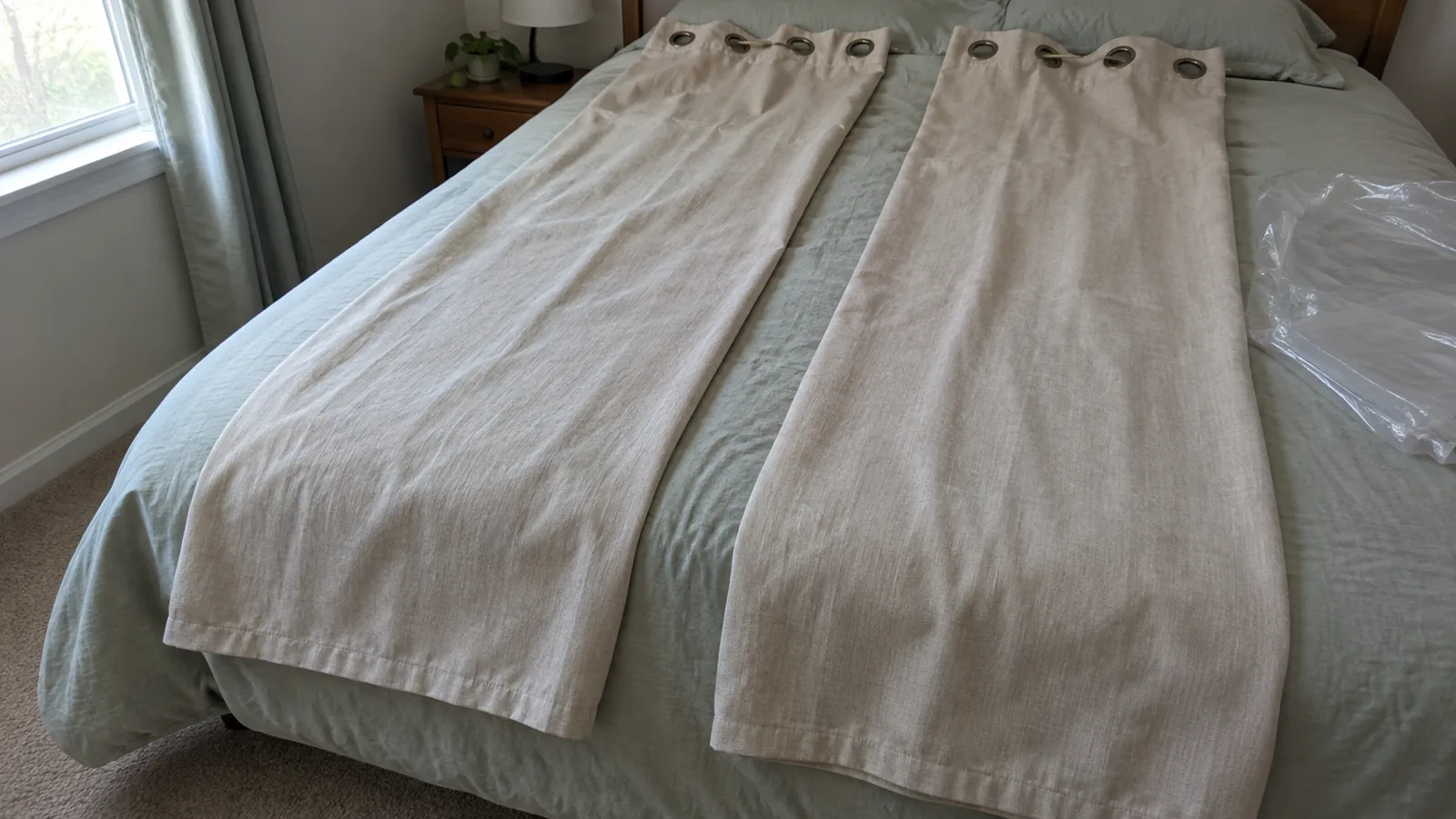
How many curtain panels do you need?
For flat ready-made panels: panel count = rod width x fullness / individual panel width, rounded up. Fullness means the amount of flat fabric relative to the width it covers. A 2x allowance is a useful planning example, not a requirement for every heading or fabric. Pre-pleated curtains may be sold by their finished gathered width; do not double that figure again.
| Rod or track width | Flat panel width | 2x target | Panels to reach target |
|---|---|---|---|
| 60 in (152 cm) | 52 in (132 cm) | 120 in (305 cm) | 3 |
| 72 in (183 cm) | 52 in (132 cm) | 144 in (366 cm) | 3 |
| 96 in (244 cm) | 52 in (132 cm) | 192 in (488 cm) | 4 |
| 144 in (366 cm) | 52 in (132 cm) | 288 in (732 cm) | 6 |
These are arithmetic totals. For a balanced centre opening, an even count is usually easier: the 60 in and 72 in examples could use four narrower panels or two wider ones. Three panels can work with an intentionally uneven opening or a one-way draw. Decide how the curtains should open before rounding a purchase up to the next pair.
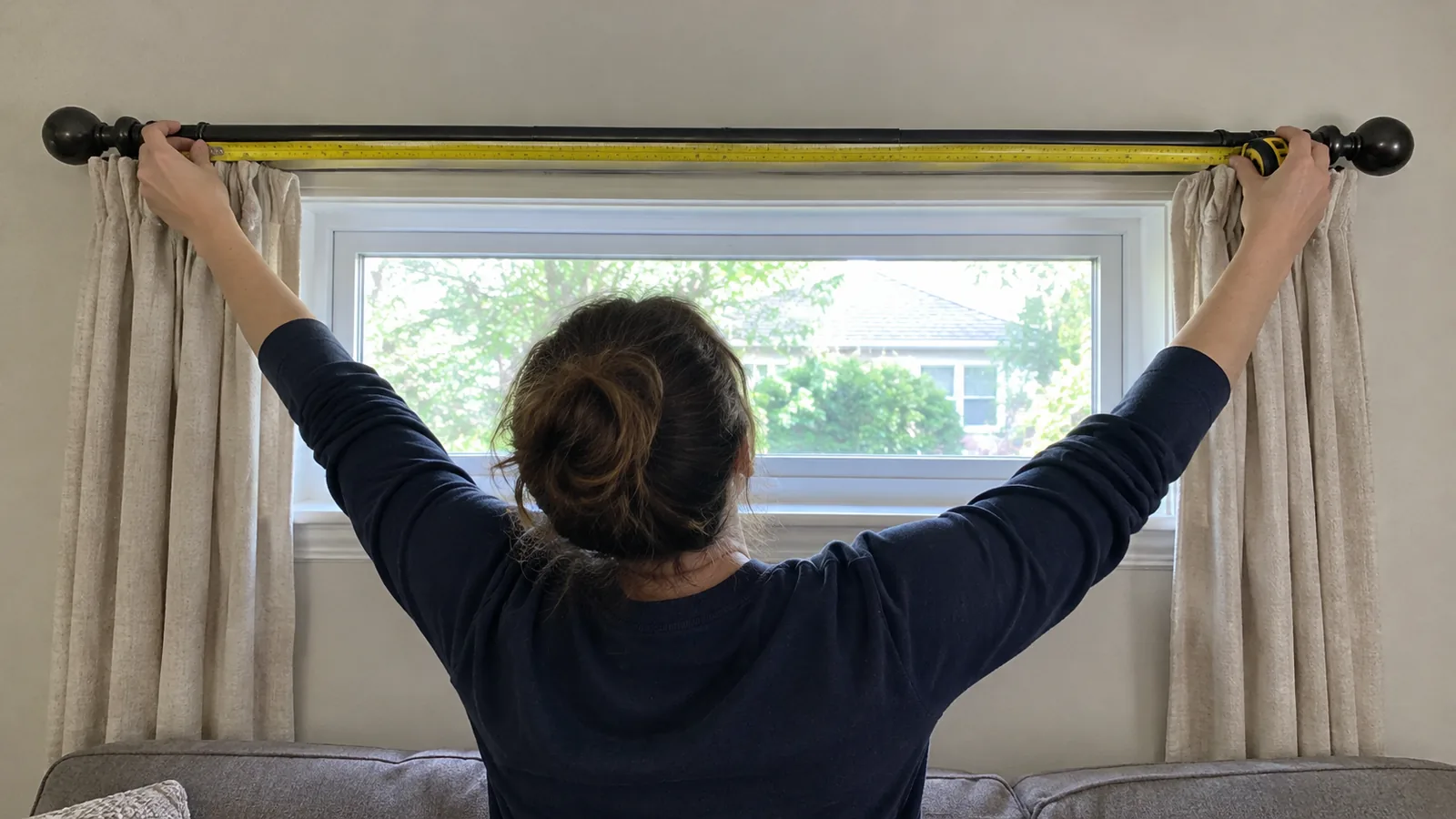
Measure the rod, then check the listing
Install or specify the rod first, including any extension beyond the window. Measure the usable span without the finials. For a curved or return track, ask the supplier which parts of the track its sizing formula includes. Do not replace the track measurement with a straight line across the glass.
The John Lewis curtain guide makes the distinction between pole measurement and window width, and between ready-made and pre-pleated headings. Apply the instructions for the heading you are actually buying.
| Listing wording | What to establish before ordering |
|---|---|
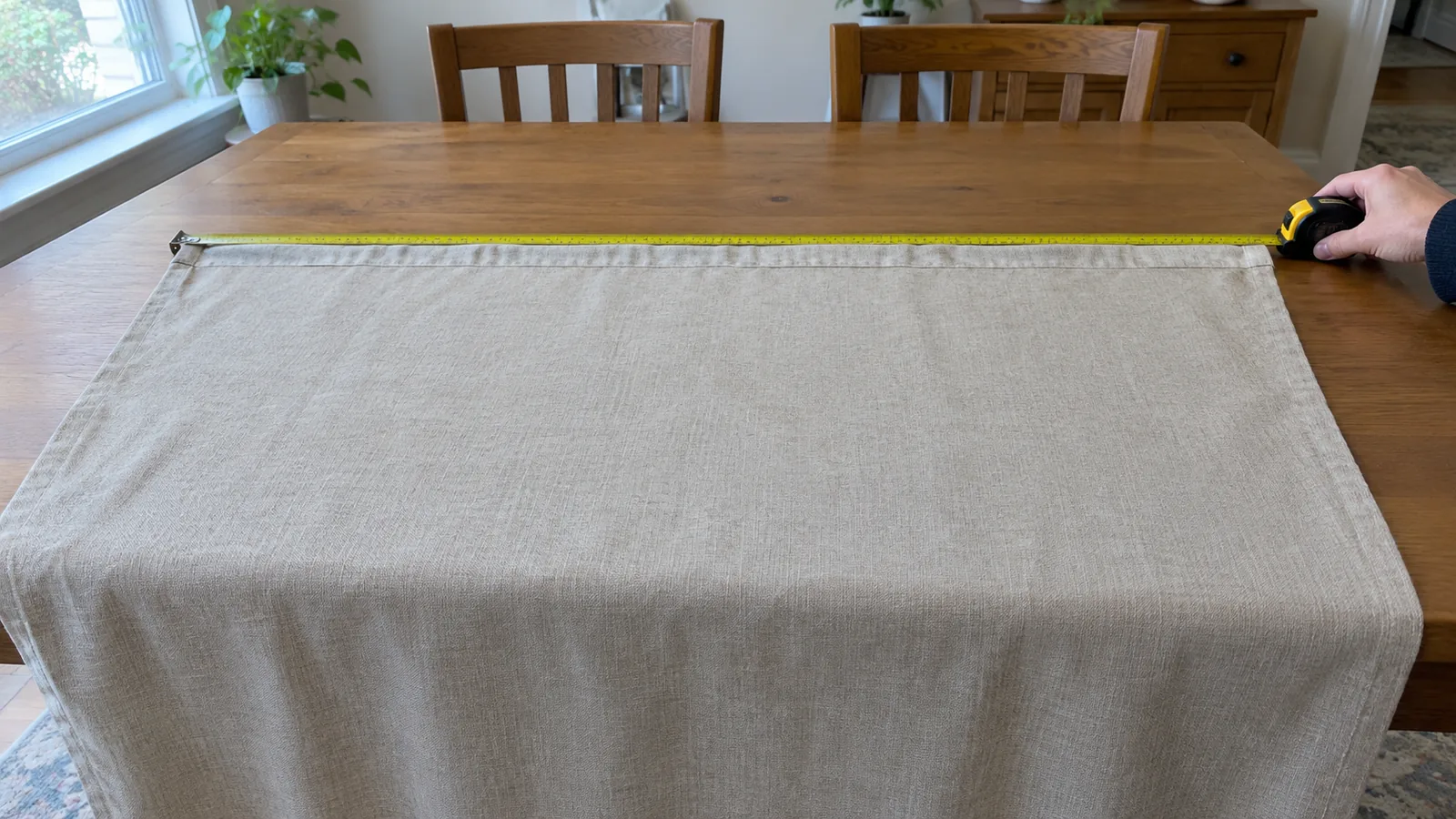
| One panel, 52 in wide | Is 52 in the flat width of one panel? Order the required panel quantity. |
| Pair, each panel 52 in wide | Two panels give 104 in (264 cm) of flat fabric. |
| Pair, 104 in total width | The total may be the same pair above; do not assume each is 104 in. |
| Finished pleated width | Ask how much track the pair covers; flat-width fullness maths may not apply. |
Keep a screenshot of the size and quantity you selected. The title of a listing can describe several sizes while the selected variant describes only one.
A worked example for a 96 in rod
Suppose your installed rod is 96 in (244 cm) wide and the curtains are sold as single flat panels 52 in (132 cm) wide. At 2x fullness you want 192 in (488 cm) of fabric. Divide 192 by 52: 3.69. Round up to four panels. Their combined flat width is 208 in (528 cm), giving about 2.17x fullness.
Four single panels means four units. If the same panels come in pairs, it means two packs. Two 100 in (254 cm) flat panels are another option, provided the heading and draw arrangement suit the rod. Matching the fabric total does not guarantee that separate panels slide as one curtain.
Choose the length from the hanging point
Measure where the curtain actually hangs, not simply the top of the rod. Ring clips add a drop below the rod. Hooks sit at a particular pocket position. Grommets leave some fabric above their opening. Follow the product's measuring diagram, then measure to the intended hem at several points if the floor slopes.
| Length choice | Buying check |
|---|---|
| 84 in (213 cm) | Only suitable if your hanging-point-to-hem measurement matches; it is not a default for every room. |
| 96 in (244 cm) | Useful when the hanging point is higher, but still measure before choosing. |
| 108 in (274 cm) | Check whether it needs hemming rather than allowing accidental pooling. |
| Custom or hemmed | Confirm whether the ordered length includes the heading above the hanging point. |
For a sliding door or busy walkway, prefer a hem that clears the floor rather than fabric underfoot. Check wash-care and shrinkage instructions before hemming. For the visual effect of rod height, use the short curtain proportions check; this page is about ordering the correct size.
Grouped windows and sliding doors
For several windows under one continuous rod, use the whole rod span in the calculation. Do not independently double every pane width and then add the spaces between windows a second time. If each window has its own rod, calculate each separately.
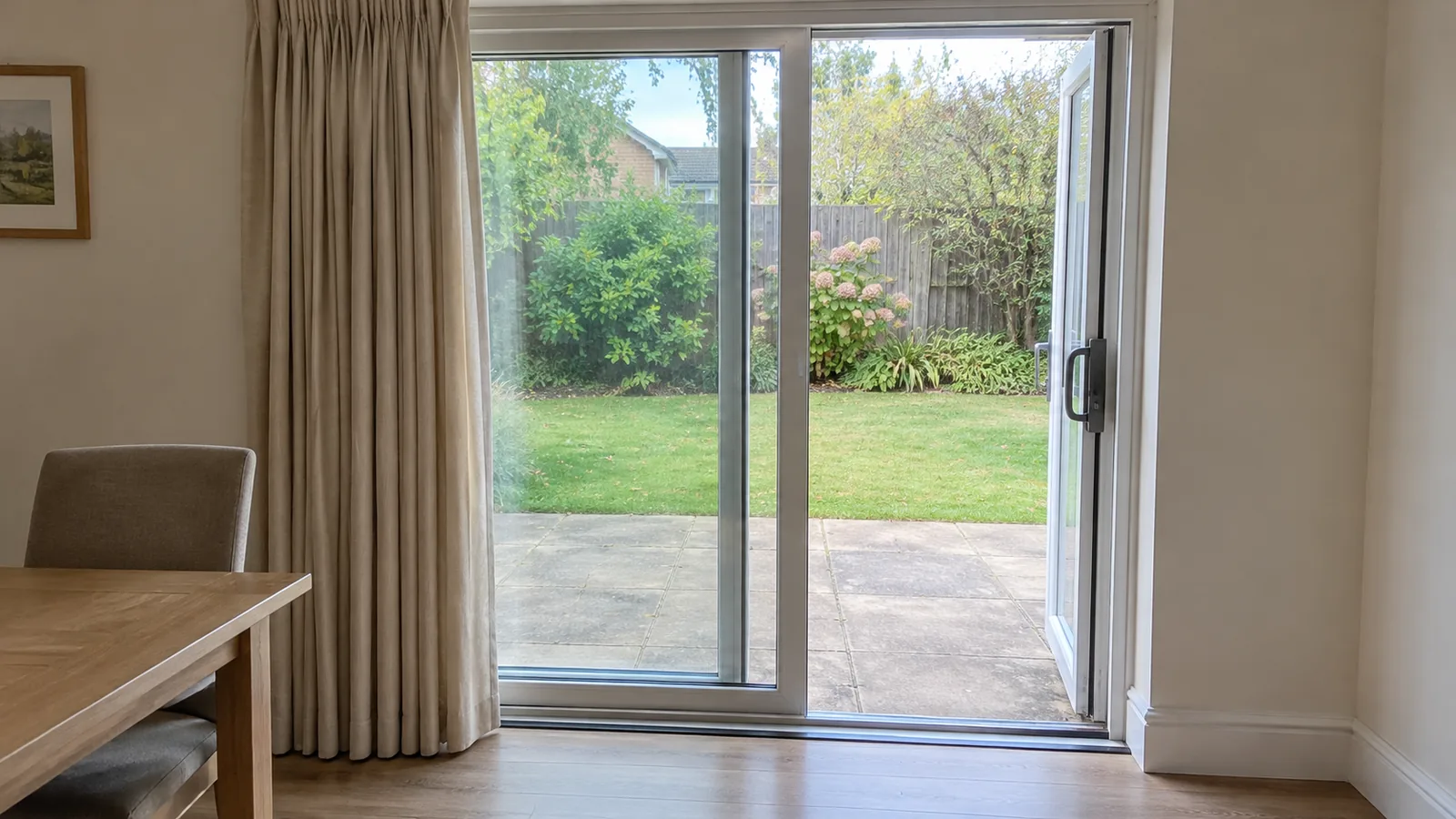
A 144 in (366 cm) track with 52 in panels needs six panels for the 2x example. That arithmetic does not decide where those panels stack when open. On a sliding door, mark the active door side and keep the stack from blocking its handle and passage. A one-way draw may be more useful than a symmetrical centre opening.
| Situation | Separate decision from fabric quantity |
|---|---|
| Grouped windows | One continuous span or separate rods? |
| Sliding door | Which side must stay clear for access? |
| Heavy lining | Can the hardware carry the chosen fabric and extra panels? |
| Blackout priority | Will side returns, centre overlap and top coverage be adequate? |
If darkness is the main aim, compare blackout and room darkening curtains. Extra width helps folds and overlap, but it does not close every installation gap.
Before you place the order
- Write down the rod/track width and intended opening direction.
- Confirm flat width or finished width, and the manufacturer's heading allowance.
- Calculate the panel total, then convert it into packs.
- Measure the length from the correct hanging point.
- Check stack space, bracket load, care instructions and return terms.
Order the size that works when closed and when open. If the listing leaves panel width or pack quantity ambiguous, get a written answer from the seller before buying.