
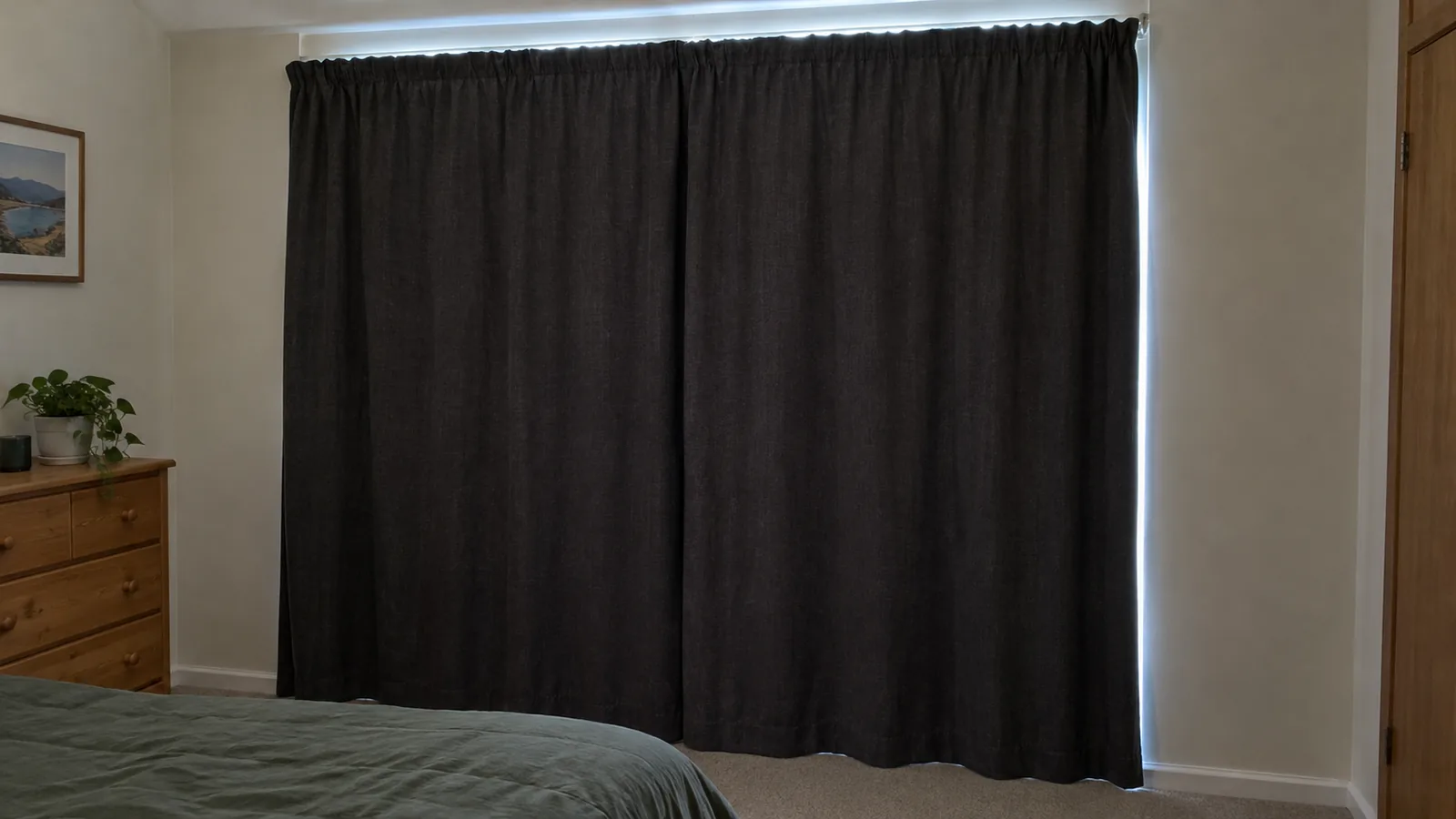
Blackout vs room darkening at a glance
Choose blackout when reducing light is the main priority. Choose room darkening when a dimmer room is sufficient and you prefer that curtain's fabric or drape. Before ordering, look for the exact model's performance explanation. There is no single percentage table established by the sources checked here that reliably describes every curtain using these labels.
| Question | Blackout | Room darkening |
|---|---|---|
| Intended effect | Stronger light blocking | Reduces light without necessarily aiming at total darkness |
| What to check | Model-specific fabric or lining claim | How much filtering the exact variant promises |
| Can light escape at edges? | Yes | Yes |
| Enough to specify only the label? | No | No |
Hunter Douglas distinguishes opacity levels for window shades and identifies blackout as the highest light-blocking option. That is useful terminology context, not a test result for a curtain from another manufacturer.
Fabric, lining and colour variants
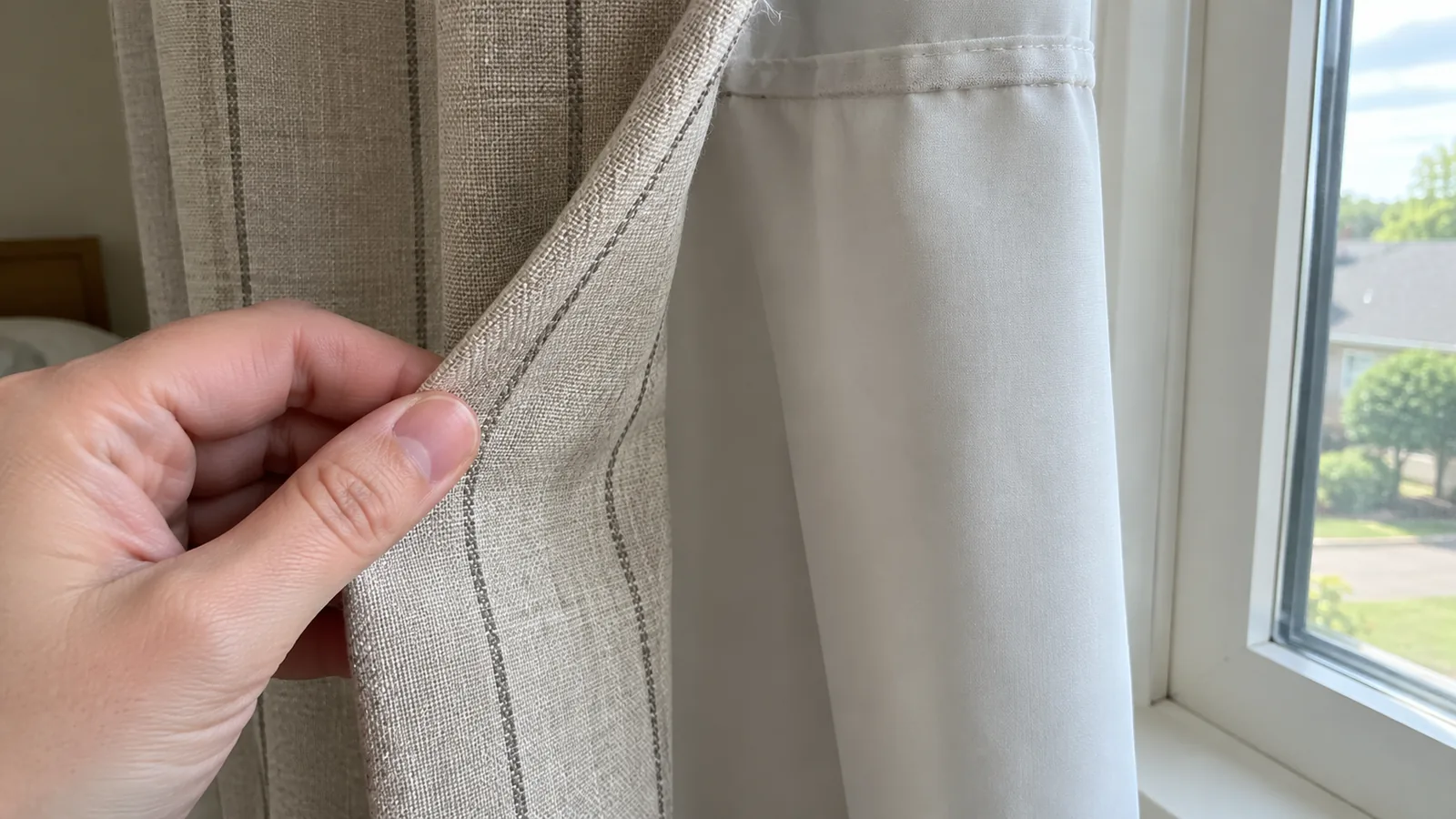
Check whether the curtain uses a separate lining, an applied backing or a dense woven construction. A decorative face fabric may appear thin while the lining does the blocking. Conversely, a dark-coloured unlined curtain can look opaque in a product photo without controlling a bright window sufficiently.
Read the selected colour and size's description. Do not transfer a claim from one lined variant to another unlined version in the same range. If the shop offers samples, examine the exact face-and-lining combination against daylight. A small sample helps you inspect the material; it cannot demonstrate the finished room's edge coverage.
| Product statement | Useful follow-up |
|---|---|
| Blackout fabric | Does the claim cover this exact colour and construction? |
| Room darkening | Is there a defined test or simply a descriptive label? |
| Thermal lining | What separate light-blocking claim is made? |
| Washable | Does the care label specify temperature, drying or ironing limits? |
Thermal performance, acoustic performance and light blocking are different properties. Do not assume a blackout label guarantees insulation or soundproofing. Use a separate product specification for those claims.
Is the light coming through or around the curtain?
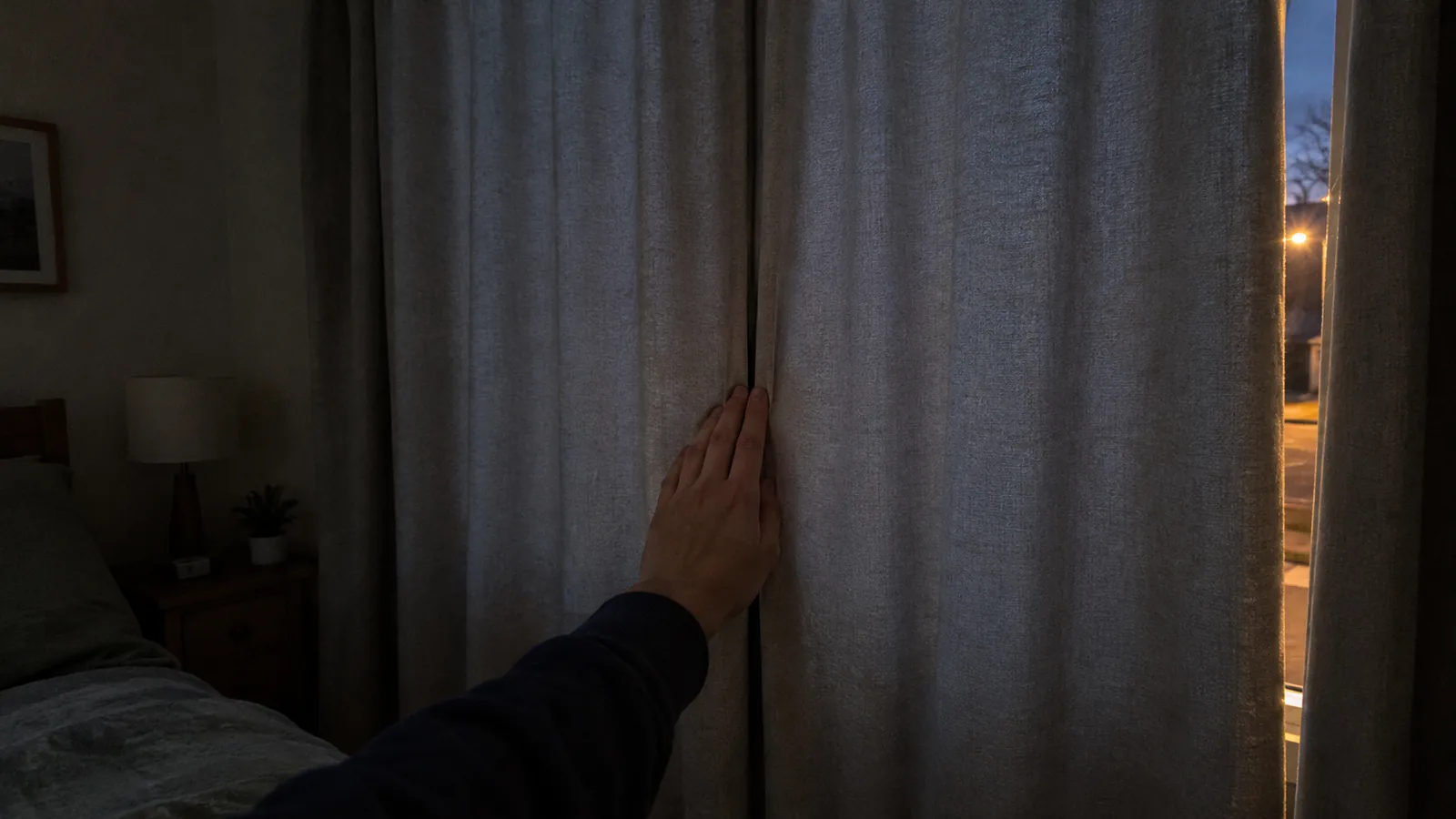
Close the curtains during the light conditions that bother you. Inspect the middle of the fabric first, then the top, sides, centre join and bottom. If the fabric itself glows, changing hardware may not solve the material problem. If the centre is dark but the edges glow, examine coverage before buying a different fabric.
| Where light appears | Check first |
|---|---|
| Across the middle | Fabric/lining performance and selected variant |
| Above the rod | Distance from wall, heading and top coverage |
| Beside the panels | Rod extension, wall return and stack position |
| At the centre | Overlap, movement and whether panels actually meet |
| Below the hem | Hem position and whether shortening created a gap |
For rental rooms, decide which reversible hardware changes are allowed before ordering a new rod. Keep curtains clear of heat sources according to the appliance and curtain instructions.
Panel fullness is not the same as complete coverage
A generous amount of fabric gives folds and can help the panels meet, but it does not automatically fill a gap above a grommet heading. Hardware that holds the fabric far from the wall can admit side light even when the panels are wide enough.
Use the curtain size guide to calculate flat-fabric quantity and pack counts. Then separately check the route the curtain takes to the wall and how it closes. For a sliding door, preserve access to the handle and passage while considering which side the panels stack on.

| Fabric decision | Installation decision |
|---|---|
| Blackout or room darkening construction | Rod/track position and wall distance |
| Lined or unlined variant | Side coverage or return arrangement |
| Quantity and length | Centre meeting/overlap and bottom coverage |
A second fitted shade or blind may help where the room needs more darkness than curtains alone provide, but compare its own edge coverage and fitting instructions. Adding layers without measuring can leave the same light path open.
Which should you choose for a bedroom?
Start with blackout if
- Streetlights shine directly at the window.
- You need to sleep after sunrise or during daylight.
- You are prepared to address edge coverage too.
Room darkening may be enough if
- Your aim is a dimmer room rather than maximum darkness.
- A sample of the selected fabric meets your needs.
- You prefer its drape and accept some remaining light.
These are buying criteria, not medical claims about sleep. If possible, start with one window and test the closed installation before duplicating it throughout the house. Return policies can differ for custom-sized and ready-made curtains.
Before you replace the curtains
- Identify through-fabric light versus edge light.
- Check the exact variant's lining and performance claim.
- Measure the installed rod/track and hanging point.
- Plan the top, side, centre and bottom coverage.
- Check care, hardware load and return terms.
Keep the answer proportionate to the problem. If the fabric is doing its job and one side gap is bright, investigate that gap first. If light passes through the centre, choose a better-supported fabric specification. For rod height and the room's visual balance, use the curtain proportions check.