
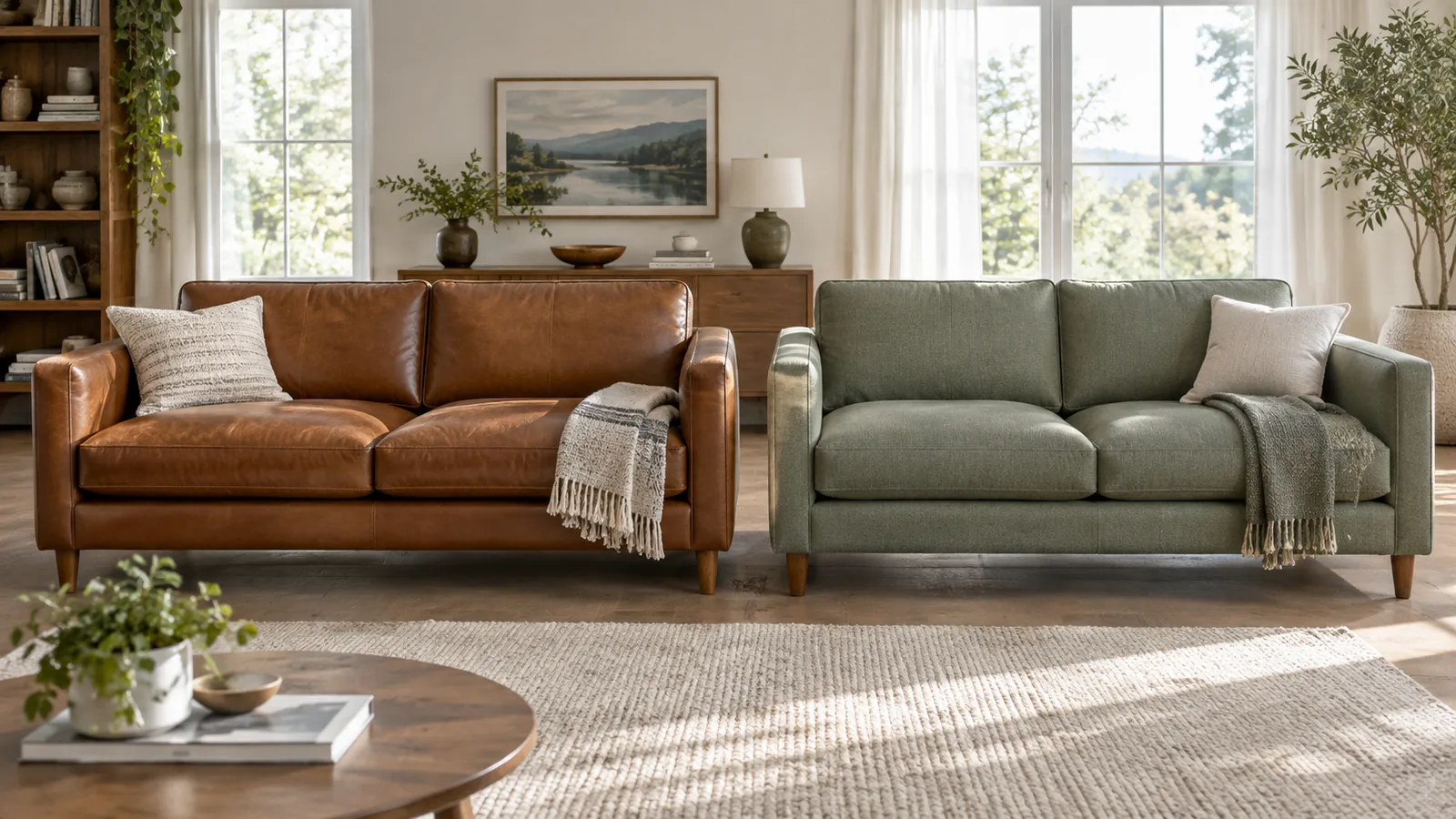
Quick verdict
Choose leather if
- Spills are a daily event: children, snacks, drinks
- You have a dog that sheds, or allergies to dust or dander
- You want a sofa that ages into its look rather than wearing out
- You can afford full-grain or top-grain, not bonded
Choose fabric if
- You want warmth and softness in every season
- You have cats that scratch, and choose a tight weave
- You want a specific colour, pattern, or texture
- You are working to a budget
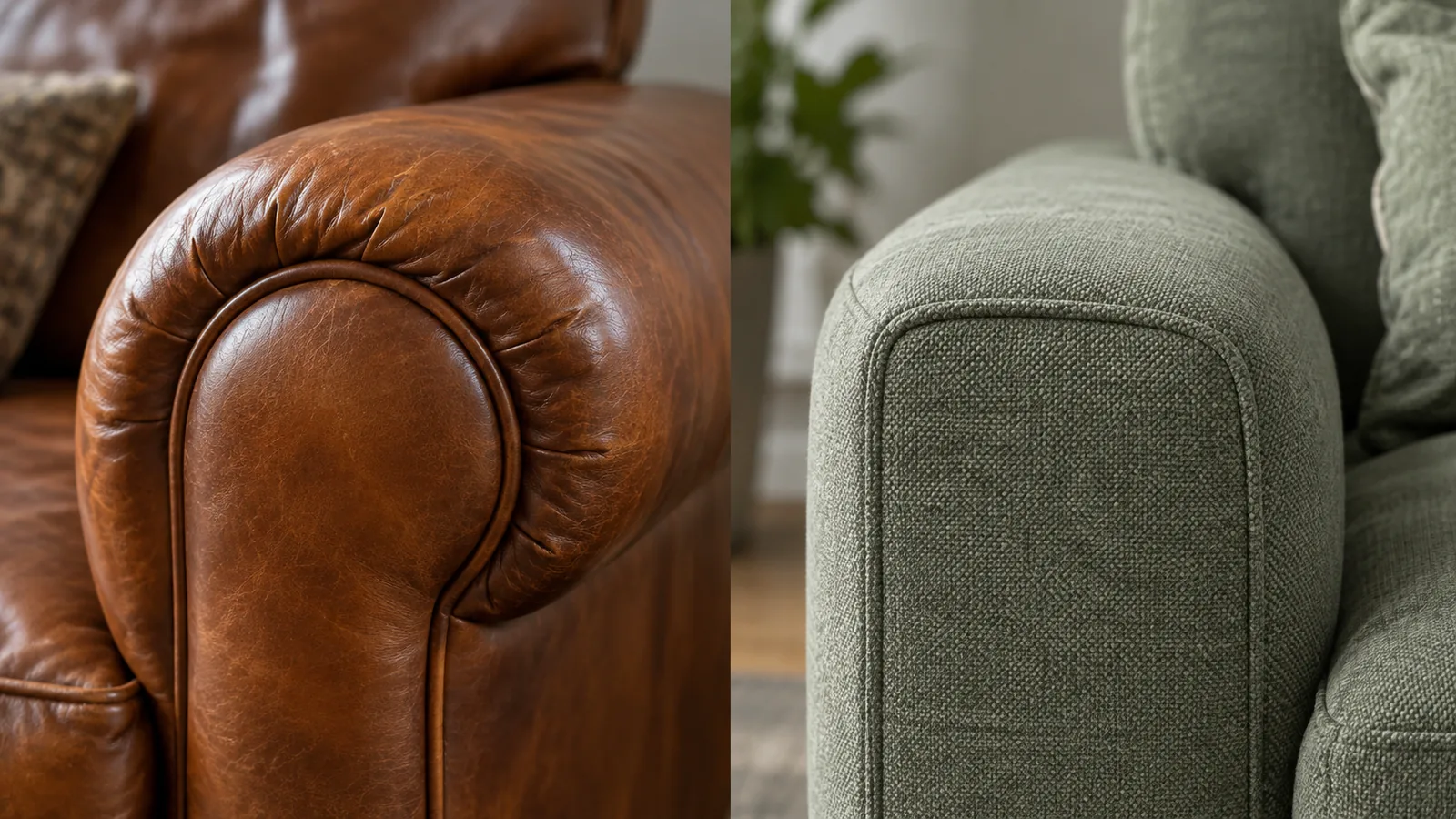
Leather vs fabric scorecard
This is our assessment for real leather (full-grain or top-grain) against a tightly woven synthetic or performance fabric. The closer a dot sits to one end, the more clearly that material wins.
Three of those rows deserve a closer look. Spills: finished leather lets a drink bead on the surface long enough to wipe it away, while most fabrics absorb it within seconds. Pet hair: fur slides off leather and clings to fabric, especially velvet and chenille. Cat claws: claws puncture leather and leave marks for good, while a tight, flat weave gives them nothing to catch on.
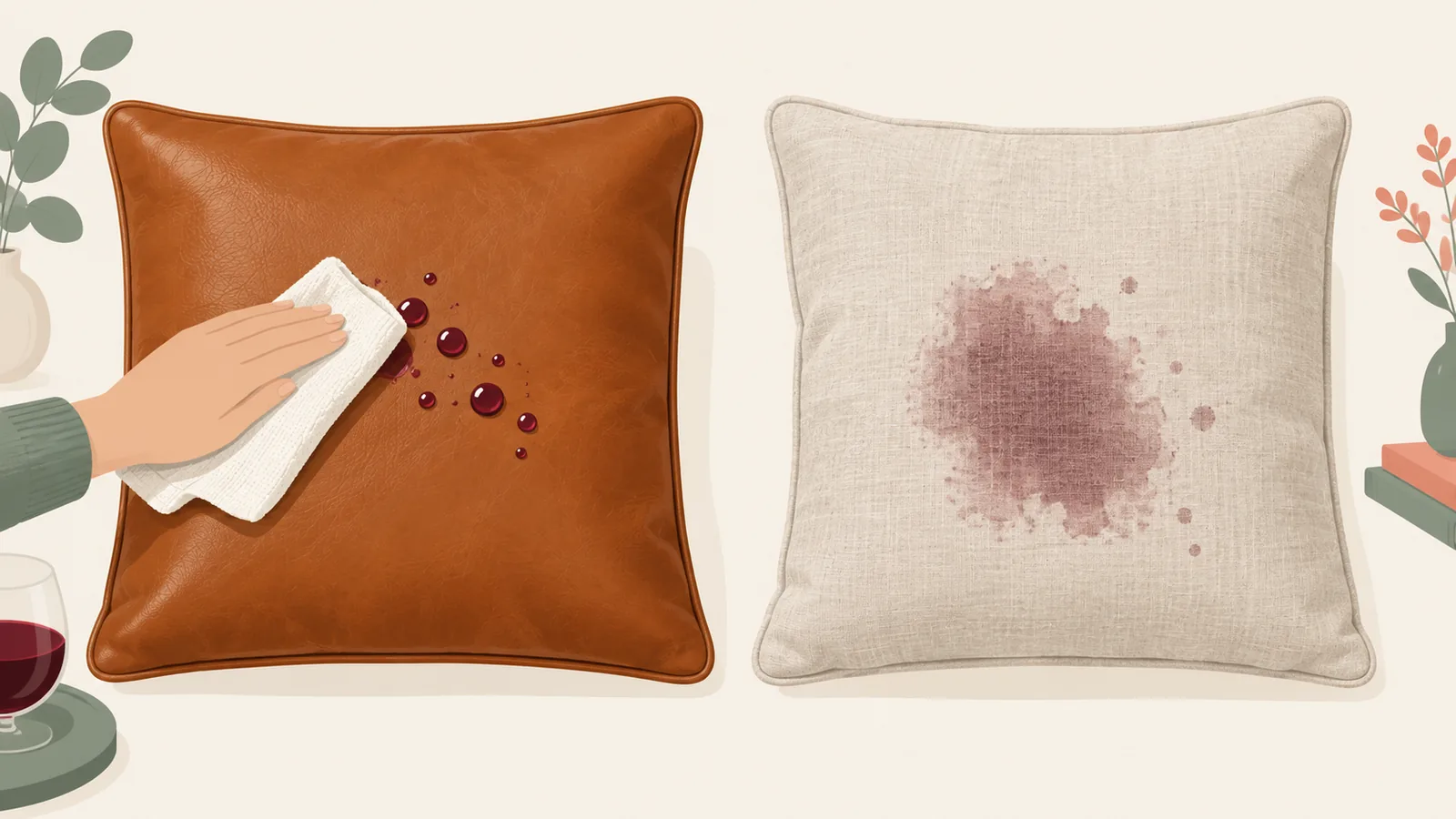
Leather grades explained
A hide is thicker than a sofa cover, so it is split into layers. Which layer you get, and how its surface is treated, decides how the leather wears. Listings rarely explain this, so learn to read the words.
- AFull-grain: the whole grain layer with its natural surface intact. The toughest grade; it develops a patina and shows natural marks.
- BTop-grain: the grain layer with the surface sanded and finished for a uniform look. Slightly less tough, more stain-resistant, and very common on good sofas.
- CSplit, often sold as "genuine leather": the lower layer, embossed and coated to look like grain. Real leather, but weaker and stiffer.
- DBonded leather: leather dust and scraps glued to a backing and coated. It commonly peels and flakes within two to three years of regular use.
Watch for "leather match" too: real leather on the seats and back cushions, vinyl on the sides and back. It is a reasonable way to save money when it is disclosed. Our guide to furniture dupes covers how to spot grades that are not spelled out.
Fabric durability and rub counts
For fabric, the useful number is the abrasion rating: how many times a machine can rub the fabric before it wears through. North American listings quote double rubs from the Wyzenbeek test; European and UK listings quote Martindale cycles. The two tests are not interchangeable, so compare like with like.
- Weave matters as much as fibre. Tight, flat weaves resist snags and claws; loose, loopy textures such as bouclé and open tweeds catch on everything.
- Synthetics and blends (polyester, olefin, nylon, microfibre) generally resist wear and stains better than pure linen or cotton, which feel lovely but mark and wrinkle easily.
- Performance fabrics are treated or engineered to repel liquids and resist stains. Check what the treatment covers and whether it needs reapplying after cleaning.
- Removable covers are worth a lot on a family sofa, provided the care label allows washing.
Pets, kids, and allergies
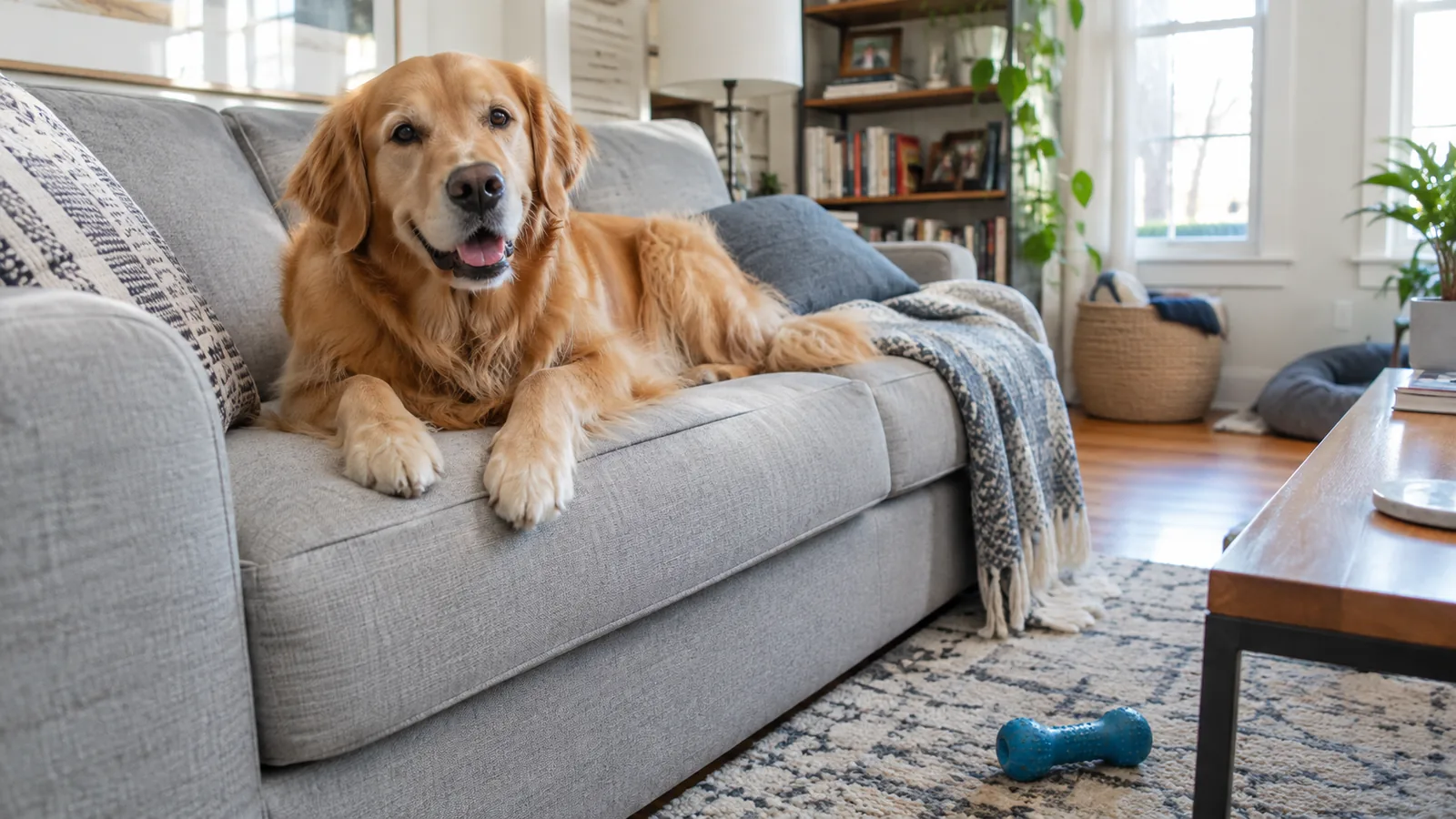
- Dogs: leather is easier. Hair does not cling, drool and muddy paws wipe off, and dogs rarely scratch deliberately. Expect light surface scratches, which full-grain leather tends to absorb into its patina.
- Cats: a tight, flat-woven synthetic or microfibre is usually safer than leather, which claws puncture, and far safer than loopy textures.
- Children: leather handles spills and sticky hands; a performance fabric with washable covers is the fabric equivalent.
- Allergies: smooth leather does not hold dust mites, pollen, and dander the way upholstery fabric does, and a damp cloth removes what settles on it.
Cleaning and care
| Leather | Fabric | |
|---|---|---|
| Everyday | Dust and wipe with a soft, slightly damp cloth | Vacuum weekly with an upholstery brush |
| Spills | Blot immediately; do not rub or soak | Blot, then treat according to the cleaning code |
| Periodic care | Condition as the maker recommends to prevent drying and cracking | Deep clean or wash covers as the care label allows |
| Keep away from | Direct sun and radiators, which dry and fade it | Direct sun, which fades many fabrics |
| Hardest stains | Ink and dye transfer from jeans | Oil, grease, and red wine |
Before cleaning any fabric sofa, find its W, S, W/S, or X cleaning code: it decides whether water, solvent, or only vacuuming is safe. Our guide to cleaning a fabric couch explains every code and stain.
Cost and lifespan
Real leather usually costs more upfront than fabric on a comparable frame. A well-cared-for full-grain or top-grain leather sofa can outlast several fabric covers, while bonded leather is the cheapest option and often the shortest-lived. For fabric, lifespan depends on the rub count, the weave, and whether you can replace or wash the covers.
Either way, the cover is only part of the story. The frame, springs, and cushion foam decide how long any sofa stays comfortable, and they are where cheap sofas cut corners. Our guide to when to replace your sofa shows what fails first and what can be repaired.
Which one should you buy?
- Young children or daily spills?Top-grain leather, or a performance fabric with washable covers.
- A dog that sheds?Leather.
- Cats that scratch?Tightly woven synthetic or microfibre.
- Allergies to dust or dander?Leather.
- Hot climate, or a tight budget?Fabric.
- Tempted by cheap "leather"?Check it is not bonded. A good fabric beats bonded leather every time.
Deciding on the shape too? See our sofa vs sectional comparison and the sofa size guide.