
Quick verdict
Choose a sofa (plus chairs) if
- The room is small, narrow, or has doors on several walls
- You host conversations more than movie nights
- You rent, move often, or like to rearrange
- You want to spend less and have more style choice
Choose a sectional if
- You have a corner to fill or an open plan to divide
- Everyone wants to lounge and put their feet up
- The TV is the main focal point
- You plan to stay put for years
The same room, furnished both ways
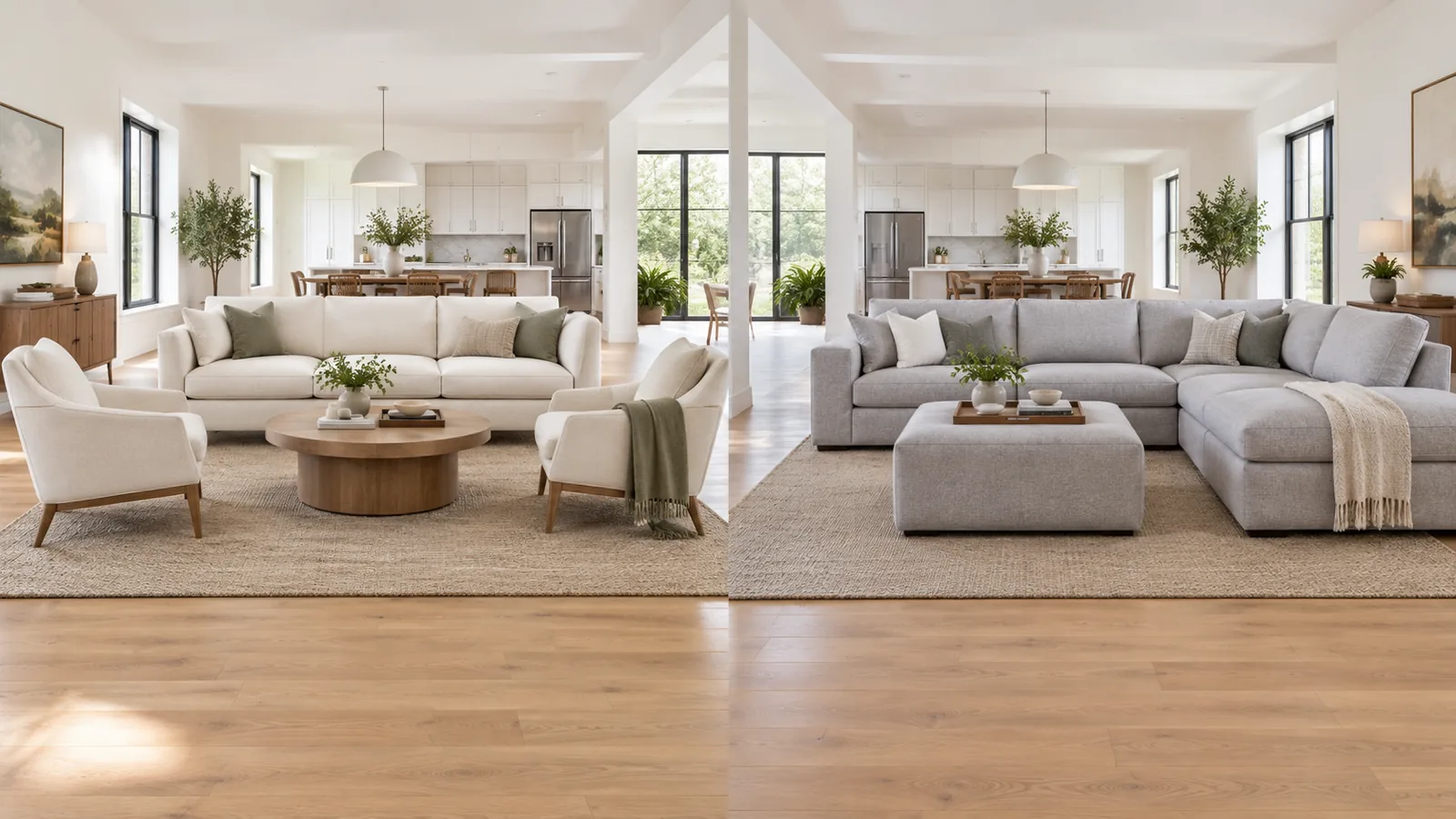
Both plans below show the same 14 x 16 ft living room at the same scale, with the TV on the top wall. On the left, an 84 in sofa faces the TV with two armchairs facing each other across the coffee table. On the right, an L-shaped sectional wraps the corner around a square ottoman.
The seat count is a draw. What changes is the kind of room you get: the chairs make conversation easy and can move to another room when guests leave; the sectional is the better place to watch a film with four people and a blanket. The rest of this guide is about which of those you want most.
Sectional configurations
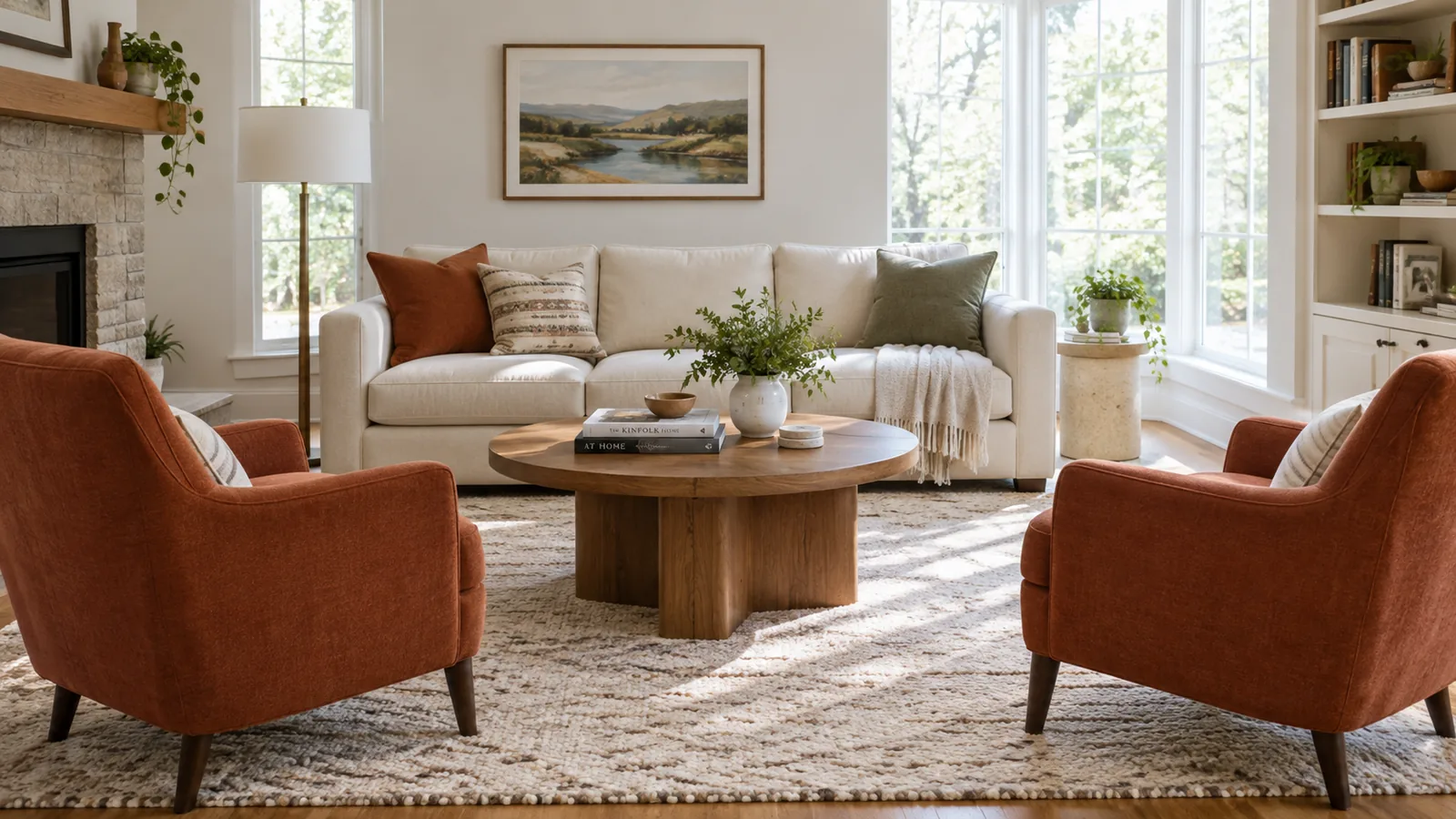
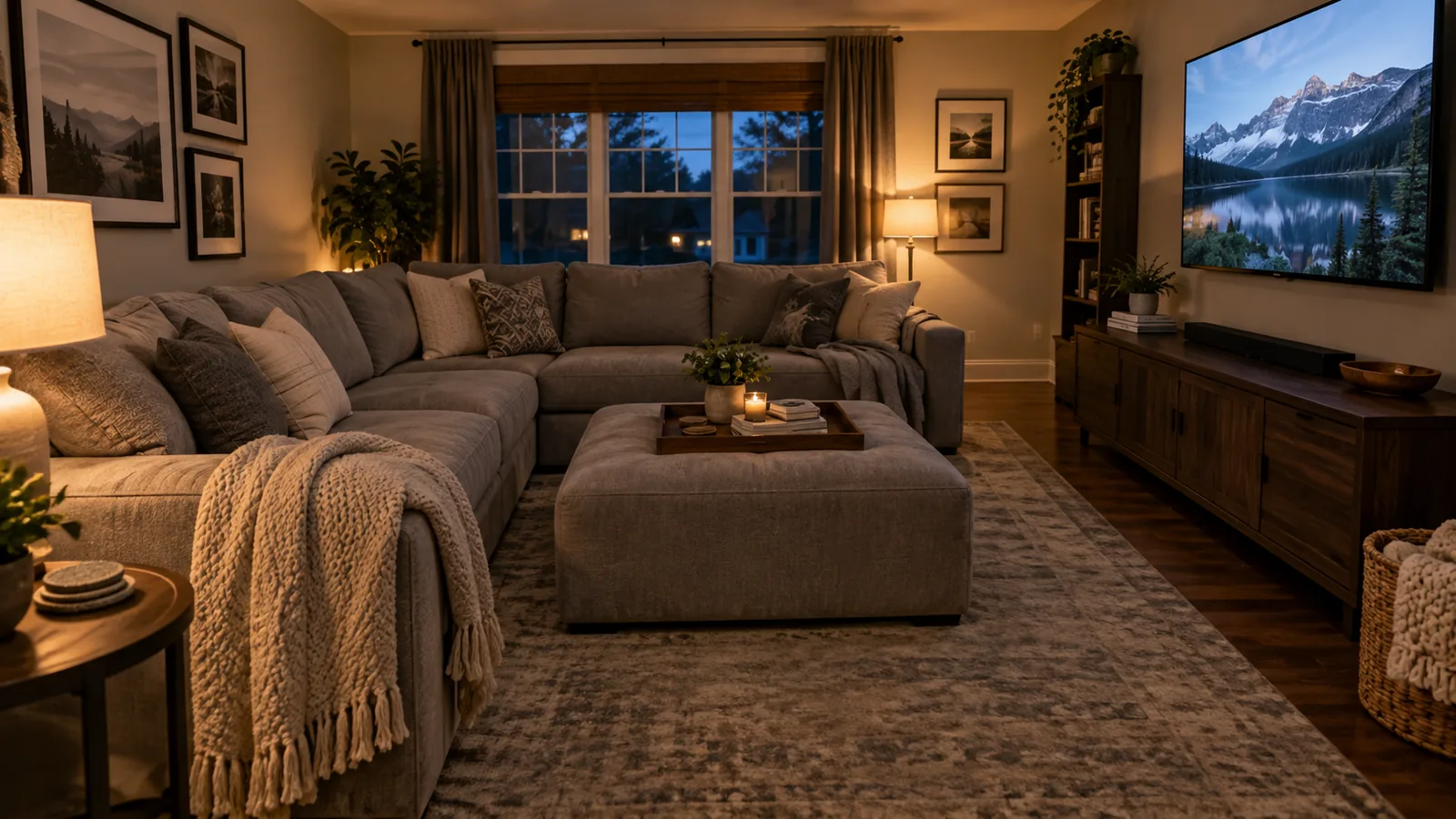
"Sectional" covers several shapes. The configuration matters more than the style, because it decides which walls the piece needs and how many people can sit without taking the corner.
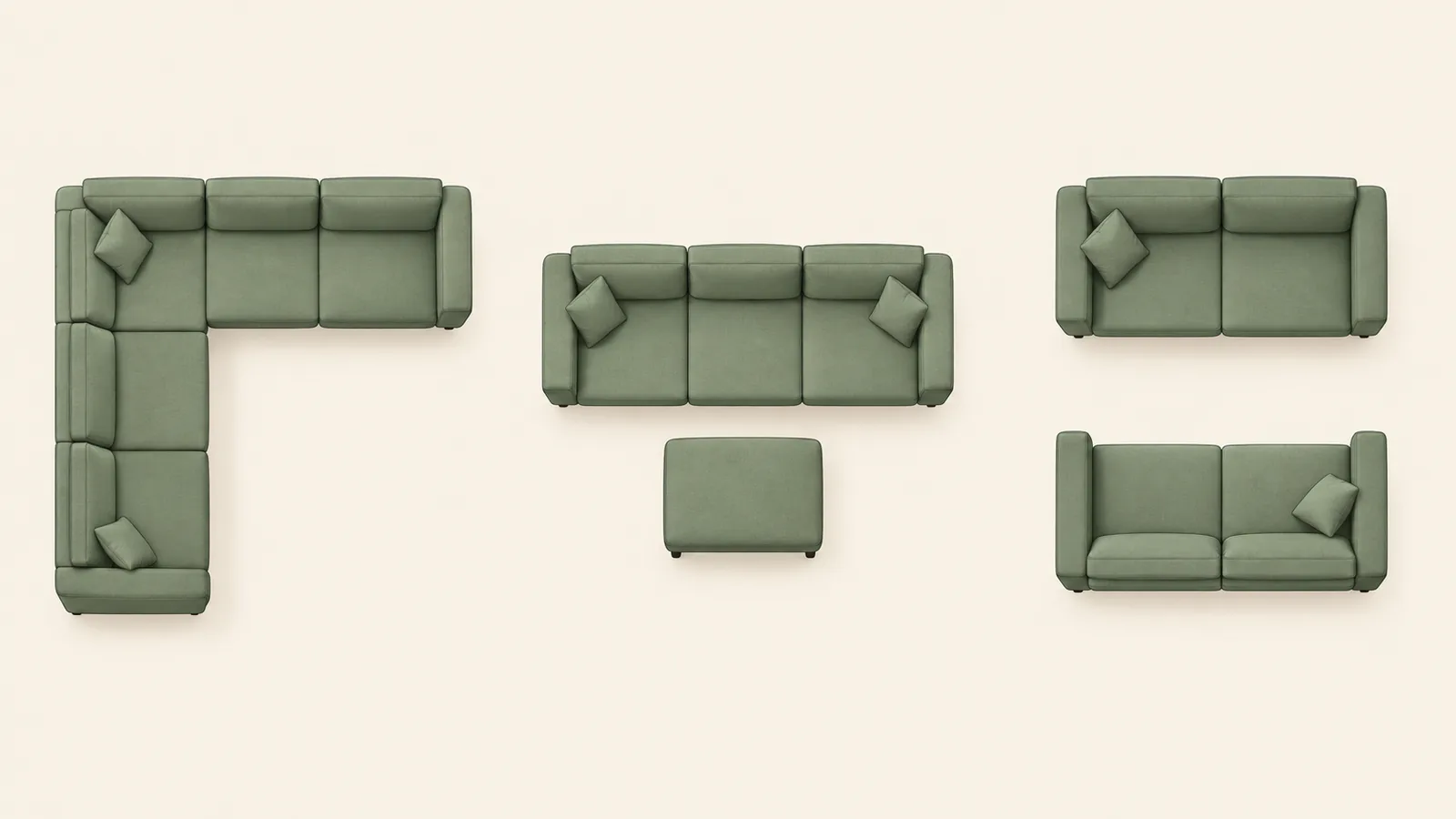
- L-shaped: the classic corner piece. Needs two walls, or a corner of an open plan, and at least 18 in spare at each open end.
- U-shaped: seats the most people but needs a large room, and blocks the path on three sides. Check that nobody has to climb over it to reach a door.
- Chaise sectional: a sofa with one extended seat. The easiest sectional to fit into a small room, and often the best compromise.
- Modular: separate seats, corners, and ottomans that you arrange yourself. The most flexible, and the easiest to move, but the gaps between pieces can shift over time.
Left-arm facing vs right-arm facing
Sectional listings describe pieces as left-arm facing (LAF) or right-arm facing (RAF). The rule catches people out because it is based on standing in front of the piece and looking at it, not sitting on it. An LAF chaise is on your left as you face the sofa, which puts it on your right once you sit down.
Sofa vs sectional, side by side
| Factor | Sofa (plus chairs) | Sectional | Edge |
|---|---|---|---|
| Seats in a mid-size room | About 5 with two chairs | About 5 including the corner | Even |
| Lounging and feet up | One person at a time | Several at once | Sectional |
| Conversation | Chairs face each other | Everyone faces one way | Sofa |
| Small or narrow rooms | Fits the longest wall | Can overwhelm; a chaise sectional is the exception | Sofa |
| Open plans | Needs chairs to define the zone | Defines the zone on its own | Sectional |
| Rearranging and moving house | Easy | Usually fits one layout; modular is the exception | Sofa |
| Delivery through tight doors | One large piece | Several smaller pieces | Sectional |
| Cost | Lower for the sofa alone | Usually higher than a sofa from the same range | Sofa |
Sizing a sectional
- Measure both sides. L-shaped sectionals are often 95 to 125 in on the long side. Both sides need to fit, with at least 18 in (46 cm) spare at each open end.
- Keep the chaise out of the path. A chaise pointing into a walkway shortens it by 60 in or more. The main path needs at least 36 in (91 cm); see our furniture clearance guide.
- Leave room for the coffee table. Keep 14 to 18 in between every seat front and the table or ottoman, which is why a square ottoman often works better than a long table inside an L.
- Count the corner honestly. A five-seat L seats four comfortably.
Our sofa size guide has standard widths for every type, and our living room layout ideas show where a sectional works best, including rooms where the fireplace and TV are on different walls.
Which one should you buy?
- Is the room small, narrow, or full of doors?Sofa, or a compact chaise sectional.
- Do you mostly watch films and lounge together?Sectional, facing the TV.
- Do you mostly talk and host guests?Sofa plus two chairs.
- Do you rent or expect to move within a few years?Sofa, or a modular sectional.
- Is it an open plan that needs a defined living area?Sectional, floated with its back to the path.
Choosing the cover as well? Our leather vs fabric sofa comparison covers durability, pets, and cleaning.