
Take the bed frame quiz
Pick one answer for each question, then see your match. It takes about a minute, and nothing you enter leaves this page.
Bed frame types explained
Seven frame types cover almost every bed you will find online. Each one changes the footprint, the height, and the kind of mattress support you get.
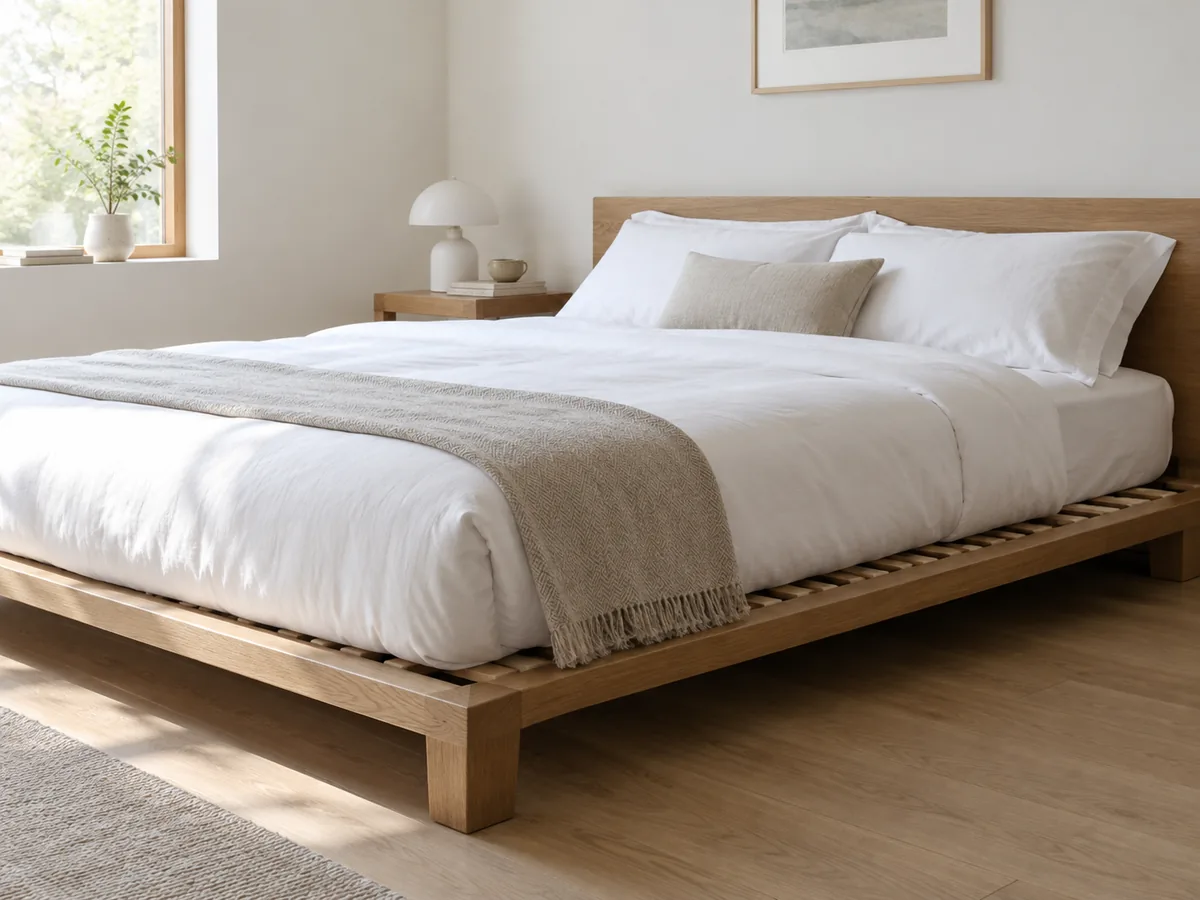
Platform bed
A slatted or solid base that supports the mattress directly, so no box spring. Low and clean, it suits small rooms and foam or hybrid mattresses. Check the slat gap against your mattress warranty.
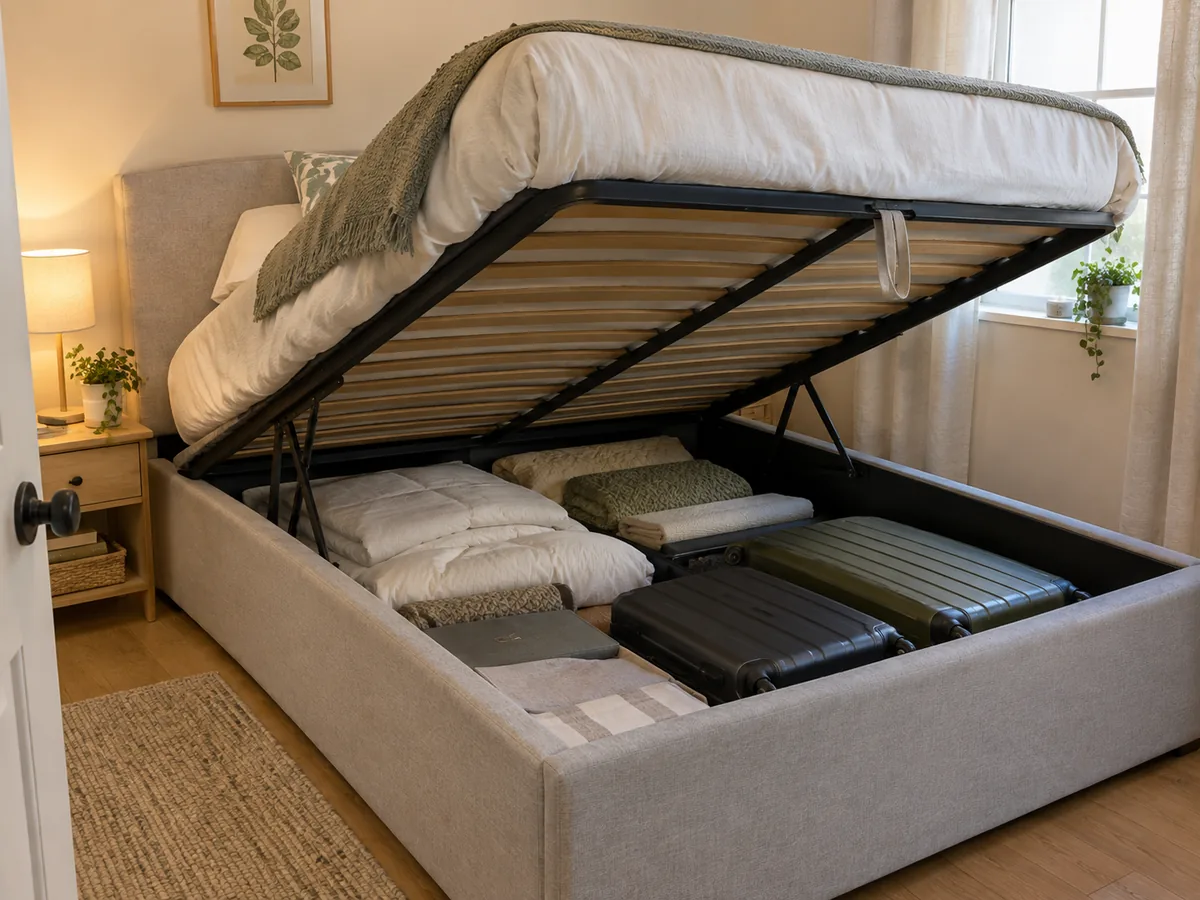
Storage bed
Drawers or a lift-up base under the mattress. The best space-saver for small bedrooms, but heavy to move. Drawers need about 30 in of clear floor to open; lift-up bases do not.
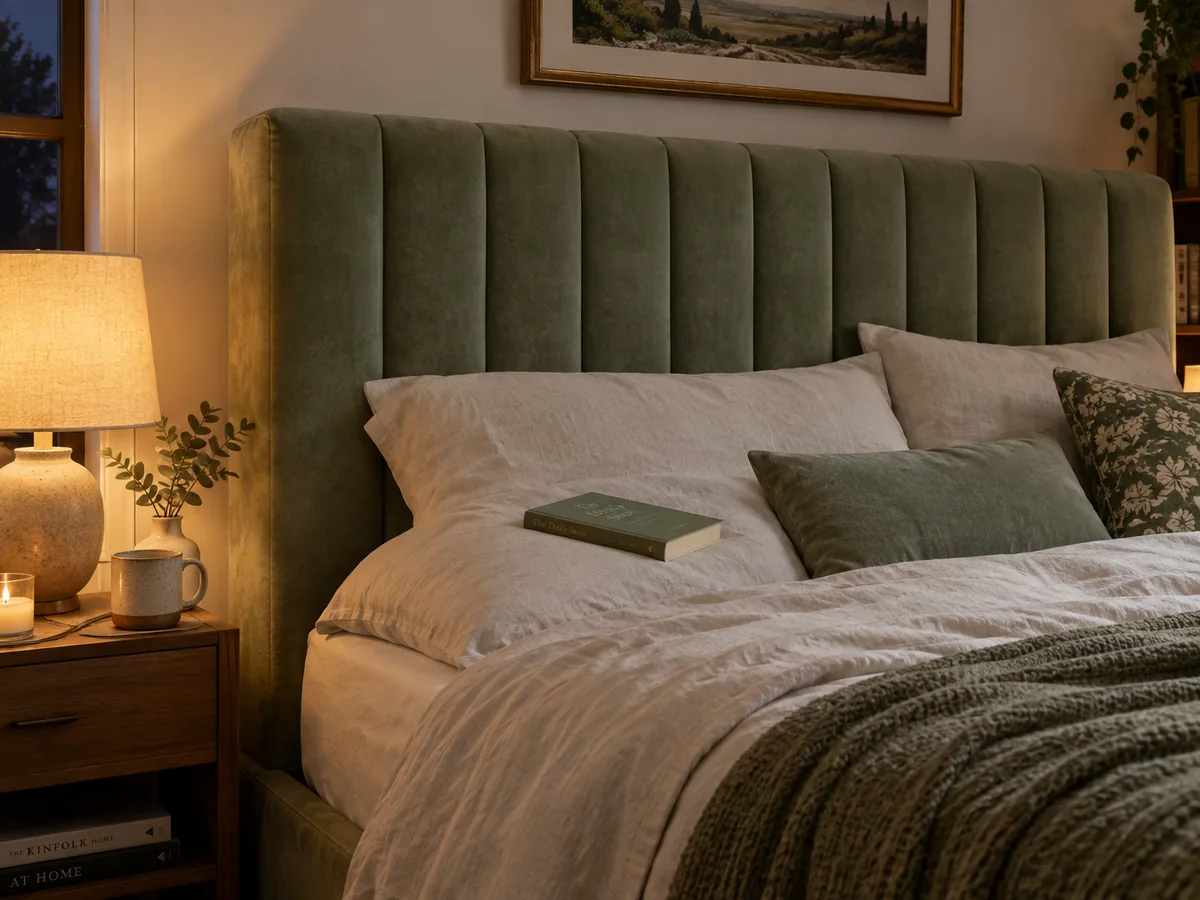
Upholstered bed
A fabric-covered frame with a padded headboard, the most comfortable to sit up against. Frames add several inches to the footprint, and fabric needs occasional cleaning.
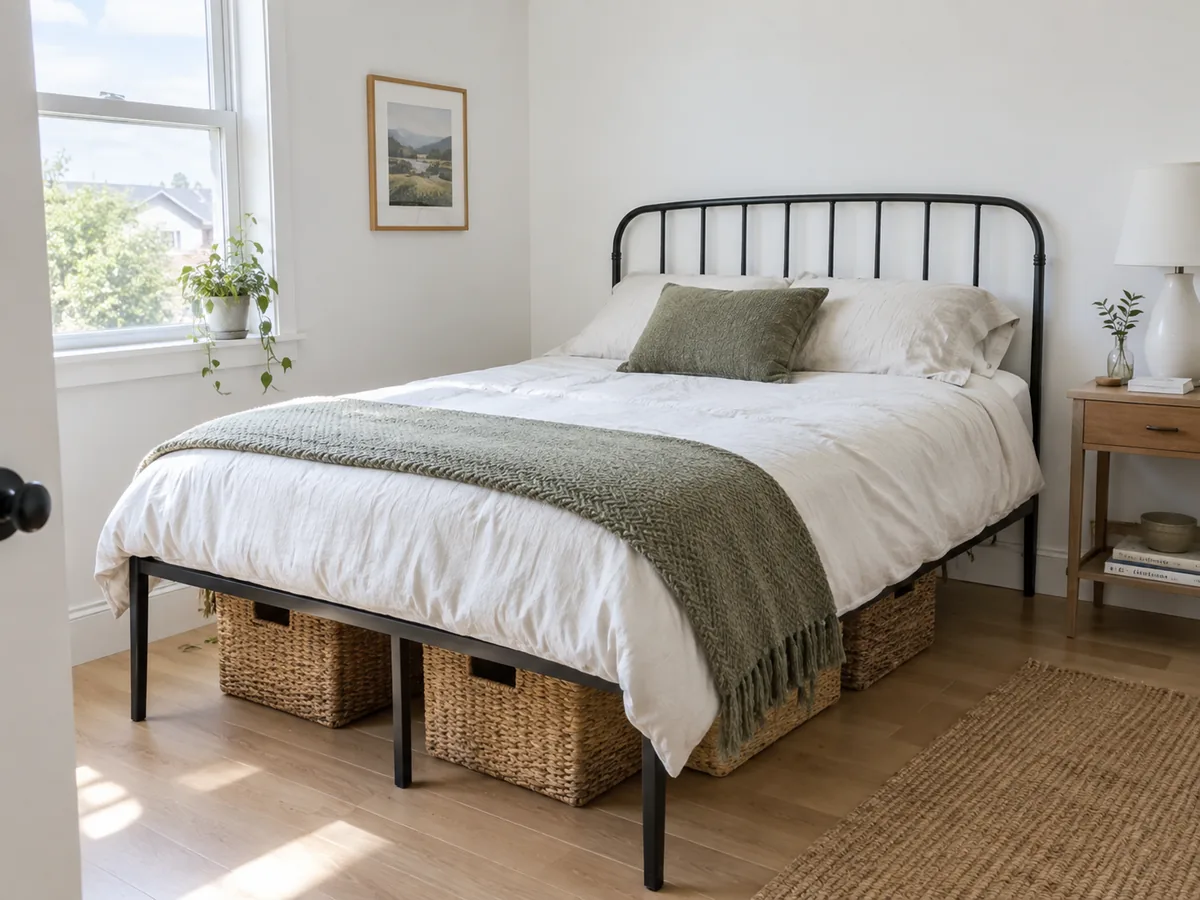
Metal bed frame
Light, affordable, and easy to take apart, with an open look that suits small rooms. Raised styles leave space for storage boxes. Some need a box spring or bunkie board.
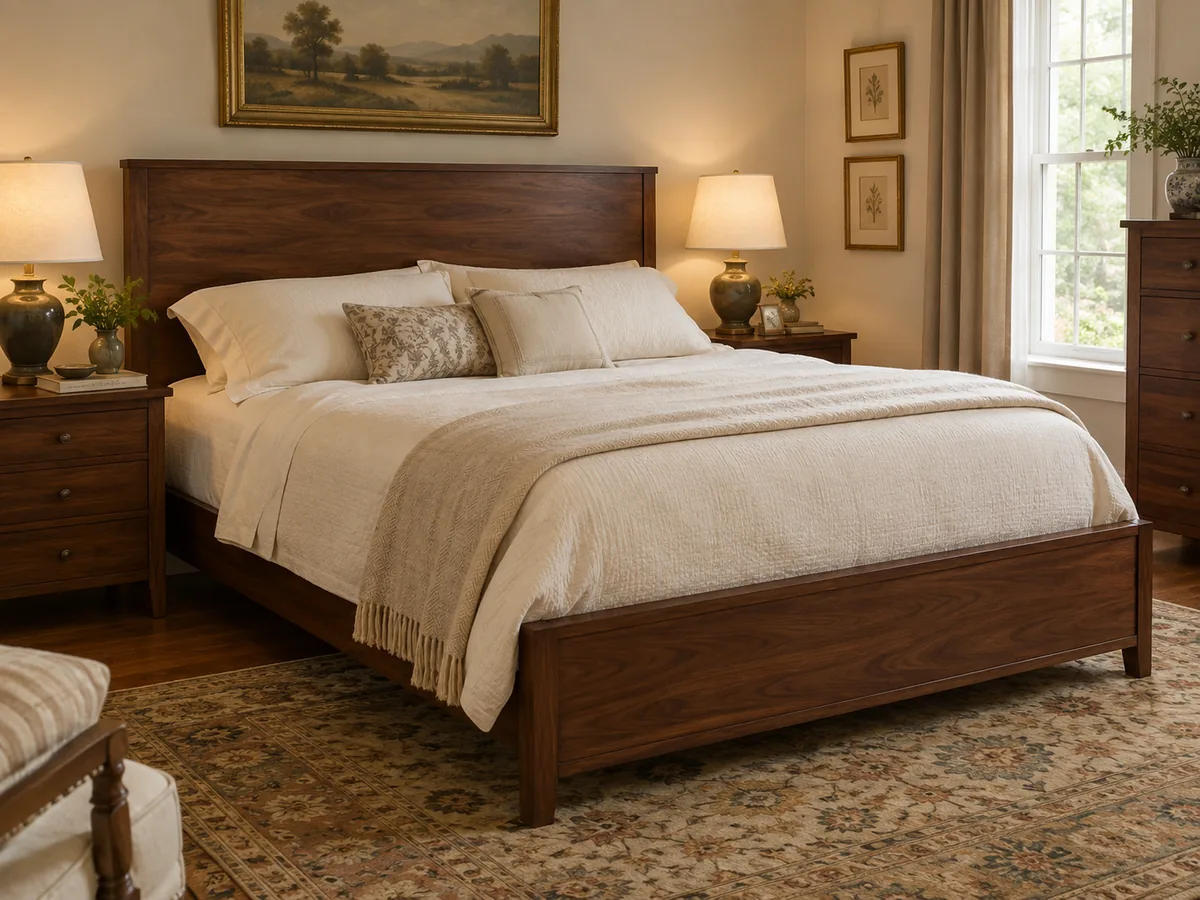
Panel or sleigh bed
A wooden headboard and footboard, flat on a panel bed and curved on a sleigh bed. Warm and classic, but the footboard adds length. Most take a box spring or foundation.
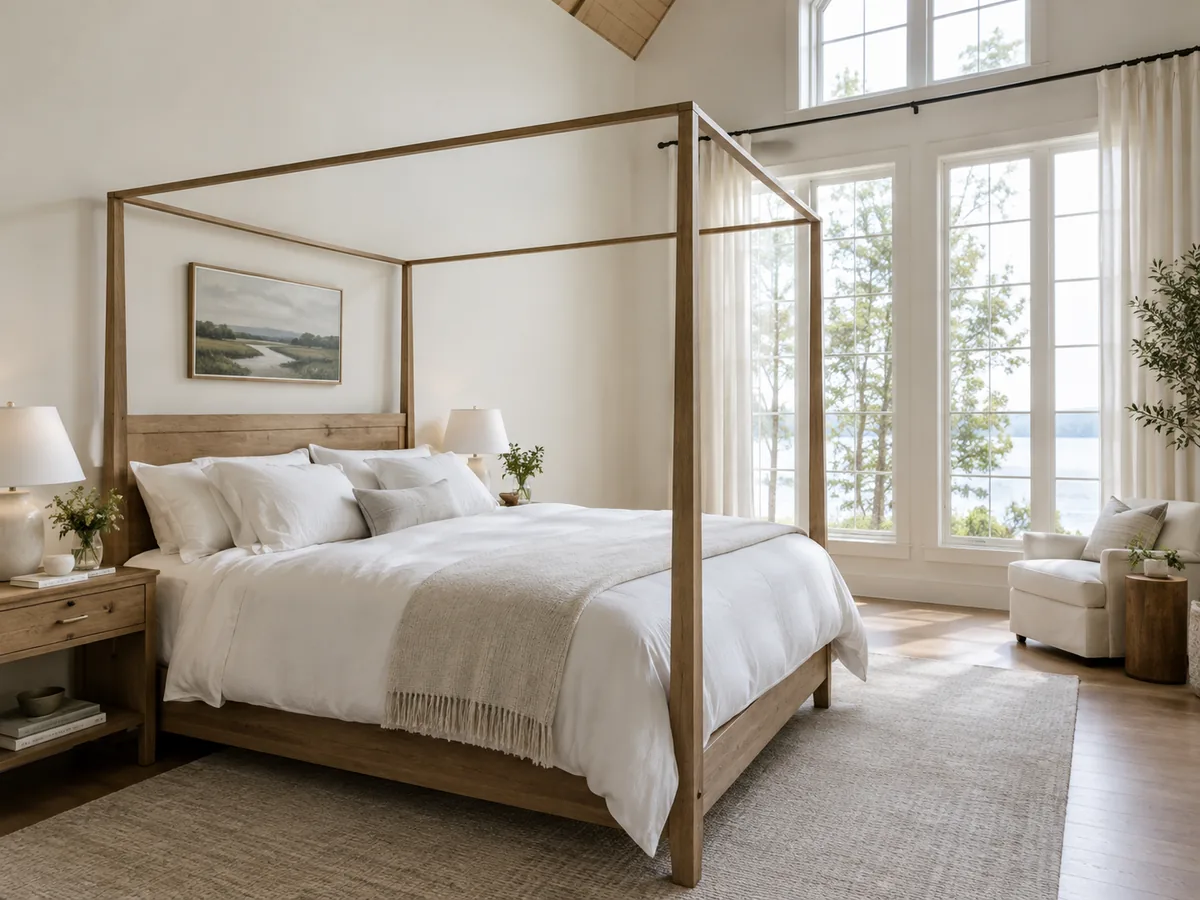
Canopy or four-poster bed
Tall posts, sometimes joined by a top frame, make the bed the room's focal point. Best in large rooms with high ceilings; posts are often 80 in or taller.
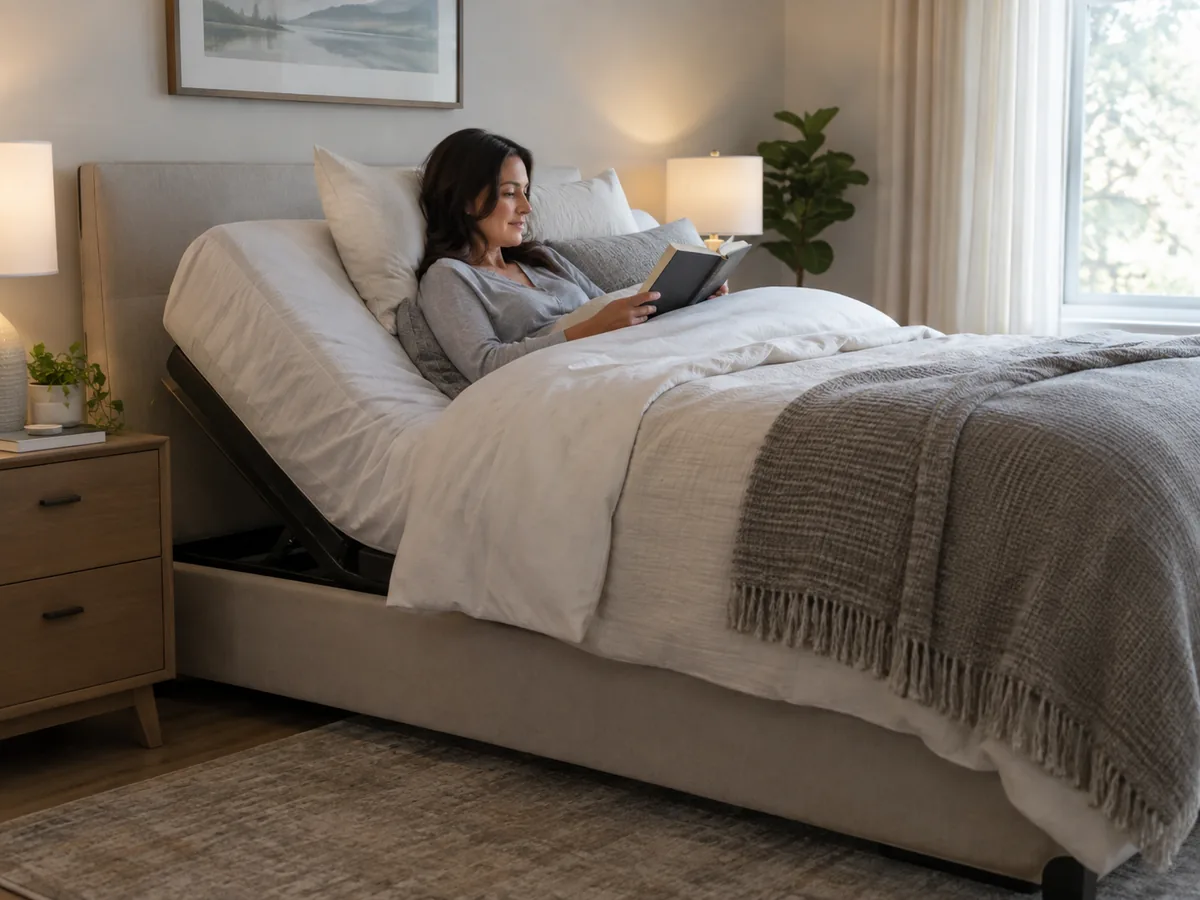
Adjustable base
A motorised base that raises the head and feet. It needs a flexible foam or hybrid mattress, and only fits inside frames sold as adjustable-base compatible.
Mattress sizes, drawn to scale
The frame is always larger than the mattress, so start from the mattress size and then add the frame. These are standard US mattress dimensions.
| Size | Inches | Centimetres | Best for |
|---|---|---|---|
| Twin | 38 x 75 | 97 x 191 | Kids' rooms, bunk beds, daybeds |
| Twin XL | 38 x 80 | 97 x 203 | Tall teenagers, dorms, split king setups |
| Full | 54 x 75 | 137 x 191 | One adult, small guest rooms |
| Queen | 60 x 80 | 152 x 203 | Most couples and most bedrooms |
| King | 76 x 80 | 193 x 203 | Couples who want space, children or pets in the bed |
| California king | 72 x 84 | 183 x 213 | Tall sleepers, long and narrow rooms |
How big a room each bed needs
Room size comes from a simple sum: the frame, plus 24 in (61 cm) of walking space on each open side and at the foot. That is the minimum from our furniture clearance guide; 30 to 36 in feels comfortable. The plan below shows the sum for a queen.
| Bed | Smallest workable room | Comfortable room |
|---|---|---|
| Twin (against a wall) | About 7 x 10 ft (2.1 x 3 m) | 8 x 10 ft |
| Full | About 9 x 9 ft (2.7 x 2.7 m) | 10 x 11 ft |
| Queen | About 9.5 x 9.5 ft (2.9 x 2.9 m) | 10 x 12 ft |
| King | About 11 x 9.5 ft (3.4 x 2.9 m) | 12 x 12 ft |
| California king | About 10.5 x 10 ft (3.2 x 3 m) | 12 x 13 ft |
These assume a frame about 4 in wider and 6 in longer than the mattress. Upholstered, sleigh, and wingback frames can add much more, so use the overall dimensions from the listing in your own sum.
How high should a bed be?
For most adults, a bed is comfortable when the top of the mattress sits about 20 to 25 in (51 to 64 cm) from the floor: sit on the edge and your feet rest flat with your knees roughly level with your hips. The frame and the mattress both count towards that height.
- Low beds make a room look taller and suit people who like a grounded, minimal look, but they are harder to get out of for anyone with knee or hip trouble.
- Tall beds are easy to sit on and hide storage, but can feel imposing in a small room and awkward for shorter people.
- Nightstands look and work best with the top within a few inches of the mattress height. Buy them after you know the bed height.
- Mattress thickness varies from about 8 in to 16 in or more. A thick mattress on a tall frame can overshoot the comfortable range.
Headboards and windows
A headboard is the bed's most visible part and the one most likely to clash with the room. Match its height to the wall behind it.
| Headboard height (from the floor) | Works best |
|---|---|
| Low, about 36 to 45 in (91 to 114 cm) | Under a window, under a sloped ceiling, in small rooms |
| Medium, about 46 to 55 in (117 to 140 cm) | Most bedrooms with standard 8 ft ceilings |
| Tall, about 56 in (142 cm) and up | Tall ceilings, large rooms, statement walls |
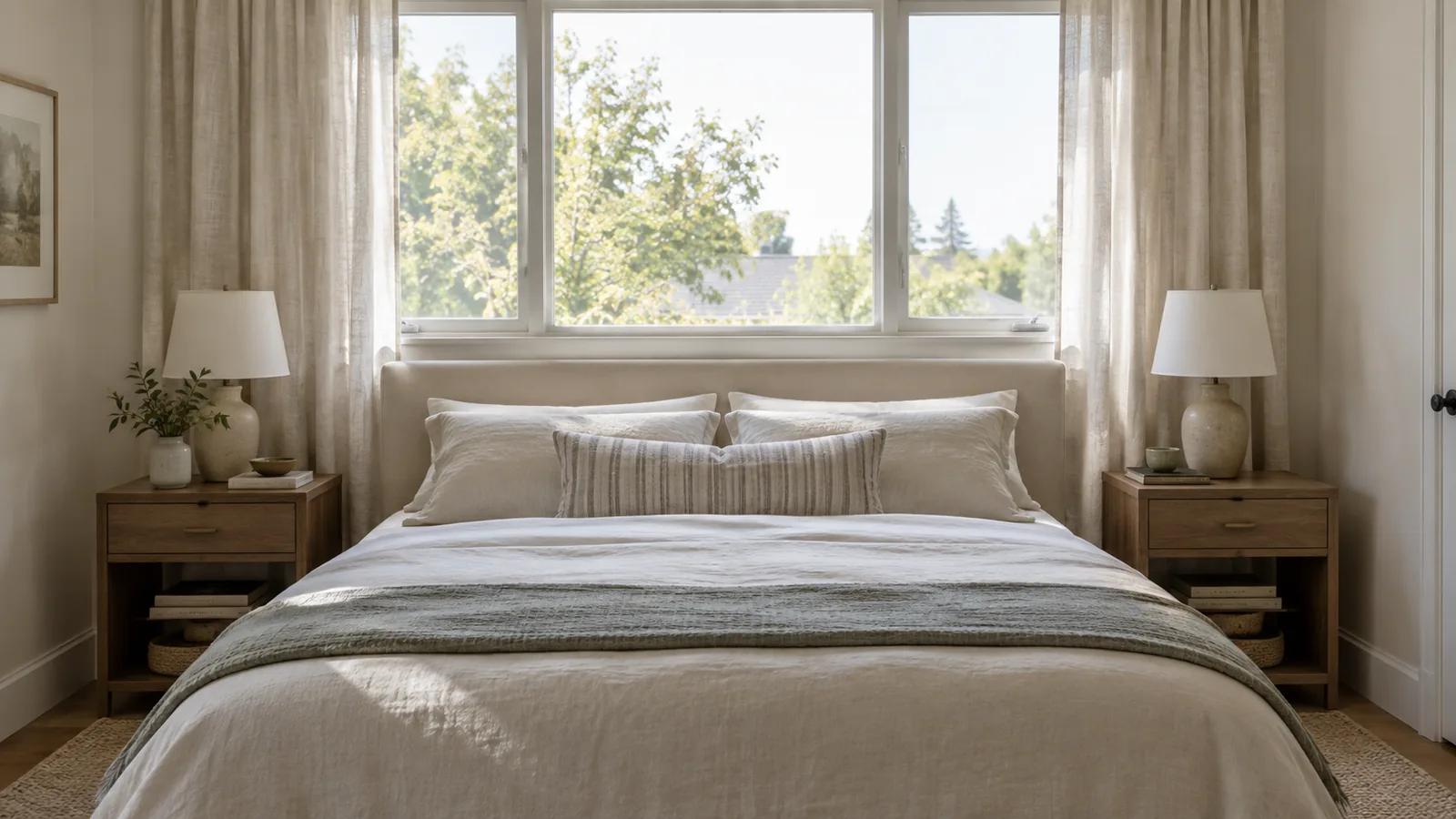
If the bed has to sit under a window, keep the headboard below the sill or choose a frame with no headboard at all, and leave room for curtains or blinds to close behind it. Our guide to checking a bed frame in your bedroom before ordering covers how to judge headboard scale against your own walls.
Which bed frame suits which situation
The same logic as the quiz, in one table.
| Your situation | Frame to look at first | Why |
|---|---|---|
| Small room, tight closets | Lift-up storage bed or platform | Storage without drawer clearance, or a low profile that keeps the room open |
| You read or watch TV in bed | Upholstered bed or adjustable base | A soft headboard to lean on, or a base that raises you up |
| You move often | Metal frame | Light, quick to take apart, and inexpensive to replace |
| Foam or hybrid mattress, no box spring | Platform bed | Supports the mattress directly |
| Innerspring mattress with a box spring | Panel bed or a metal frame that takes a foundation | Designed around a box spring |
| Large room, tall ceiling | Canopy or four-poster | Fills the height and anchors the room |
| Bed under a window | Low platform or metal frame with a low headboard | Stays below the sill |
Before you order a bed frame
- Check the overall frame dimensions, not the mattress size, and add 24 in of walking space on each open side and at the foot.
- Confirm the mattress support: slat spacing, whether a box spring is needed, and whether a centre support leg is included for queen and larger.
- Add the frame height to your mattress thickness and check it lands near 20 to 25 in.
- Check the headboard height against windows, sloped ceilings, and wall lights.
- Measure the delivery route: headboards and storage bases are often the largest boxes.
- Preview your two or three finalists in a photo of your bedroom to judge scale and colour; our room-by-room preview checklist shows how.