
Quick verdict
Choose a queen if
- Your bedroom is smaller than about 12 x 12 ft
- You sleep alone, or with a partner and no regular extra guests
- You want the widest choice of frames and bedding, at lower prices
- You move often or have narrow stairs
Choose a king if
- Children or pets regularly end up in the bed
- One of you moves a lot, runs hot, or keeps different hours
- The room is 12 x 12 ft or larger and has space for nightstands
- You want each sleeper to have a twin bed's worth of width
Queen and king sizes, drawn to scale
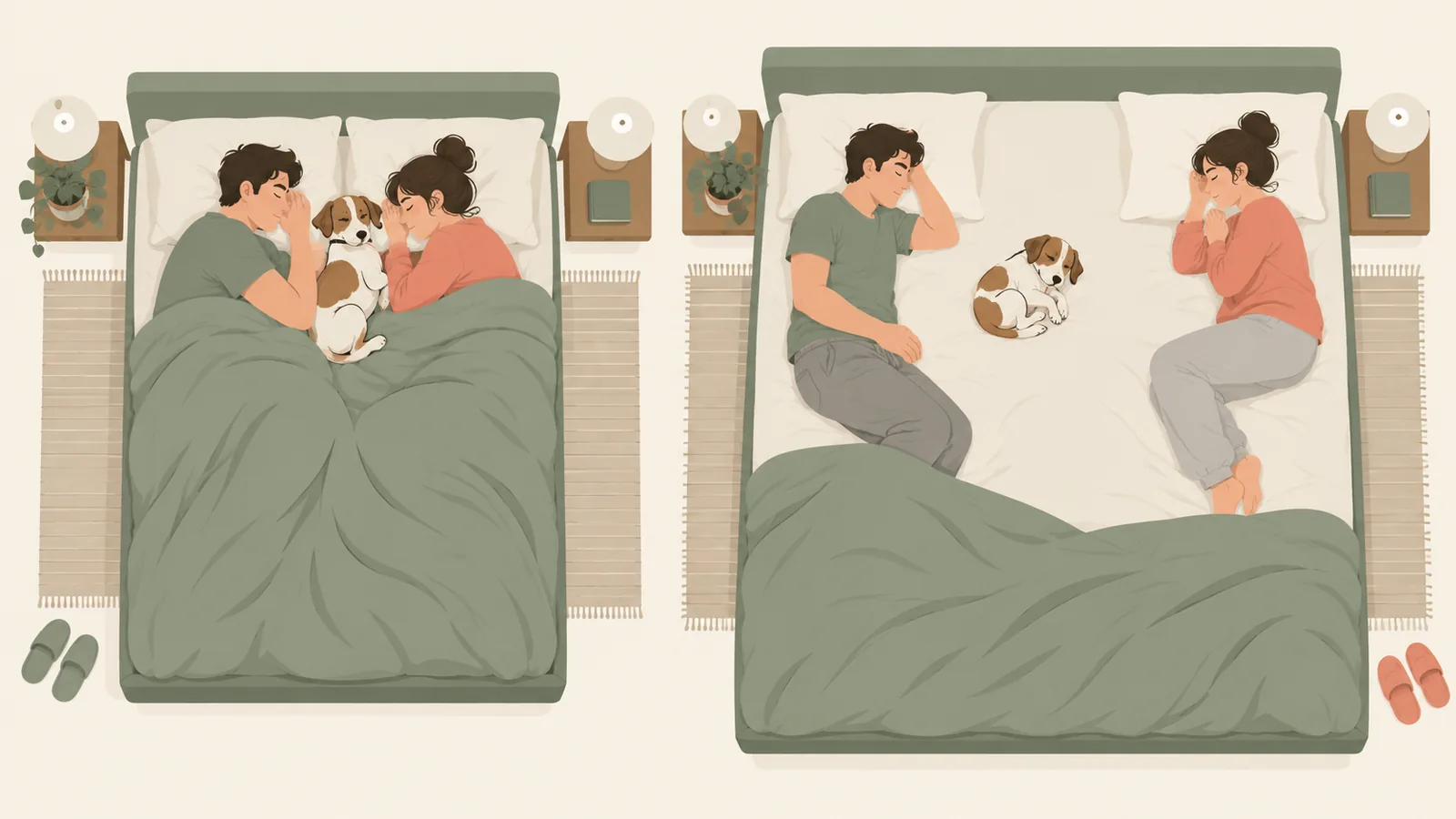
Both beds are 80 in (203 cm) long. The king's extra 16 in (41 cm) is all width, which is why it changes how the bed feels far more than how it looks from the doorway. Two variations are worth knowing: the split king, which is two twin XL mattresses side by side, and the California king, which trades width for length.
| Size | Inches | Centimetres | Width per sleeper (two people) |
|---|---|---|---|
| Queen | 60 x 80 | 152 x 203 | 30 in (76 cm) |
| King | 76 x 80 | 193 x 203 | 38 in (97 cm) |
| Split king | Two 38 x 80 | Two 97 x 203 | 38 in (97 cm), on separate mattresses |
| California king | 72 x 84 | 183 x 213 | 36 in (91 cm) |
Sleeping space per person
Divide the width by two and the difference becomes easier to feel. On a queen, each of two sleepers gets 30 in (76 cm), only a couple of inches more than a standard crib mattress. On a king, each gets 38 in (97 cm), the same as a whole twin bed.
That is why a queen works well for couples who sleep still and close, and why a king makes a noticeable difference once a child, a dog, or a restless sleeper joins in. A single sleeper, on the other hand, gets 60 in on a queen, which is generous by any measure.
Will a queen or a king fit your room?
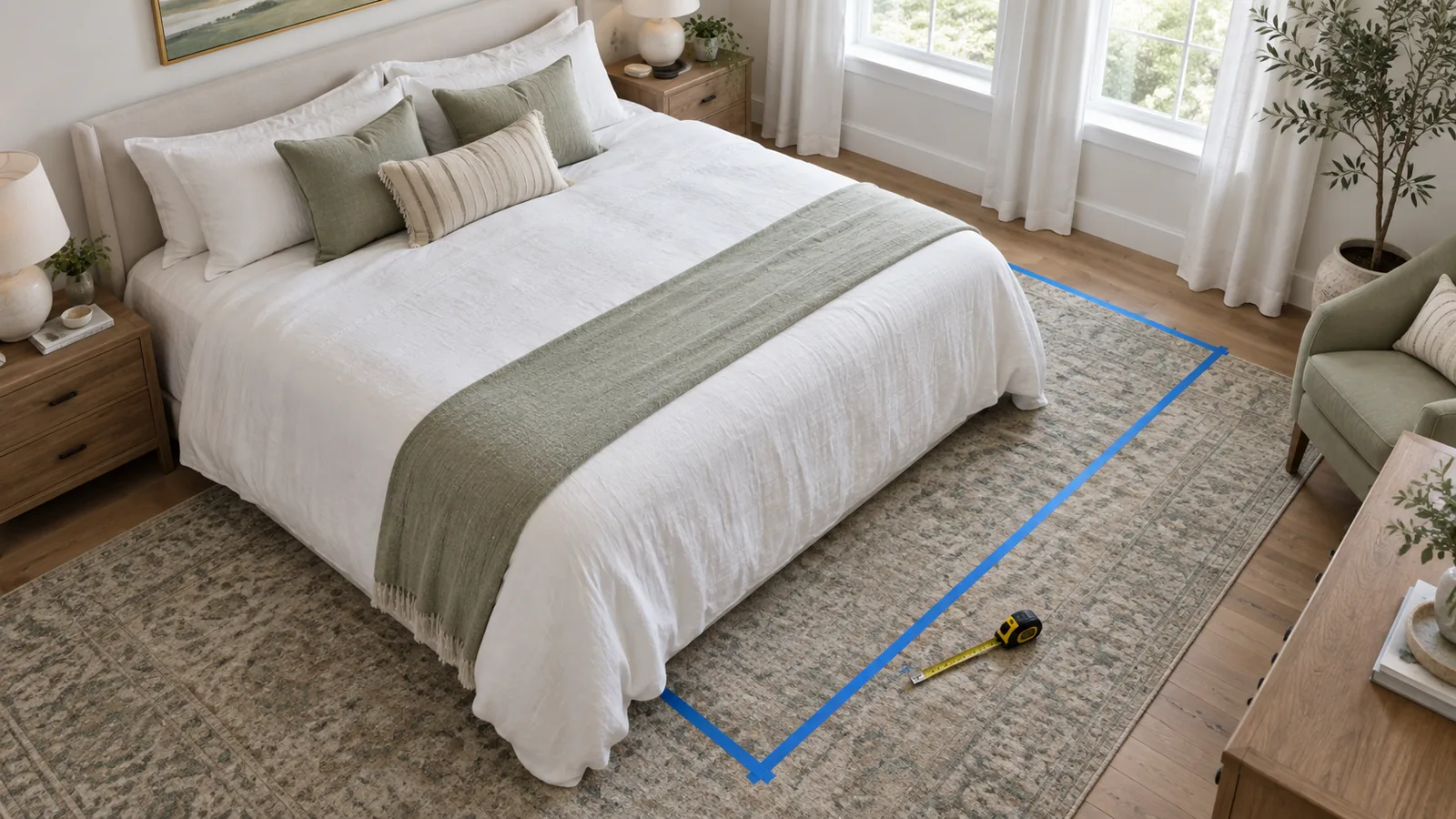
Room fit comes from the frame, not the mattress, plus walking space: at least 24 in (61 cm) on each open side and at the foot, and about 36 in in front of a dresser, from our furniture clearance guide. The plan below puts both beds in the same 12 x 12 ft room with the same nightstands and dresser.
| Bedroom size | Queen | King |
|---|---|---|
| About 9.5 x 9.5 ft (2.9 x 2.9 m) | Fits, tightly | Too small |
| 10 x 12 ft (3 x 3.7 m) | Comfortable | Only about 20 in per side on a 10 ft wall; too tight |
| 11 x 12 ft (3.4 x 3.7 m) | Roomy | Fits, with about 26 in per side |
| 12 x 12 ft (3.7 x 3.7 m) and up | Roomy | Comfortable |
These assume a frame about 4 in wider and 6 in longer than the mattress. Upholstered and wingback frames can add much more, so check the frame's overall width against the wall behind the bed. Our bed frame guide covers how each frame type changes the footprint.
Cost and bedding
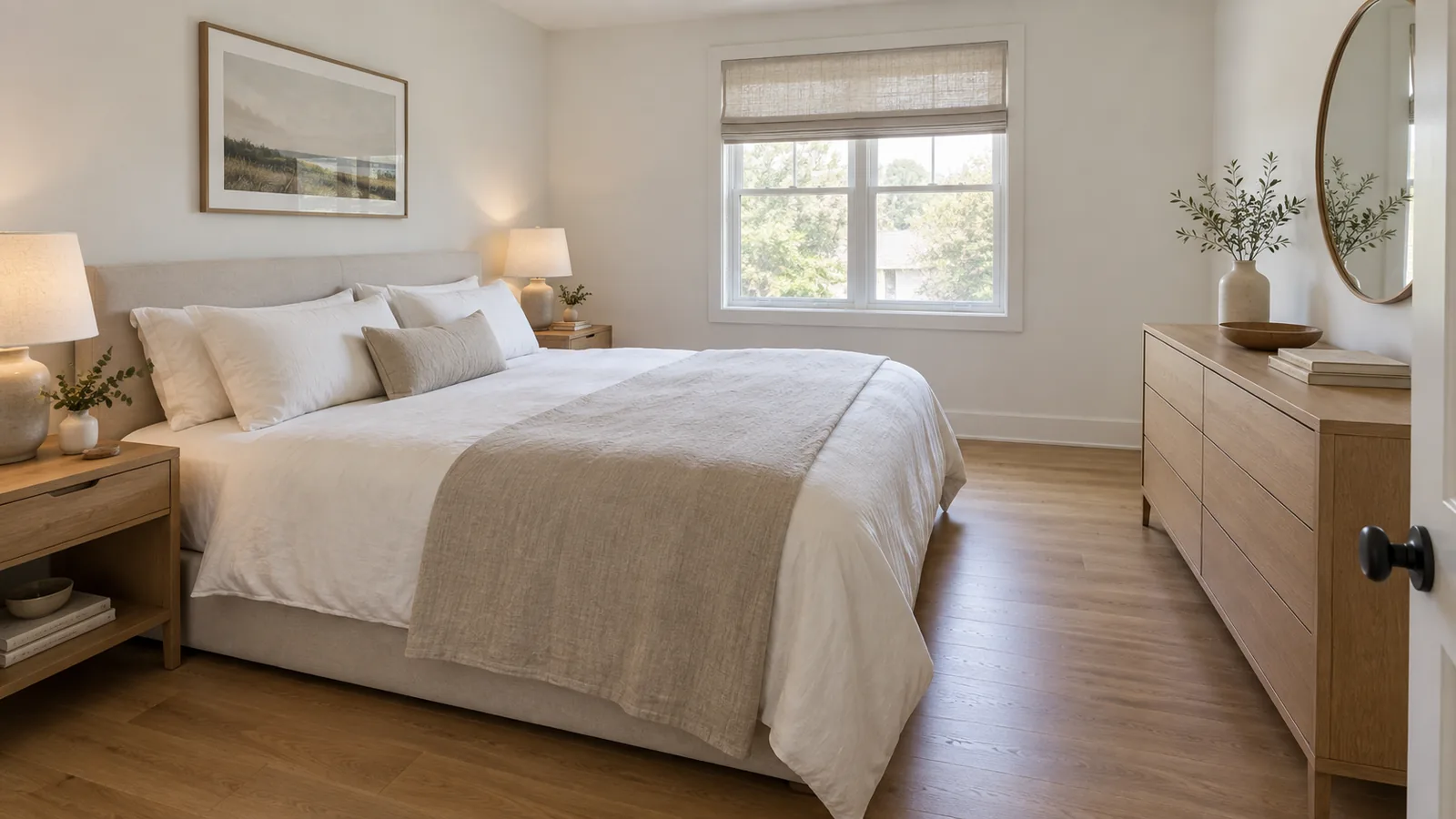
A king costs more at every step, not just once. The same mattress model is priced higher in king, and so are the frame, the headboard, the mattress protector, the sheets, and the duvet. How much more varies by brand, so compare the same product in both sizes before deciding.
- Sheets are not interchangeable. Queen sheets do not fit a king, and king sheets do not fit a California king. A split king takes two twin XL fitted sheets and one king flat sheet or duvet.
- Duvets and throws scale up too. A king duvet is wide enough that it can feel heavy to shake out and awkward to launder at home; check that it fits your washing machine.
- Nightstands cost the same, but a king often calls for wider ones to look in proportion, and the room still has to fit them.
Delivery and moving
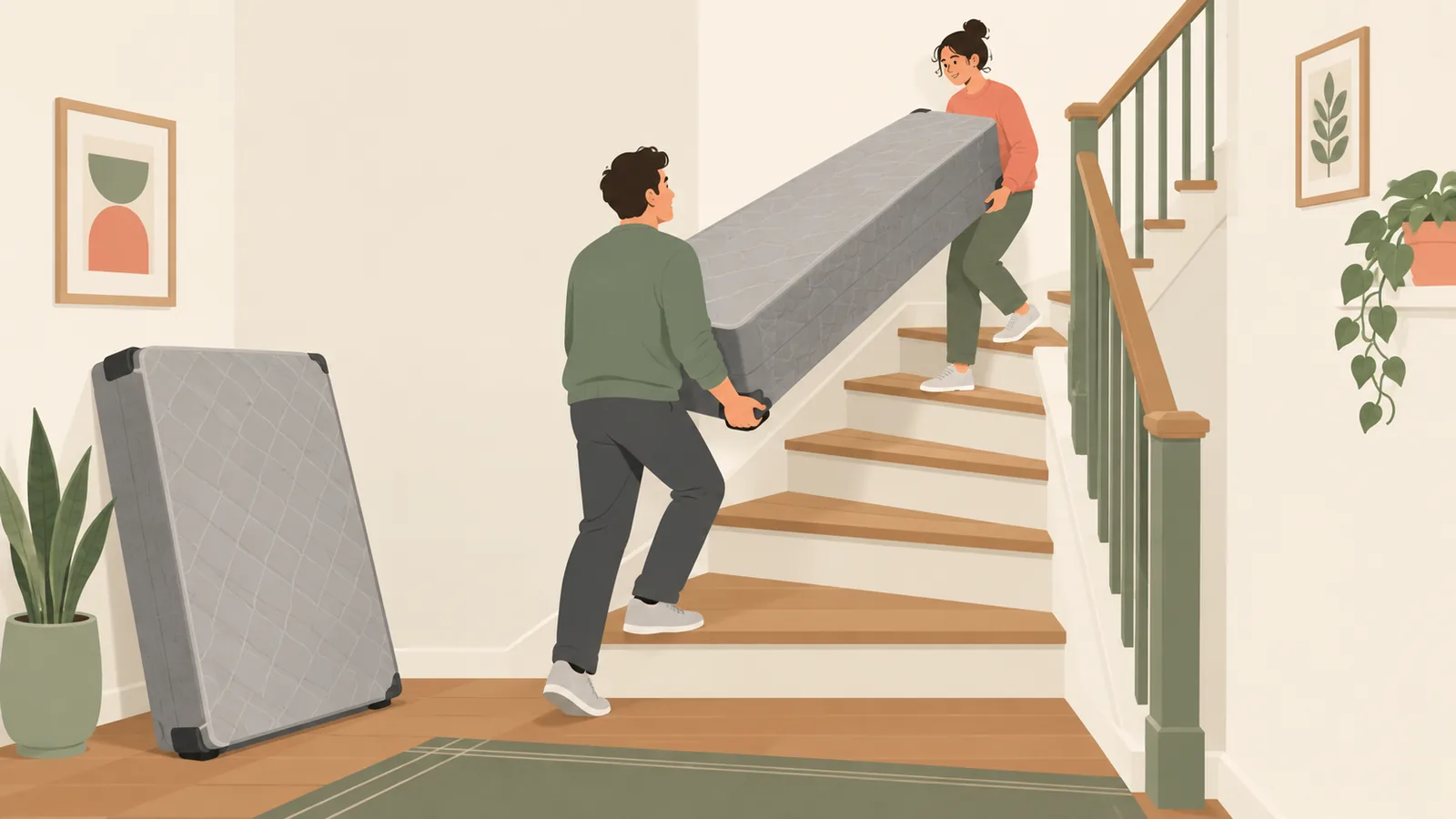
A queen mattress and foundation go through most doors and up most stairs without trouble. A king is where delivery gets harder:
- King foundations usually come in two halves, each about the size of a twin XL, precisely because a single 76 in wide box spring would not turn on most staircases.
- The mattress itself is heavy and floppy. Measure stair turns, landings, and the ceiling height where it may need to stand on end. Our sofa delivery section explains how to measure the route.
- Bed-in-a-box kings avoid the problem on delivery day, but not the next time you move.
When a California king or split king makes more sense
- California king (72 x 84 in): 4 in narrower but 4 in longer than a king. It suits sleepers over about 6 ft 2 in, and long, narrow rooms where the extra width of a king would crowd the sides.
- Split king (two 38 x 80 in): the same footprint as a king, made from two twin XL mattresses. It lets each sleeper choose their own firmness, and it is the usual choice for an adjustable base where each side moves on its own.
Both need their own sheets and, for the California king, a matching frame. Check that the frame you want is sold in that exact size before committing.
Which one should you buy?
- Is the bedroom under about 11 ft on the wall behind the bed?Queen. A king would leave less than the 24 in walking space per side.
- Do children or pets sleep in the bed most nights?King, if the room allows it.
- Do you and your partner want different firmness, or an adjustable base?Split king.
- Is one of you taller than about 6 ft 2 in?California king, or a king with a low footboard.
- None of the above?Queen. It is cheaper, easier to furnish around, and easier to move.
Still choosing the frame itself? Take the six-question quiz in our bed frame guide.