
Quick verdict
Choose wool if
- It is for a living room or bedroom you want to furnish once
- You want softness underfoot and a rug that springs back
- Your budget allows for the best rug you can afford at the right size
Choose a synthetic if
- There are pets, children, or a dining table on it
- It goes in a kitchen, hallway, basement, or outdoors
- You need to clean it hard and often
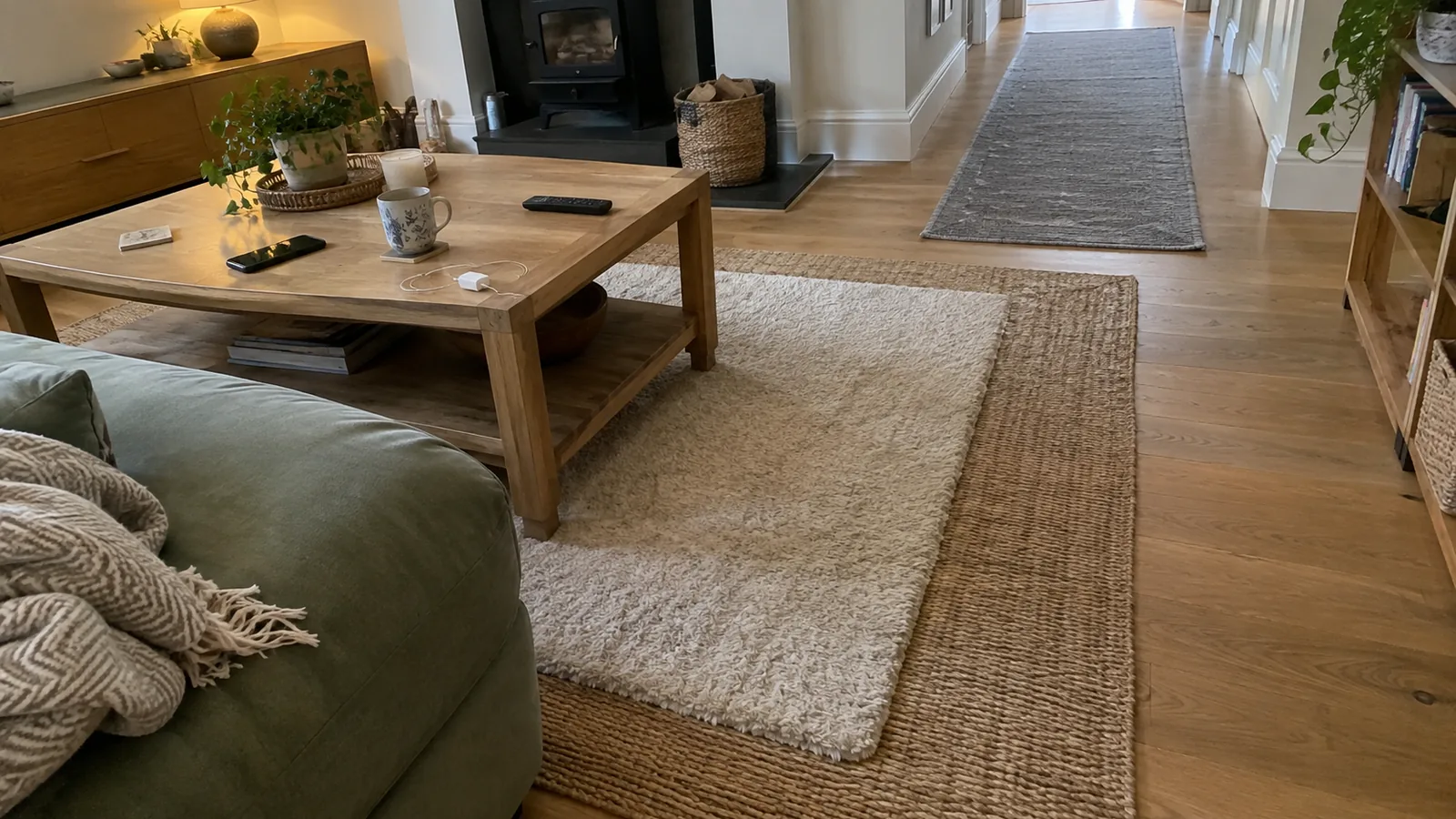
Choose jute for texture and a natural look in a dry, low-traffic room, or as a large, affordable base rug with a smaller wool rug layered on top. The rest of this page explains why.
Rug fibres at a glance
| Fibre | Feel | In heavy traffic | Spills and water | Shedding | Relative price |
|---|---|---|---|---|---|
| Wool | Soft, springy, warm | Excellent; springs back | Good; blot quickly | Some at first, especially tufted | High |
| Jute | Coarse but soft for a plant fibre | Fair; wears and flattens | Poor; water can brown it | Yes, ongoing | Low to medium |
| Sisal | Firm, smooth, hard underfoot | Good | Poor; stains with water | Low | Medium |
| Seagrass | Smooth, slightly slippery | Good | Better than jute or sisal | Low | Low to medium |
| Polypropylene | Can feel slightly waxy | Good in low pile; crushes in shag | Excellent | Low | Low |
| Nylon | Soft to firm | Excellent; the toughest synthetic | Very good | Low | Medium |
| Polyester | Very soft | Fair; flattens and mats | Good | Low | Low |
| Viscose | Silky, shiny | Poor | Poor; can stain permanently | Yes | Low to medium |
The ratings below are our editorial assessment from the fibre properties described on this page, not a laboratory test. Construction and quality within each fibre matter as much as the fibre itself.
Wool
Wool is the benchmark rug fibre for good reasons. Each fibre has a natural crimp, so the pile springs back after being walked on or pressed by furniture legs, which is why a good wool rug can look much the same after years in a living room. The Woolmark Company describes wool as naturally resistant to soiling and odour, with the highest natural flame resistance of untreated textiles: it tends to smoulder and self-extinguish rather than melt.
- Good for: living rooms, bedrooms, and any room where you want the rug to last and feel soft.
- Watch: new wool rugs shed loose fibres for the first few months, especially tufted ones; vacuum regularly and it settles. Blot spills rather than rubbing, avoid bleach and strong alkaline cleaners, and vacuum under furniture, since moths prefer undisturbed wool.
- Price: the most expensive of the common fibres, but a wool rug usually outlasts two or three cheaper ones in a busy living room.
Jute, sisal, and seagrass
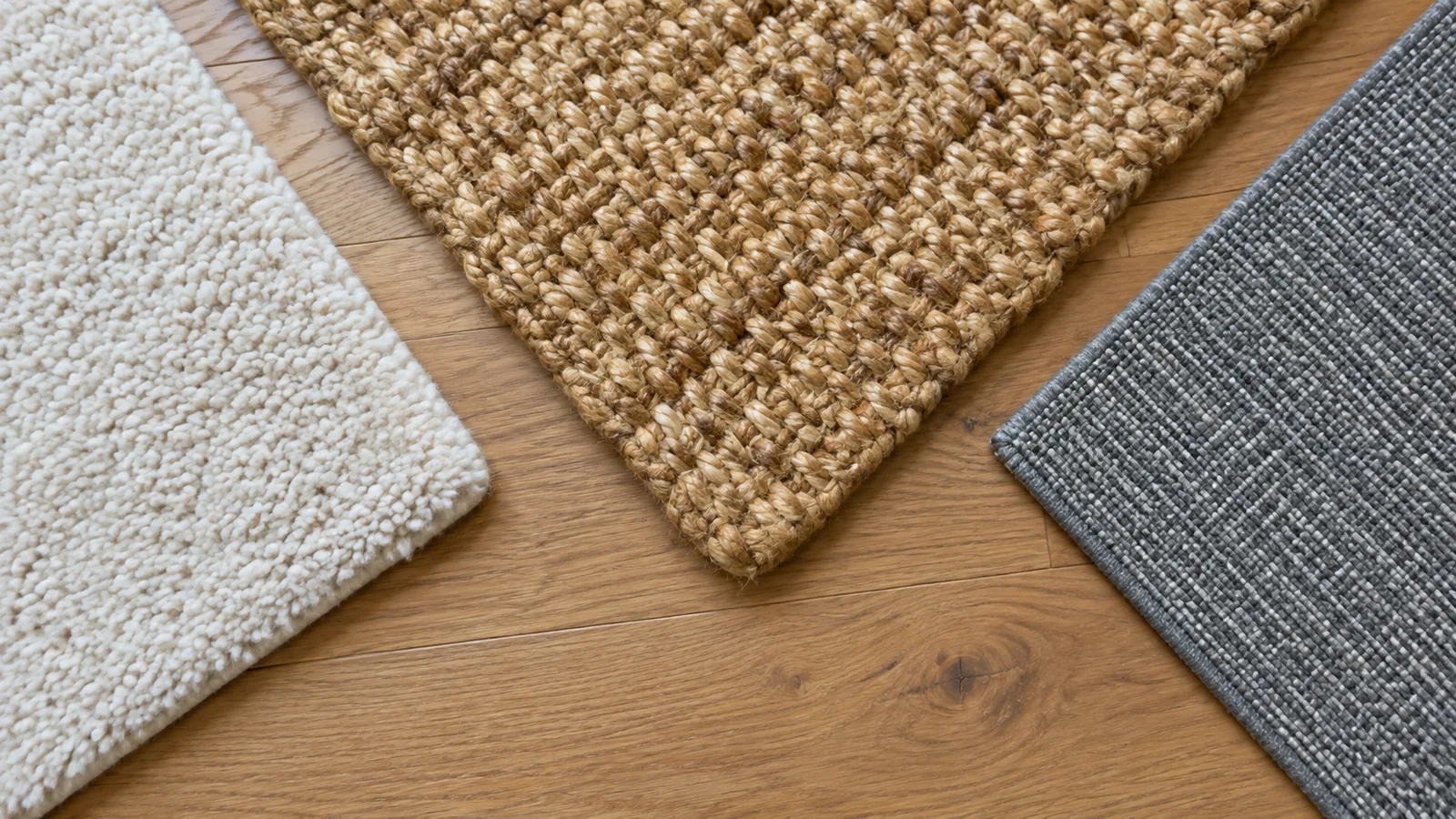
The natural plant fibres give a room texture and warmth that synthetics imitate but rarely match, and jute in particular is affordable in the large sizes a living room needs. They are all cellulose fibres, which means they react badly to water.
- Jute is the softest of the three, with a chunky, golden look. Water can release natural oils that brown the fibre, and a soaked jute rug can develop watermarks or mildew if it does not dry quickly, so rug specialists advise dry cleaning methods and immediate blotting. It sheds, and it wears and flattens in heavy traffic.
- Sisal is tougher and smoother, and harder underfoot. It wears better than jute but is just as sensitive to water.
- Seagrass has a naturally smooth, slightly waxy surface that resists spills better than jute or sisal. It cannot be dyed, so it comes only in its natural greens and browns, and it can be slippery on stairs.
Jute is at its best in a dry, low-traffic room: a bedroom, a home office, a formal sitting room, or as a large base rug under a smaller wool rug. Keep it out of kitchens, bathrooms, and entries in wet climates. Pets that scratch or chew will find it irresistible.
Polypropylene, nylon, and polyester
Synthetic rugs are made from plastics, and their big advantage is that liquids sit on the surface rather than soaking in. That makes them the practical choice anywhere spills, muddy feet, or pets are a daily fact.
- Polypropylene (also called olefin) is the most common and the cheapest. Many are solution-dyed, meaning the colour runs through the fibre rather than sitting on it, which helps them resist fading and bleaching from sunlight. It is used for washable and outdoor rugs. It attracts oily soil, can feel slightly waxy, and in a high pile it crushes under furniture.
- Nylon is the most resilient synthetic and the fibre most wall-to-wall carpet is made of. It springs back well in heavy traffic. It is less common in area rugs and costs more than polypropylene.
- Polyester is very soft and takes bright colours well, and is often made from recycled plastic bottles. It flattens and mats in heavy traffic, so it suits bedrooms better than hallways.
Low-pile and flat-woven synthetics are also the easiest rugs to live with under a dining table, where chairs are dragged in and out, and many small ones can go in a washing machine. Check the label for the exact fibre: "synthetic" alone can mean any of these.
Viscose: the one to be careful with
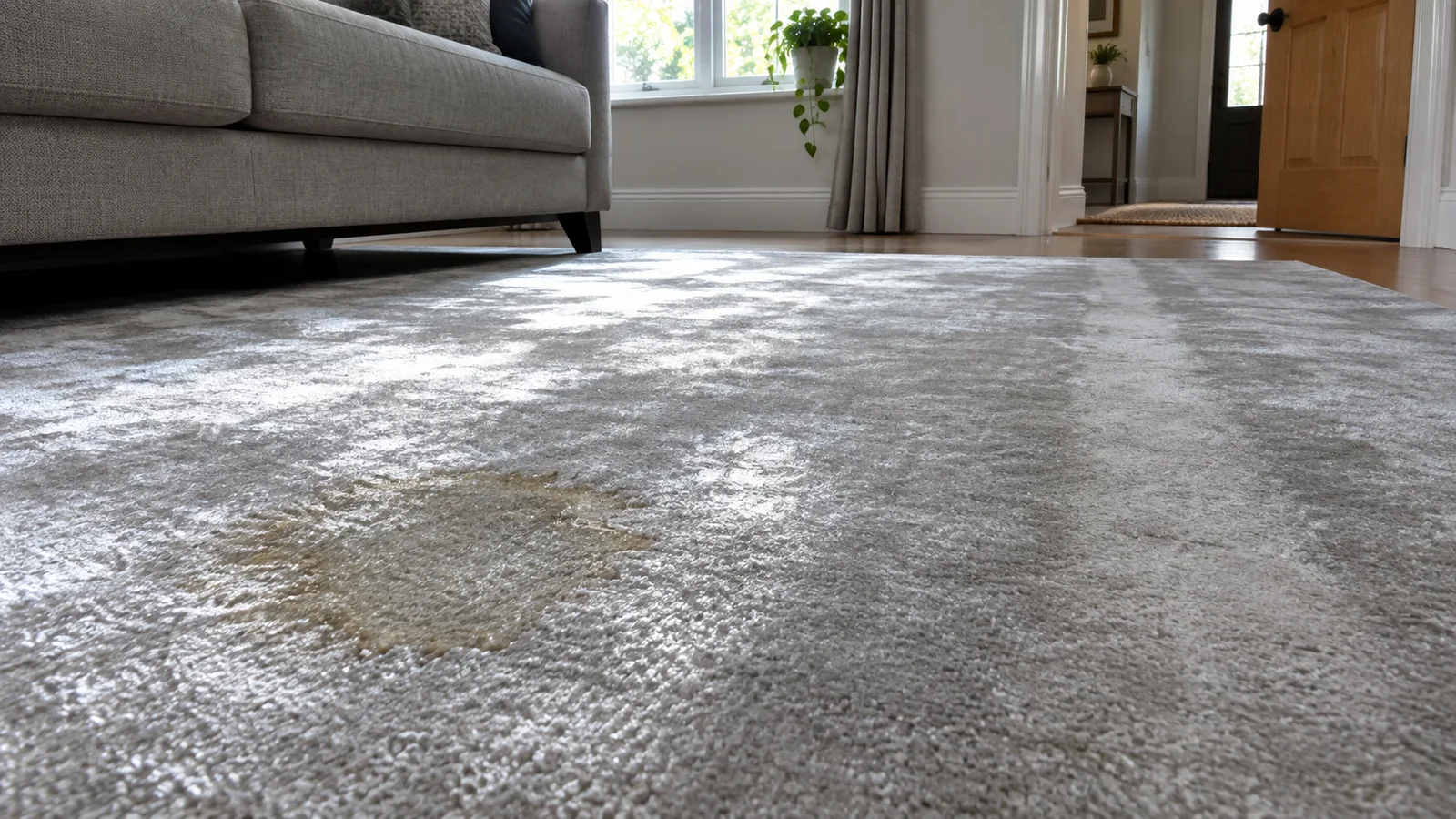
Viscose (also sold as rayon, and in marketing names such as "art silk" or "bamboo silk") is made from regenerated wood pulp and has a silky sheen that photographs beautifully. It is also one of the weakest rug fibres, and weaker still when wet. Rug maker Jaipur Rugs describes it as best suited to low-traffic, dry areas: water can yellow or brown it, spills can leave permanent marks, and the pile mats and loses its shine where people walk.
A viscose rug is fine in a bedroom beside the bed, a dressing room, or a formal room nobody eats in. It is a poor choice for a living room with a sofa, a dining room, an entry, or any home with pets or small children. If a rug listing shows a high sheen at a low price, check the fibre content before you buy.
How a rug is made matters too
Two rugs of the same fibre can wear very differently depending on how they are made. The four constructions you will see most often:
- Flatweave (including kilims and dhurries): woven flat with no pile. Thin, reversible, easy under chairs, and often the best value in wool or cotton.
- Hand-knotted: every tuft of pile is tied by hand around the foundation. The most durable and the most expensive; good ones last decades.
- Hand-tufted: loops are punched through a backing cloth with a tool and held with a latex glue under a second backing. Much cheaper than knotted, but it sheds more, can smell of latex at first, and lasts only as long as its backing.
- Machine-made (power-loomed): woven by machine, in any fibre. Quality ranges from excellent to disposable; pile density is the thing to compare.
Whatever you buy, put a rug pad under it. It stops the rug sliding, protects the floor, and reduces wear by cushioning the fibres.
Which fibre for which room
| Room | Best choice | Also good | Avoid |
|---|---|---|---|
| Living room | Wool | Nylon; jute if traffic is light | Viscose |
| Bedroom | Wool | Polyester, jute, viscose beside the bed | Nothing in particular |
| Dining room | Low-pile or flat-woven synthetic | Wool flatweave | Jute, shag, viscose |
| Hallway and entry | Nylon or polypropylene runner | Wool flatweave | Jute in wet climates, viscose |
| Kitchen | Washable polypropylene | Nylon | Jute, sisal, viscose |
| Children's room or pets | Polypropylene or nylon | Wool | Jute (scratching), viscose |
| Patio or porch | Outdoor polypropylene | Any natural fibre |
Once you have picked the fibre, size it to the furniture: our rug size guide has the right size for every room and a calculator. If the budget has to give somewhere, buy the right size in a cheaper fibre rather than the perfect fibre too small; a floating rug is the most common reason a room feels off.