Roller vs Roman vs cellular at a glance
Choose roller shades for a clean look, tight spaces, and rooms that get wet or messy. Choose cellular shades when insulation and quiet matter most. Choose Roman shades when you want a soft fabric look and have space above the window for the stack. All three come in light-filtering and darker versions, so the fabric and the way you mount the shade decide how dark the room gets, not the shade type alone.
| Question | Roller | Cellular | Roman |
|---|---|---|---|
| Look | Flat, modern, minimal | Pleated, practical | Soft folds, tailored fabric |
| Insulation | Modest, no independent figure found | Best of the three; DOE-backed savings | Depends on the lining; no independent figure found |
| Light control | Filtering to blackout fabrics | Filtering to blackout, by product | Set by the fabric and lining |
| Space it needs | Smallest projection | Slightly bulkier than roller | Tallest stack when raised |
| Kitchens and baths | Good in a wipeable fabric | Only if made for moisture | Poor fit: thick and hard to clean |
| Cost | Usually the budget choice | Mid to high | Mid to high, more in custom fabric |
Insulation and cost statements here reflect what the sources below say, not our own testing. We did not measure light, temperature or energy for any shade. Retailer guides are written to sell blinds, so we lean on the US Department of Energy and the federal safety rules where we can.
How each shade is built
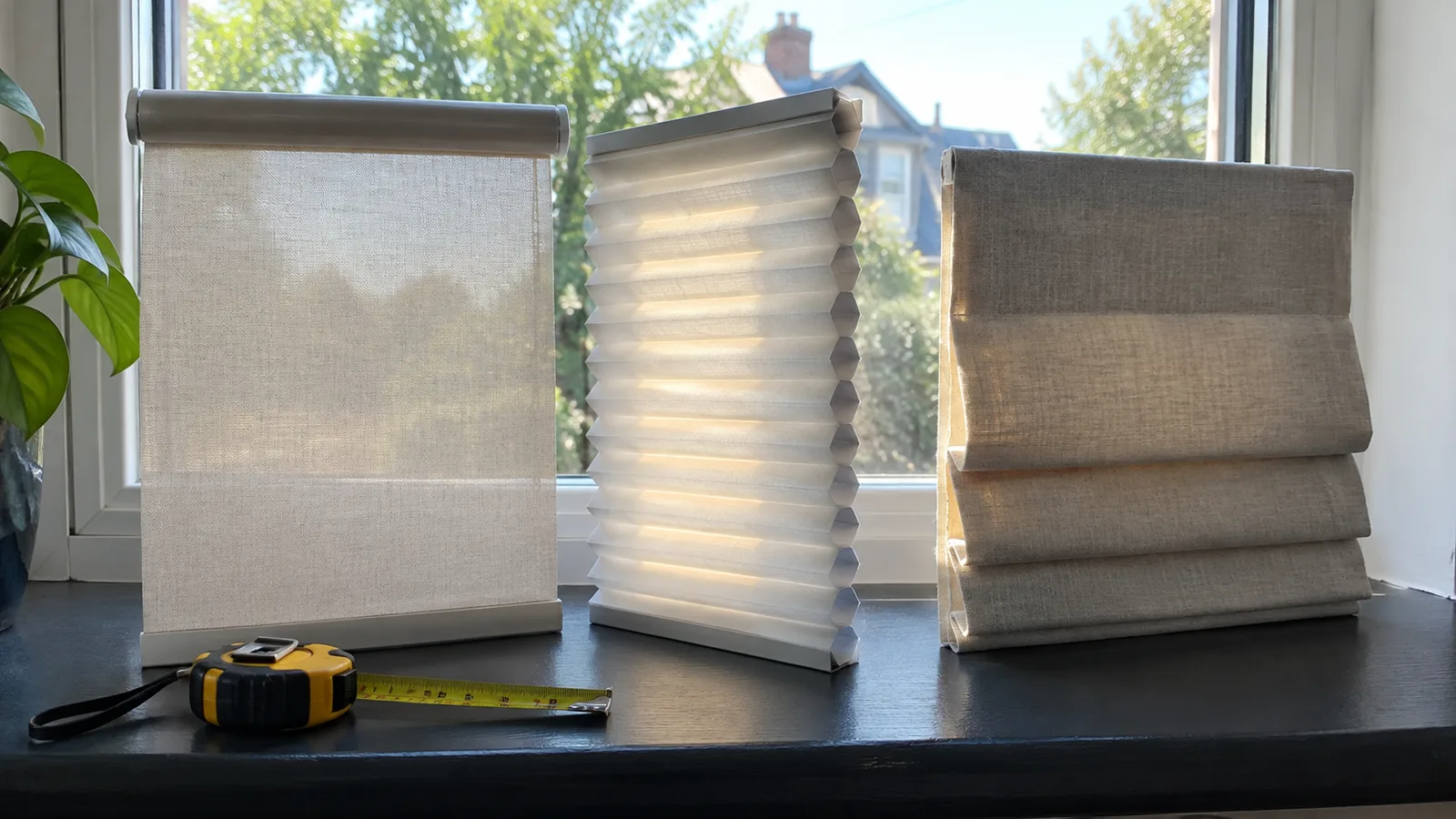
The three types differ in how the fabric is arranged, and that arrangement drives almost everything else: weight, bulk, insulation, and how you clean it.
- Roller shades are one sheet of fabric wound onto a tube at the top. They are flat, compact, and easy to wipe. Nothing hangs in front of the window except the fabric.
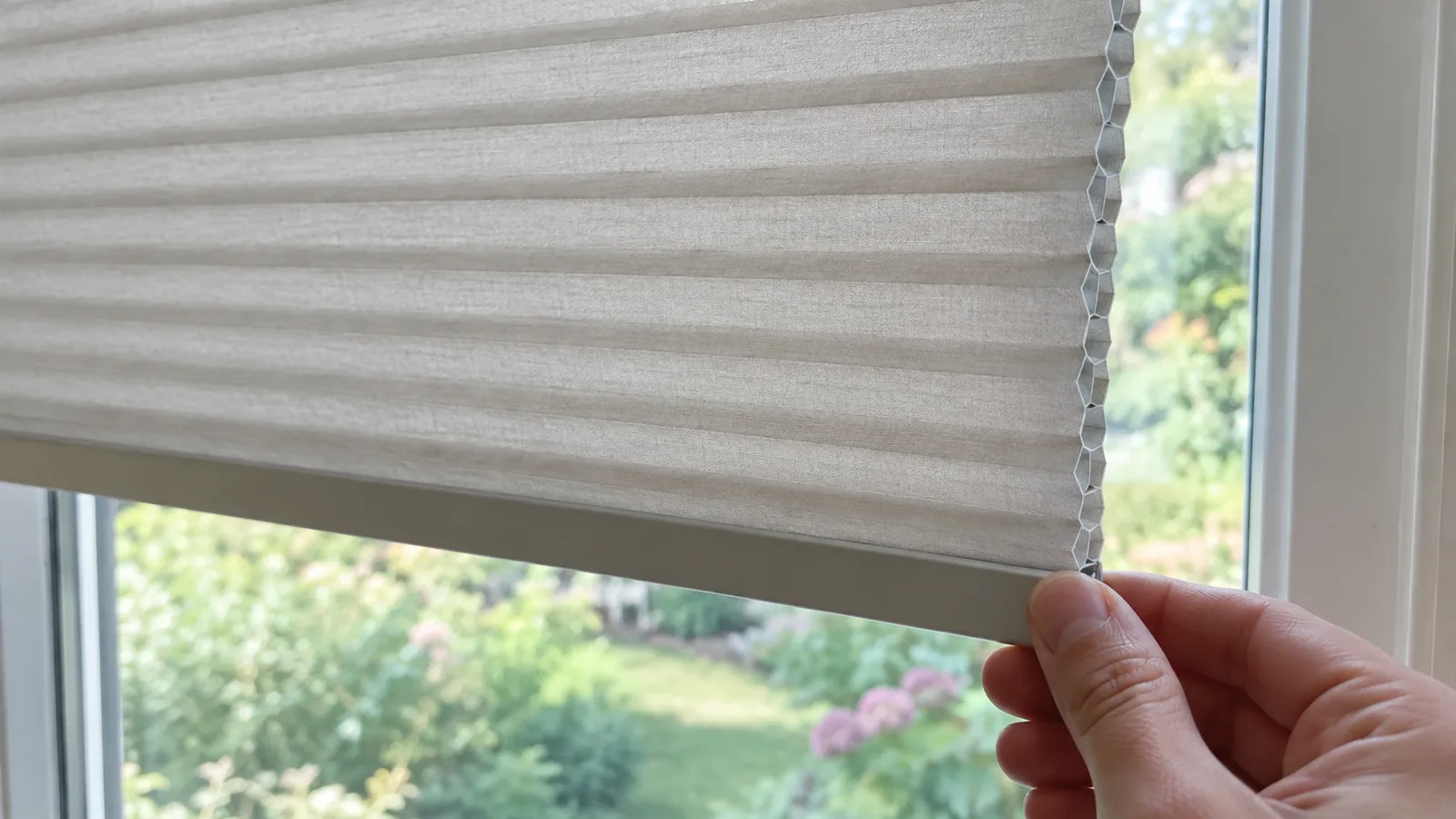
- Cellular (honeycomb) shades are pleated fabric folded into rows of cells. The cells and the gap between shade and window trap air, which is why they are the insulating choice.
- Roman shades are flat fabric that folds into horizontal pleats as it is lifted. They look like a soft curtain that rises, and the fabric can be as heavy or as light as you choose.
Light control and privacy
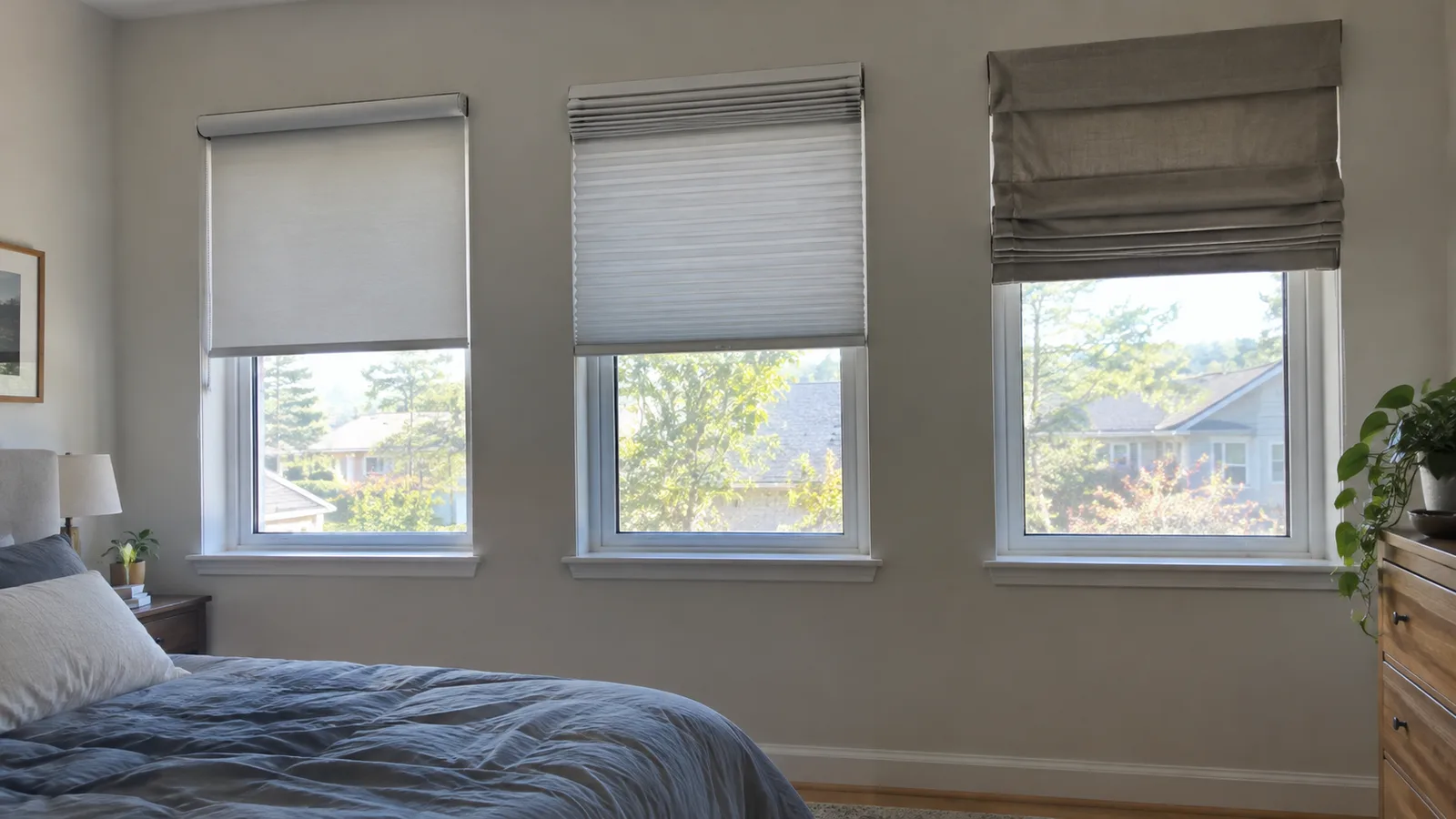
All three types can be bought in light-filtering, room-darkening and blackout fabrics, so choose the fabric first and the type second. A retailer guide from SelectBlinds lists light-filtering, room-darkening and blackout rollers, and recommends blackout cellular shades for bedrooms and media rooms. A Roman shade gets its light control from its face fabric and its lining, so ask for the lined or blackout-lined version if the room needs to be dark.
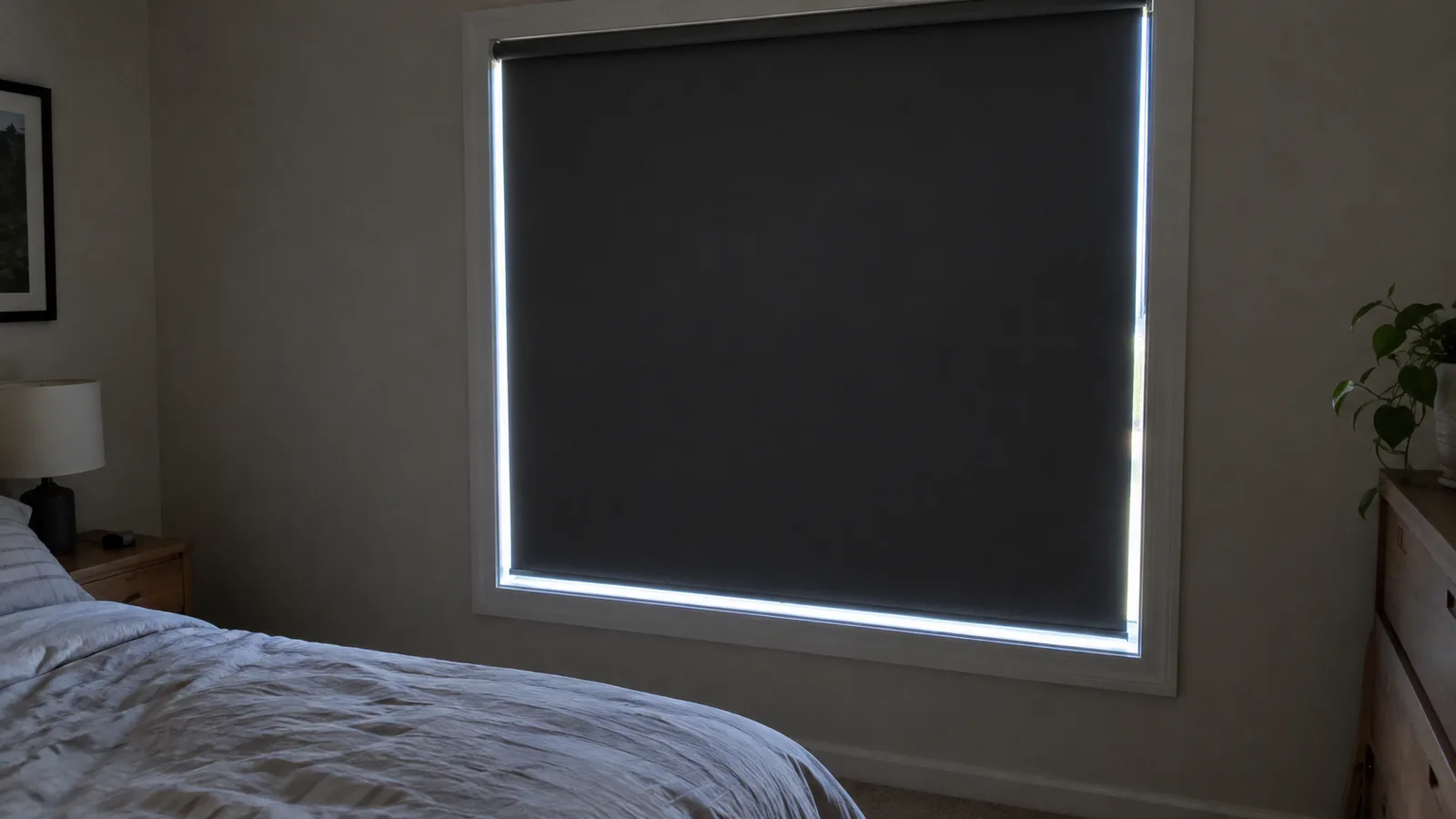
The shade type does not fix the other half of the problem, which is where the light goes around the fabric. A shade mounted inside the window frame is cut slightly narrower than the opening so that it can move, and that leaves a thin line of light at each side. If you need real darkness, mount the shade outside the frame so it overlaps the wall, or add side channels. Our guide to blackout vs room darkening curtains explains how to tell light through the fabric from light around it, and the same check applies to shades.
Insulation: where cellular wins, and what we can say about the others
Cellular shades are the one type with independent, government-backed evidence. A 2021 factsheet from the US Department of Energy and Oak Ridge National Laboratory describes a test house in Knoxville, Tennessee, where five cellular shades were compared with vinyl blinds from December 2019 to May 2020. Cellular shades saved up to 20 percent on heating energy and up to 15 percent on total heating and cooling energy compared with having no shade. The same factsheet says Lawrence Berkeley National Laboratory simulations found cellular shades gave higher energy savings than every other shading device it modelled. The experiments focused on the heating season, so the cooling benefit is less established.
The factsheet also points readers to the Attachments Energy Rating Council, which rates window attachments and puts a label on certified products. If energy is the reason you are buying, look for that label for your climate zone instead of relying on a brand's own claim.
We found no comparable independent figure for roller or Roman shades. Retailer guides quote R-values for them, but the numbers differ between sources and describe the shade alone, not the whole window. Treat a heavy lined Roman shade or a thick roller fabric as a modest improvement over a bare window, not a measured one.

How much room each one takes
A shade does not disappear when it is raised. The roll, the stack of pleats, or the headrail takes space at the top of the window, and that matters if you have a short window, a low ceiling, or a view you want to keep. Retailer guides describe roller shades as having the slimmest profile and Roman shades as having the tallest stack and the most projection.
Bali's published measuring guide for Roman shades lists a stack of about 6 in for a flat-style shade with a 36 in drop, and about 9 in for a hobbled style. At a 48 in drop it lists about 9 in and 12 in. Other makers differ, so check the stack height of the exact shade you choose.
Mounting depth is the other limit. Inside-mounted Roman shade guides we checked ask for between 1/2 in and 3/4 in of frame depth for a standard lift, more for motorised lifts, and about 2 in or more if you want the shade to sit flush with the frame. One guide for cordless shades asks for 1.5 in. Roller and cellular shades have their own minimums by brand. If your frame is shallow, mount outside it.
Cords, cleaning, and humid rooms
- Cords. The US Consumer Product Safety Commission treats accessible operating cords as a strangulation risk for young children. Its rules, published in November 2022, made non-compliant stock window coverings a substantial product hazard from 28 December 2022 and set a mandatory standard for custom ones made after 30 May 2023. Compliant products are cordless or have a short or inaccessible cord. Choose cordless for any room a child uses, and if you own older corded blinds, check them.
- Cleaning. Roller fabrics are the easiest to wipe or dust. Cellular shades hold dust in the cells and are harder to clean. Roman shades follow the care label of the fabric, and many cannot be wiped.
- Humidity. SelectBlinds notes that cellular shades may suffer moisture damage unless made for kitchens and bathrooms. A roller in a wipeable or moisture-rated fabric is the safer pick for a steamy room.
What each one costs
We did not find independent price data we could trust, and the retailer guides we read disagreed. In general they describe rollers as the budget option and Roman shades, especially in custom fabrics, as the most expensive. Price depends on window size, fabric, lining, lift system and brand, so get quotes for your own windows and compare like with like: the same width, mount type, light control and cordless lift.
| What changes the price | What to match across quotes |
|---|---|
| Window size | Exact width and drop, in the same units |
| Fabric and light control | Light filtering, room darkening or blackout |
| Lining | Lined or unlined, especially for Roman shades |
| Lift system | Cordless, continuous loop or motorised |
| Mount type | Inside or outside, and any side channels |
Which one should you choose?
Bedroom
- Blackout roller or blackout cellular.
- Mount outside the frame, or use side channels.
- Choose cordless.
Living room
- Cellular if the room is cold or drafty.
- Roman if you want fabric and have space above.
- Roller if the window is wide and plain.
Kitchen and bathroom
- Roller in a wipeable or moisture-rated fabric.
- Avoid Roman and non-rated cellular.
Sliding doors and shallow frames
- Roller has the smallest projection.
- Check that the shade can clear the handle.
See the shade on your own window first
A swatch and a product photo do not show how a shade looks on your window, in your light, against your walls. DecorViz's blinds visualizer previews roller, Roman, cellular, Venetian and woven shades on a photo of your own window. Upload a photo that shows the whole window, the frame and some of the surrounding wall, add a product image from a retailer, and describe the position you want to see, such as raised, lowered or partly open. You can reuse the same room photo to compare products.
It is a visual check, not a fitting tool. DecorViz states that it does not measure your window, so measure first and follow the retailer's fitting instructions before you order. Our DecorViz review covers what it does well and where it falls short.
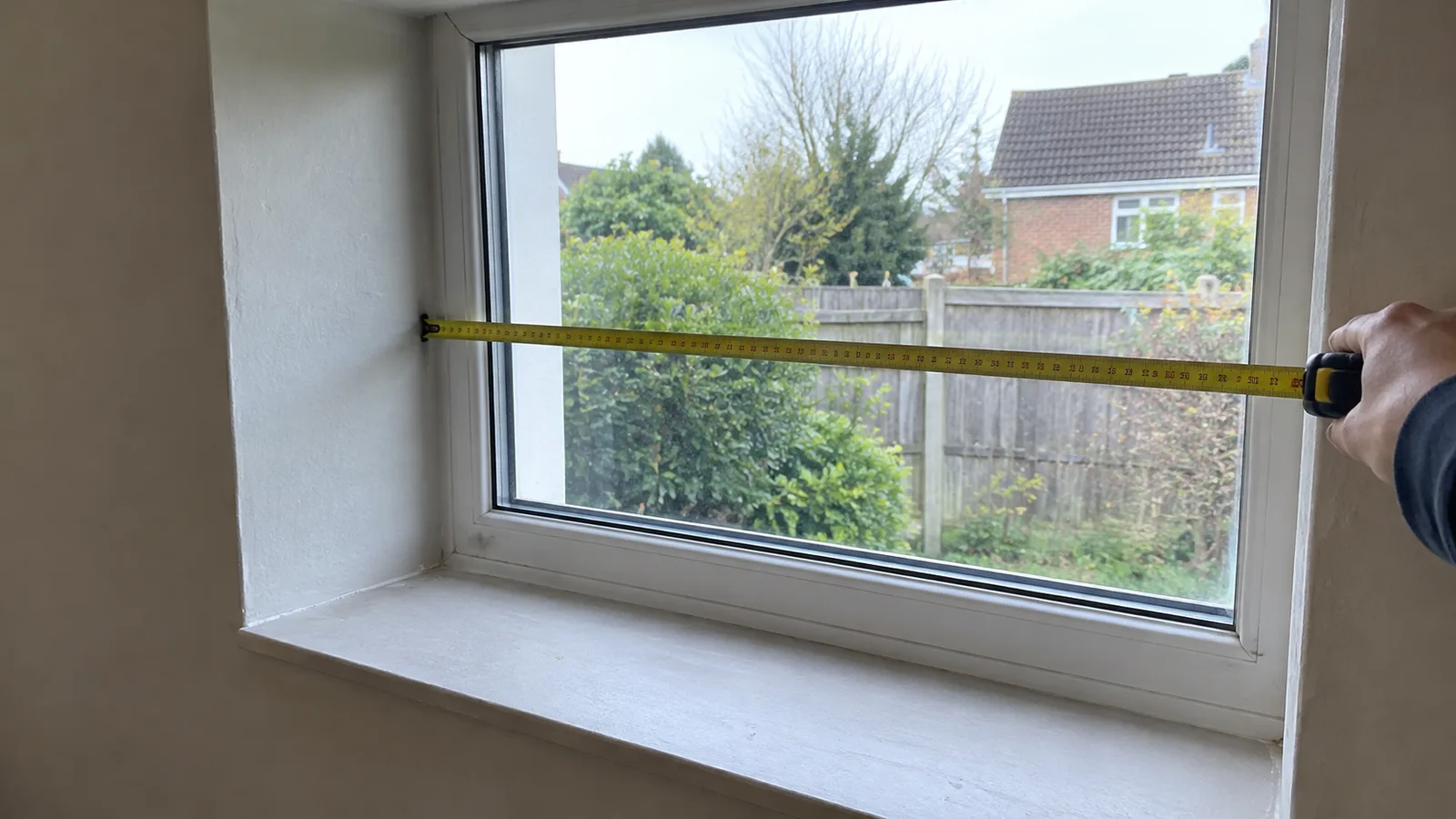
Measure before you order
- Decide inside mount or outside mount. Inside looks neater but needs frame depth and leaves side light gaps. Outside covers more wall and blocks more light.
- For an inside mount, measure the width at the top, middle and bottom of the frame and use the narrowest. Measure the height at the left, middle and right and use the longest, unless the retailer says otherwise.
- Measure the frame depth and compare it with the shade's minimum depth.
- Check what blocks the path of the shade: handles, cranks, trim and radiators.
- Follow the retailer's own measuring guide, because each brand deducts a different amount from the opening.