
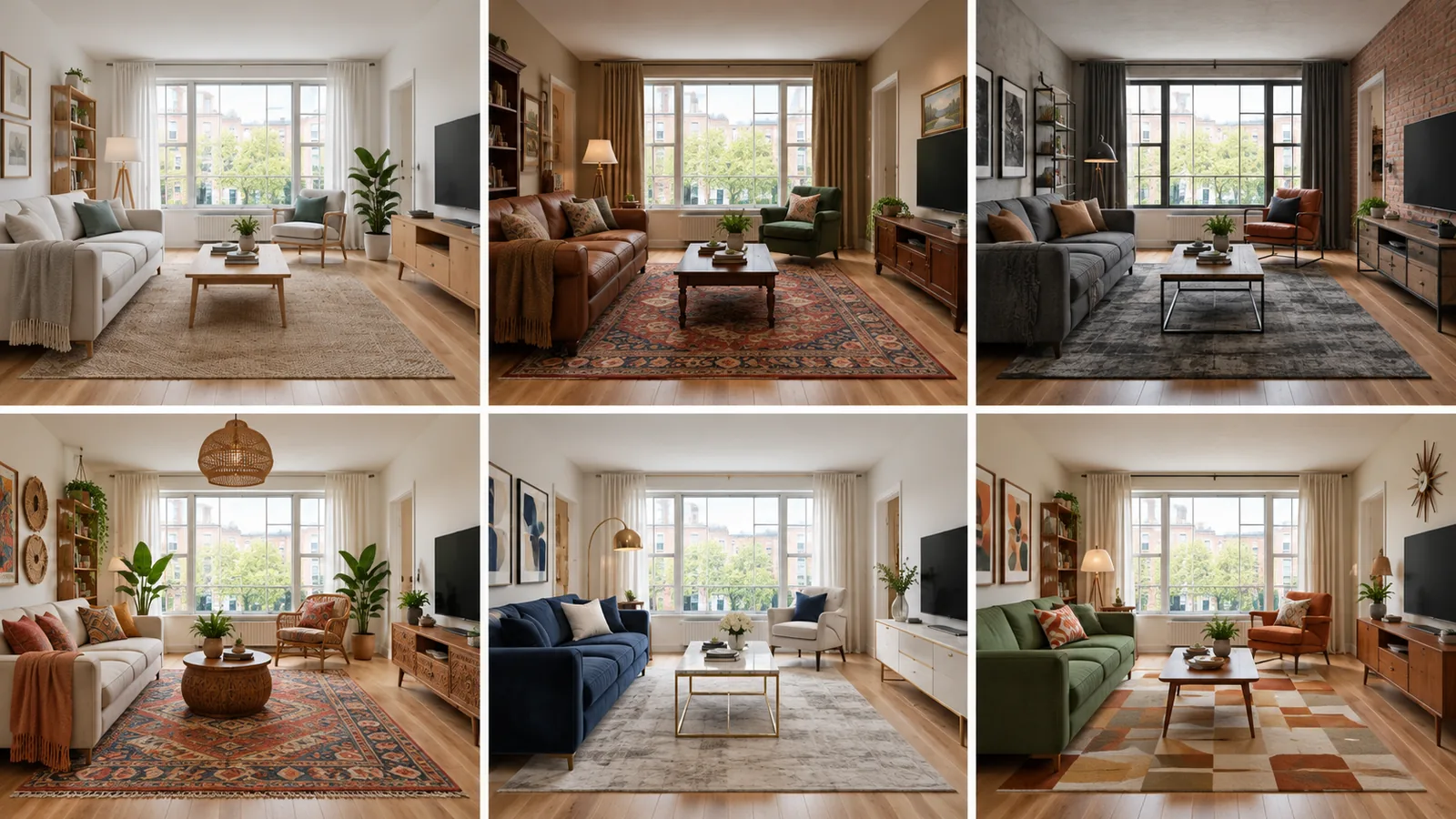
How to use these AI interior design prompts
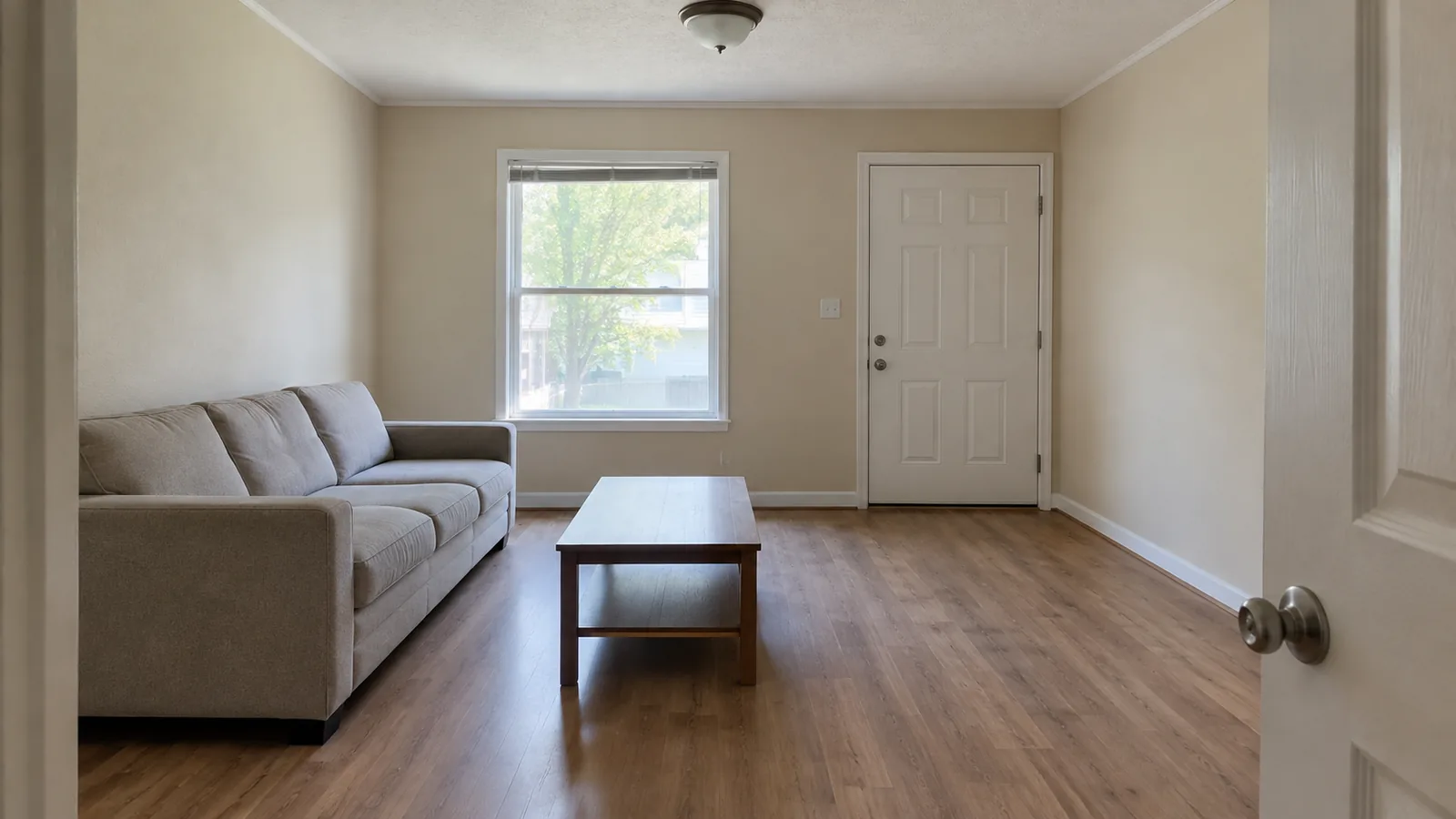
Upload a photo of your room to an image-editing tool such as ChatGPT, Gemini, or a dedicated room-redesign app. Replace the bracketed text in the base prompt, then add one style block from the sections below.
Edit this exact room photo in a [STYLE] interior design style. Keep the camera position, room dimensions, ceiling height, windows, doors, flooring, built-ins, and [ITEMS TO KEEP] unchanged. Do not add or remove architectural features. Apply the following palette, materials, furniture shapes, lighting, and decor: [STYLE DETAILS]. Keep all furniture realistically scaled and preserve clear walking paths.
- A"Edit this exact room photo." Without it, many tools generate a new room that merely resembles yours.
- BThe style name. On its own this is the weakest part of the prompt, which is why the blocks below spell out the details.
- CThe keep list: camera position, room dimensions, ceiling height, windows, doors, flooring, built-ins, and any furniture you are keeping.
- DThe change list: palette, materials, furniture shapes, lighting, and decor. This is where the style blocks below go.
- EThe guardrail: realistic furniture scale and clear walking paths, so the result stays a room you could actually live in.
Generate one version at a time. If the result changes the room itself, correct that before asking for more decor. Our guide to redesigning with AI without changing the layout explains the preservation method in more detail.
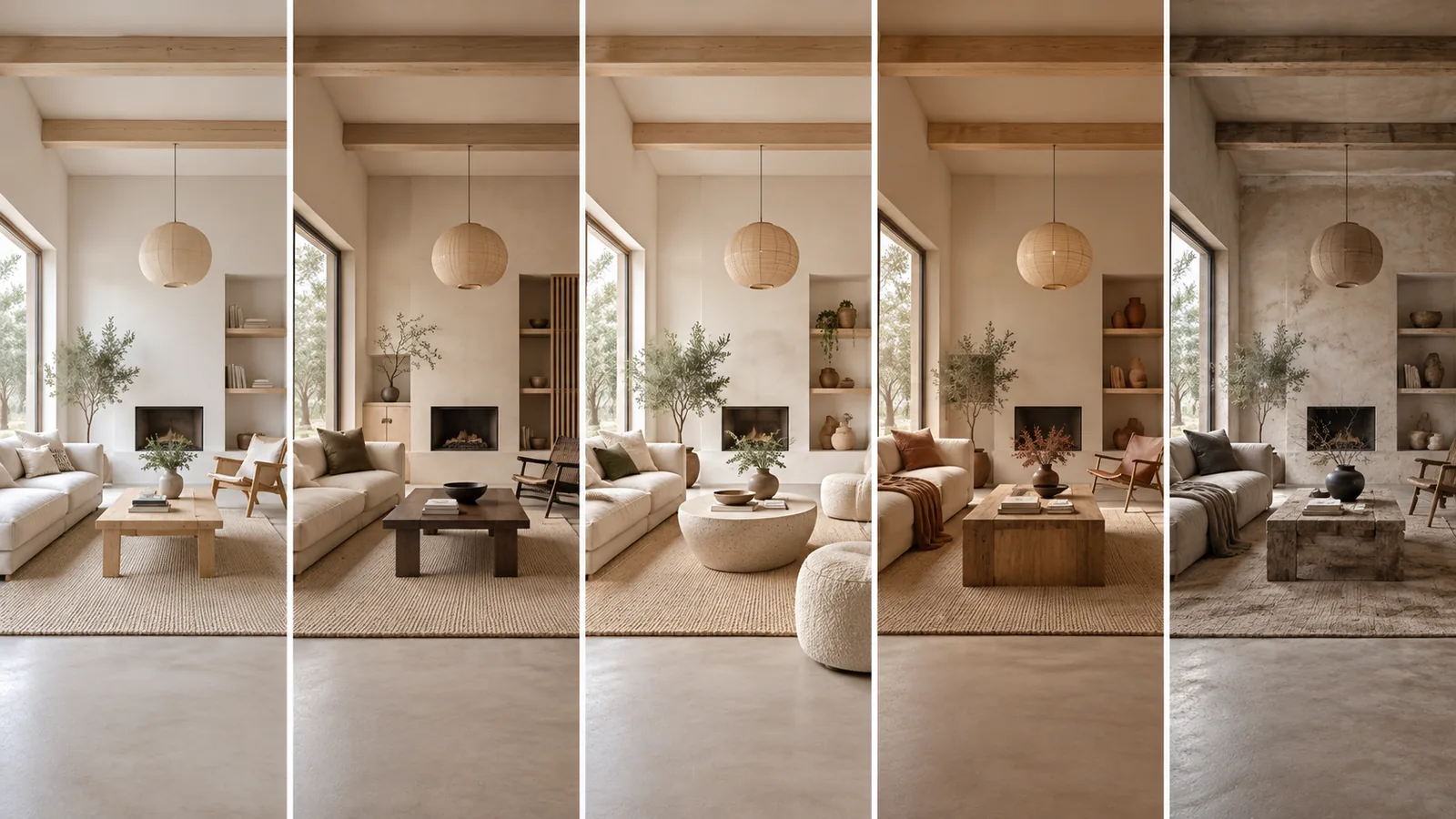
Quiet and natural styles
1. Scandinavian
What defines it: pale woods, simple functional forms, soft white walls, restrained colour, natural light, and a few warm textiles.
Add to the base prompt: Scandinavian style with warm white walls, pale oak, clean-lined furniture, woven wool and linen, muted blue-grey accents, simple paper or opal-glass lighting, and uncluttered surfaces. Keep it warm and lived-in rather than stark.
Check the result: AI often turns Scandinavian into an all-white showroom. Look for enough wood, texture, and contrast to keep the room from feeling washed out.
2. Japandi
What defines it: Japanese restraint combined with Scandinavian warmth, low profiles, natural materials, calm negative space, and visible craftsmanship.
Add to the base prompt: Japandi style with low-profile furniture, light and medium natural woods, warm plaster-toned walls, linen upholstery, handmade ceramics, subtle black details, and generous negative space. Use asymmetry and quiet texture, not themed Japanese decor.
Check the result: Remove token screens, lanterns, or decorative branches if they feel like costume rather than part of the room.
3. Organic modern
What defines it: contemporary shapes softened by curves, tactile natural materials, earthy neutrals, and sculptural objects.
Add to the base prompt: Organic modern style with warm limestone, oak, bouclé or textured linen, softly curved furniture, an earthy cream and clay palette, one sculptural light, and a restrained mix of handmade objects.
Check the result: Cream-on-cream images can hide impractical fabrics and erase depth. Ask for washable or durable surfaces where daily life demands them.
4. Minimalist
What defines it: few objects, strong proportions, concealed storage, deliberate negative space, and a tightly controlled material palette.
Add to the base prompt: Warm minimalist style with only essential furniture, closed storage, simple geometric forms, warm white and sand colours, one light wood tone, discreet lighting, and clear surfaces. Preserve comfort and function; do not make the room empty or clinical.
Check the result: AI may solve clutter by deleting necessary storage or seating. Count what the real room still needs to hold and who it needs to seat.
5. Wabi-sabi
What defines it: irregularity, age, repair, natural patina, quiet colours, and appreciation for imperfect handmade surfaces.
Add to the base prompt: Wabi-sabi interior with limewash-like warm grey walls, aged wood, natural linen, irregular handmade pottery, patinated metal, soft indirect light, and sparse asymmetrical composition. Emphasize authentic wear and repair rather than staged distressing.
Check the result: Generated decay is not the same as patina. Avoid cracked structural surfaces, artificial dirt, and unusable furniture.
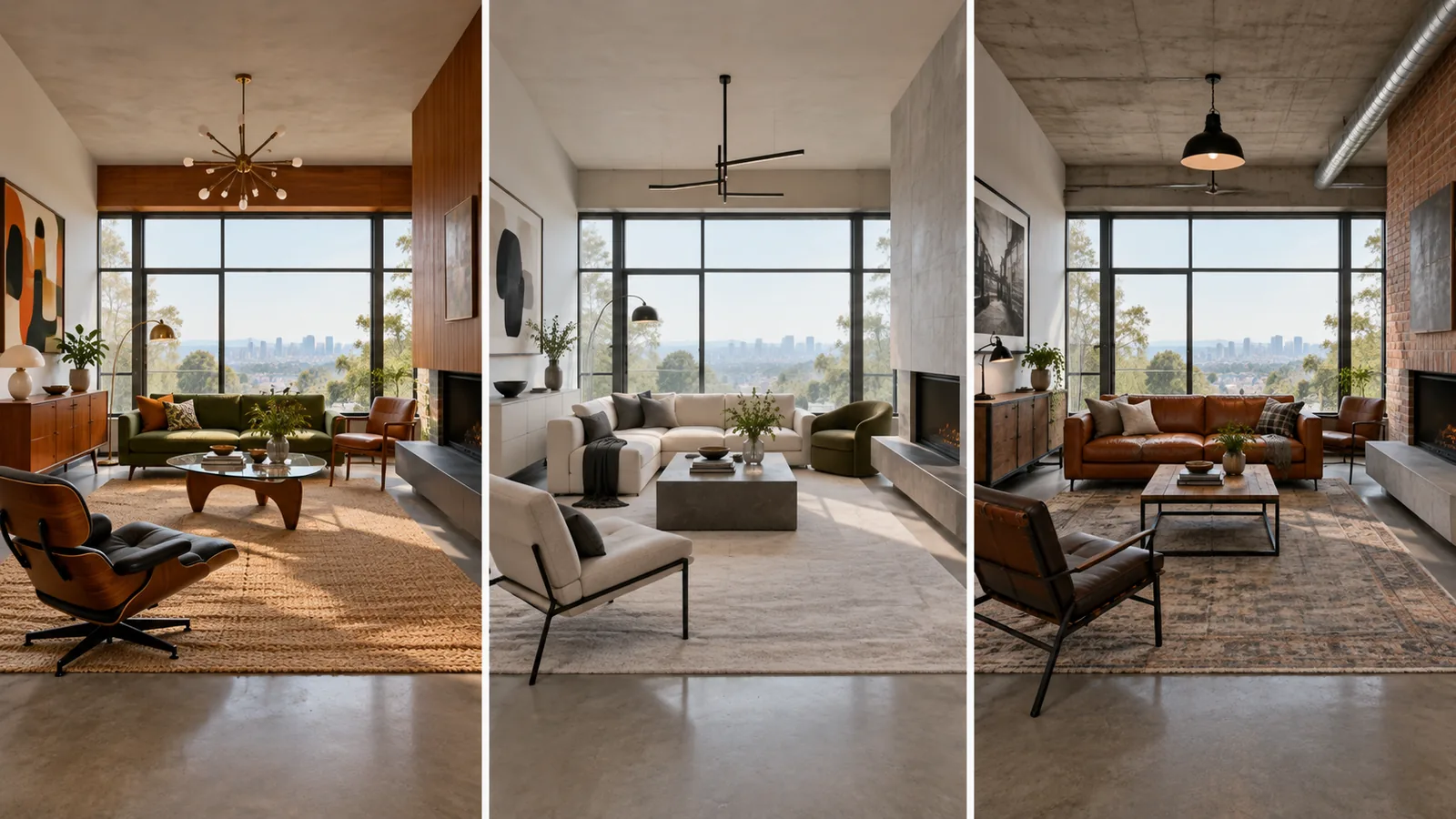
Modern design styles
6. Mid-century modern
What defines it: tapered legs, compact silhouettes, practical forms, warm woods, graphic patterns, and selective colour from the mid-20th century.
Add to the base prompt: Mid-century modern style with walnut or teak, furniture on tapered legs, a low sofa, simple globe lighting, warm white walls, and restrained olive, rust, or mustard accents. Mix authentic-looking period forms with a comfortable contemporary layout.
Check the result: Do not let every item become a period icon. A convincing room mixes eras and leaves space around the strongest piece.
7. Contemporary
What defines it: current shapes and materials rather than one historic movement, with clean lines, comfort, and a limited but flexible palette.
Add to the base prompt: Contemporary interior with clean but comfortable furniture, a warm neutral base, large-scale abstract art, layered architectural and task lighting, subtle curves, dark metal accents, and current materials without obvious trend clichés.
Check the result: "Contemporary" can become generic luxury. Ask which specific shapes, materials, and colours make the proposal suitable for your room.
8. Industrial
What defines it: exposed structure, metal, aged wood, practical lighting, and robust materials associated with converted workspaces.
Add to the base prompt: Soft industrial style with blackened steel details, aged wood, leather or durable woven upholstery, charcoal accents, practical task lights, and a warm neutral base. Work with the room's existing architecture; do not invent brick walls, factory windows, beams, or exposed ducts.
Check the result: AI frequently adds fake brick and impossible warehouse windows. Preserve the real shell and express the style through movable objects instead.
Expressive design styles
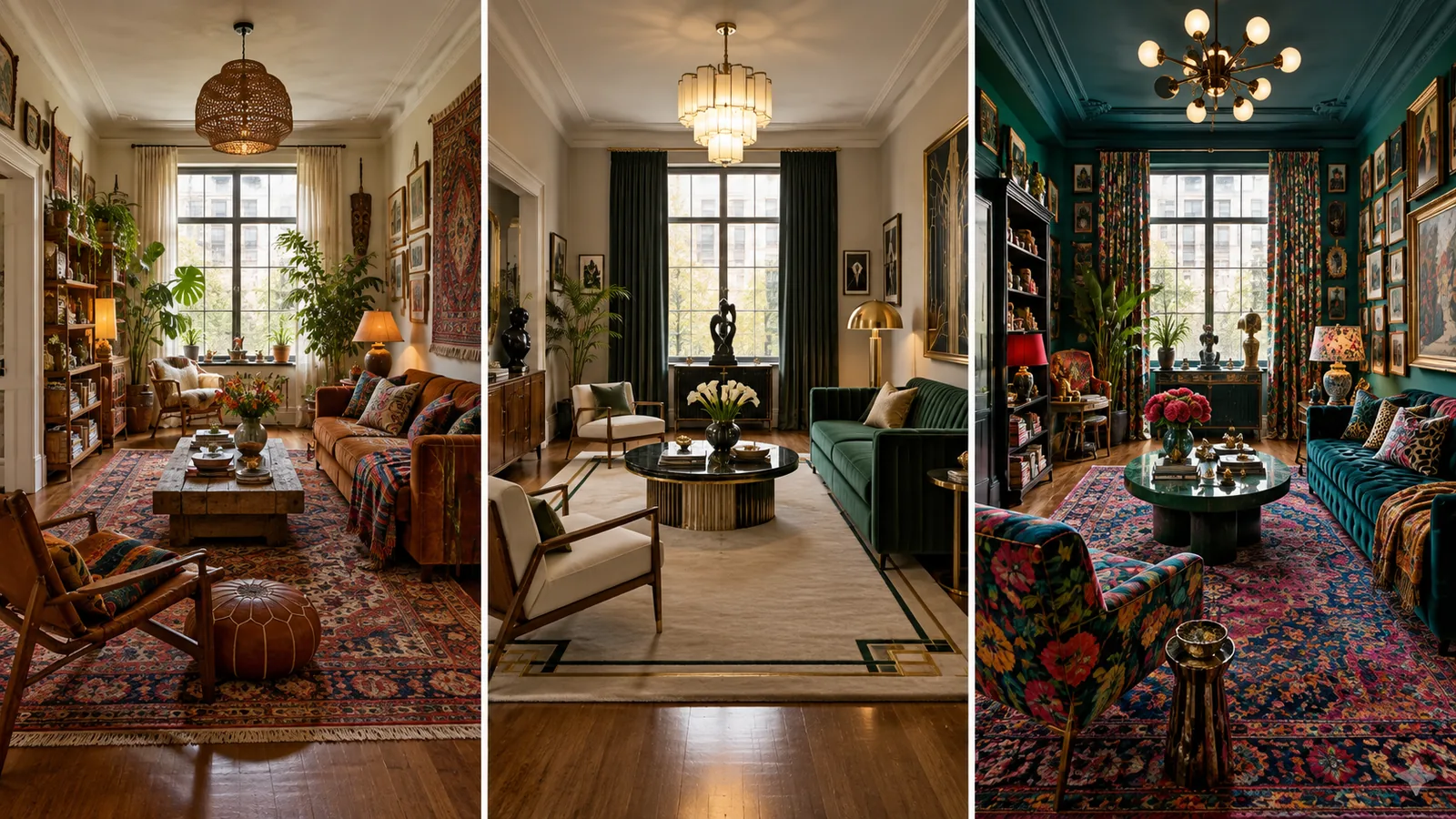
9. Bohemian
What defines it: collected objects, layered textiles, plants, craft traditions, warm colour, and a relaxed mix rather than a matched set.
Add to the base prompt: Collected bohemian style with layered vintage and handmade textiles, natural fibres, medium and dark woods, plants suited to the available light, warm terracotta and indigo accents, mixed side tables, and personal objects. Keep the floor plan calm and usable.
Check the result: More objects do not automatically make a room personal. Remove visual noise and avoid using culturally specific objects as anonymous decoration.
10. Art Deco
What defines it: geometric rhythm, polished materials, saturated colour, stepped or fan motifs, symmetry, and glamorous lighting.
Add to the base prompt: Residential Art Deco style with balanced symmetry, deep emerald or ink-blue accents, walnut, fluted glass, restrained brass, geometric upholstery details, and one sculptural pendant. Keep the architecture unchanged and make the glamour livable rather than theatrical.
Check the result: Reduce excessive gold, mirror, and pattern. Two or three strong Deco signals are usually more convincing than applying a motif to every surface.
11. Maximalist
What defines it: deliberate abundance, pattern and colour relationships, collections, art, and repeated visual motifs.
Add to the base prompt: Curated maximalist style with a coherent jewel-toned palette, layered patterns sharing at least one colour, a salon-style art grouping, books and collected objects, varied lamps, and one quiet surface in each view. Preserve circulation and do not fill every gap.
Check the result: Good maximalism has hierarchy. If every object demands equal attention, ask the model to establish one focal point and repeat fewer colours.
Styles shaped by place and history
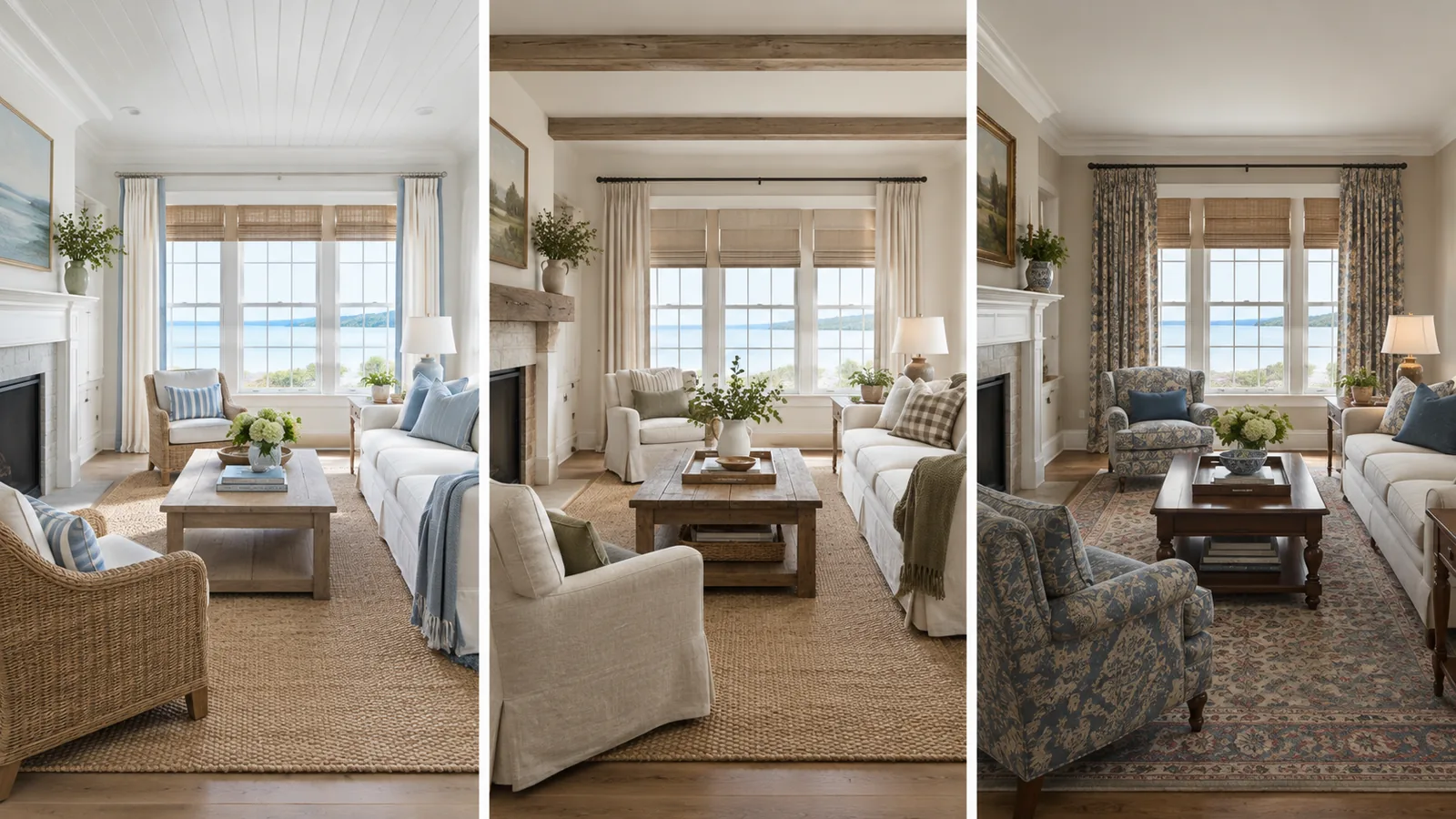
12. Coastal
What defines it: sun-washed colour, relaxed natural materials, breathable fabrics, and a connection to water and outdoor light without literal nautical props.
Add to the base prompt: Refined coastal style with chalky white and sand tones, pale weathered wood, linen slipcovers, woven natural fibres, soft sea-glass blue accents, and light window treatments. Avoid anchors, ropes, shells, signs, and themed nautical decor.
Check the result: Make sure the model has not enlarged the windows, intensified the view, or invented a coastline to sell the mood.
13. Farmhouse
What defines it: durable everyday furniture, honest woods, practical storage, simple traditional forms, and a relaxed rural character.
Add to the base prompt: Updated farmhouse style with simple painted and natural wood furniture, durable linen or cotton, warm off-white walls, aged but functional metal details, practical storage, and restrained checks or stripes. Avoid decorative signs and artificial distressing.
Check the result: If the room becomes a collection of barn doors, mason jars, and slogans, ask for fewer motifs and better materials.
14. Traditional
What defines it: symmetry, familiar furniture forms, detailed woodwork, layered textiles, antiques, and a sense of continuity.
Add to the base prompt: Comfortable traditional style with balanced furniture placement, classic wood forms, tailored upholstery, a muted historic palette, layered curtains, patterned rug, warm lamps, and a thoughtful mix of old and new. Do not alter the existing mouldings or architecture.
Check the result: Traditional does not require a formal matching suite. Ask for variation in age, finish, and pattern scale so the room feels accumulated.
A style that bridges old and new
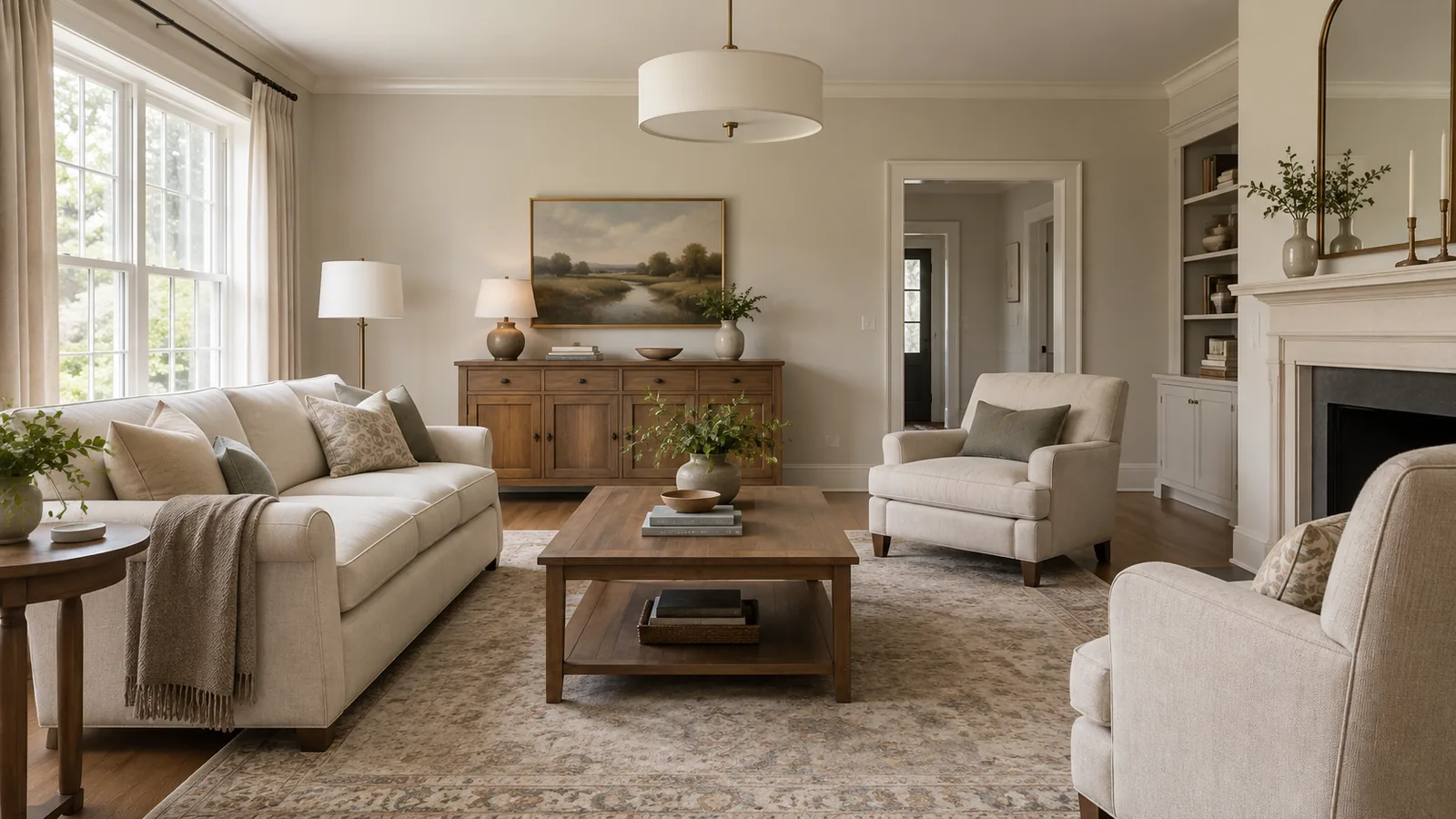
15. Transitional
What defines it: traditional proportions simplified with cleaner lines, calmer pattern, and a contemporary neutral palette.
Add to the base prompt: Transitional style with classic furniture proportions, simplified detailing, warm greige and cream, medium wood, tailored upholstery, a subtle patterned rug, contemporary lighting, and a balanced mix of curved and straight lines.
Check the result: Transitional can become anonymous beige. Ask for contrast through one darker wood, one distinctive light, or a controlled accent colour.
All 15 styles at a glance
Use this to pick two or three candidates before you spend any image generations.
| Style | Palette | Signature materials | Most common AI failure |
|---|---|---|---|
| Scandinavian | Warm white, muted blue-grey | Pale oak, wool, linen | Turns into an all-white showroom |
| Japandi | Plaster tones, soft black | Light and medium woods, ceramics | Adds themed Japanese props |
| Organic modern | Cream, clay, earth | Limestone, oak, bouclé | Cream on cream with no depth |
| Minimalist | Warm white, sand | One wood tone, closed storage | Deletes storage and seating you need |
| Wabi-sabi | Warm grey, natural | Aged wood, linen, handmade pottery | Generates damage instead of patina |
| Mid-century modern | Warm white, olive, rust | Walnut, teak, tapered legs | Every piece becomes a period icon |
| Contemporary | Warm neutral base | Clean lines, dark metal accents | Drifts into generic hotel luxury |
| Industrial | Charcoal, warm neutral | Blackened steel, aged wood, leather | Invents brick walls and factory windows |
| Bohemian | Terracotta, indigo | Layered textiles, plants, mixed woods | Clutter without a focal point |
| Art Deco | Emerald, ink blue, brass | Walnut, fluted glass, geometry | Gold and mirror on every surface |
| Maximalist | Jewel tones | Pattern layers, art groupings | No hierarchy, every object shouting |
| Coastal | Chalky white, sea-glass blue | Weathered wood, linen, woven fibre | Enlarges windows and invents a view |
| Farmhouse | Warm off-white | Painted and natural wood, cotton | Signs, mason jars, fake distressing |
| Traditional | Muted historic tones | Classic wood forms, layered textiles | Matching suite with no variation |
| Transitional | Greige, cream | Medium wood, tailored upholstery | Anonymous beige with no contrast |
How to compare your AI style results
Do not choose the image with the most dramatic transformation. Score each version against the room you actually have.
| Check | Question to ask |
|---|---|
| Room fidelity | Are the walls, doors, windows, ceiling, floor, and camera position still the same? |
| Function | Can people still walk, sit, store things, open doors, and use the room as intended? |
| Style clarity | Can you name the few materials, shapes, and colours creating the look? |
| Personal fit | Does it work with the items you own, the upkeep you accept, and the light in your home? |
| Shopping realism | Can the important pieces be found in the right dimensions and budget? |
- The room itself changed: wider windows, new beams, a different ceilingRe-run with the keep list first in the prompt, and name the feature it altered.
- The room looks emptier than your life allowsAsk for the storage and seating you actually need, by number.
- Everything went flat and beigeAsk for one darker wood, one contrasting textile, and one distinctive light.
- The style reads as costume, not as a roomRemove themed props and express the style through materials and furniture shapes.
- You like two versions equallyWrite one hybrid prompt listing only the specific features you liked from each.
Keep the top two styles, then create a hybrid prompt using only the features you liked. "Japandi room" is vague. "Low oak furniture, warm plaster walls, linen upholstery, black reading lamp, and clear surfaces" is a brief you can shop from.
For choosing a tool, see our ChatGPT vs Gemini interior design comparison and the current list of free AI interior design tools.