
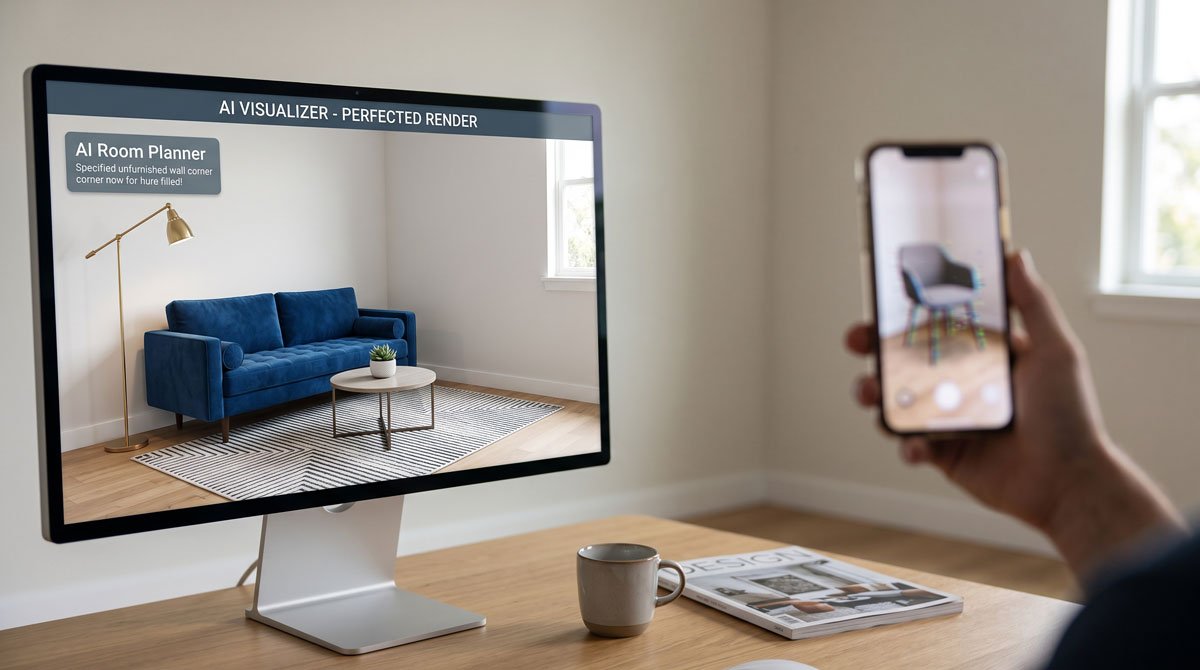
Where AR starts to break down in the real world
AR is at its best when the user wants to point a phone around the room and play with placement in real time. That can be fun, but shopping fatigue sets in quickly when you are comparing several actual pieces from different stores.
The friction is not just technical. It is behavioral. Buyers save listings, send screenshots to partners, compare tabs, and revisit options over several days. That is not the same workflow as holding a phone up to the room every time a new product enters the shortlist.
Why product-photo workflows are stronger for online furniture shopping
Furniture purchases now begin on product pages. That means the most useful preview tool should begin there too. AI visualizers let you take the image you are already using to evaluate the item and test it directly in your actual room photo.
This makes AI better for:
- shortlisting multiple options from different stores
- testing products asynchronously over time
- sharing previews with another decision-maker
- keeping the comparison anchored to the same room image
Why AI is better for decisions, not just previews
The best shopping tool is the one that helps you say yes to one option and no to the rest. AI visualizers are better at that because they are comparison-friendly. You can test multiple candidates quickly, keep the room constant, and evaluate the tradeoffs without changing the workflow each time.
AI visualizers are especially effective here because they are built around the assets furniture shoppers already collect: room photos and product photos. That makes it easier to move from browsing to buying.
When AI is the better choice
Use an AI visualizer when you are narrowing down real pieces, buying from multiple retailers, or trying to avoid an expensive return. It is not trying to replace every design app. It is trying to solve the specific high-stakes moment right before purchase, and that is exactly why it works.